
 Americans can’t hate Islam enough and those who advocate for Sharia Law within our borders as they demand to see Islam reign supreme over America.
We now have millions of them in the country now taking over one city government after the next, university after university and partying in the chaos they are unleashing at every level of government, from the local to the states and federal.
One of the things Trump has gotten right is he has basically reduced immigration from Muslim nations by ninety-six percent this term, although many Muslims are still entering by way of family kinships and chain migration. And then there are the Special Immigration Visas by which we still find Muslims from Afghanistan entering the nation, under only God knows what sort of authority and vetting.

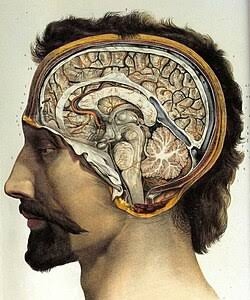 I have spoken many times about how amazing the human brain is, but I’m not sure if I’ve ever mentioned how we often don’t realize what it is capable of, or how it is performing functions without our ever realizing that it is doing so. Even now, as I sit here typing, my brain is pulling data from multiple regions, then sending signals (kind of like e mails I suppose) along neural pathways to my fingers; which in turn type out what is going on inside my head. All this occurs almost instantaneously; my mind decides what it wants to say, then my fingers type it out; without me giving any thought to the process of how those thoughts get to my fingertips.
 It should be of some great interest to many American patriots that the U.S. Supreme Court will be hearing arguments concerning semiautomatic rifle bans put into “law” by Illinois and Connecticut on December 2nd 2026. Notoriously slow to act, we may not see their ruling until next summer, but hopefully they will in fact prove me wrong and act sooner.

 At the core of our country rests many millions of these same type of strong-willed independent Americans willing to do any and everything to ensure that their families and communities remain safe and free. And although I still believe America will not be saved until we fight another bloody, violent full-blown civil war at some point in the not too distant future, I do believe that we will see a very large percentage of Her patriots emerge on the other side in victory, still ready to get on with the necessary work to keep the engines of this country humming along strong and sound and get on with the business of working, loving, and livin’ free for all the rest of their days.
 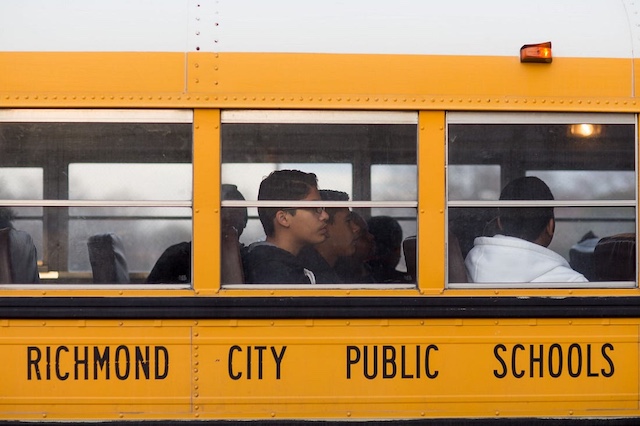 A news blurb on back-to-school sales gave me a tough dose of reality the other day. Even though most of the nation is currently in the throes of summer heat and humidity, the truth is that kids will be hitting the books before we know it.
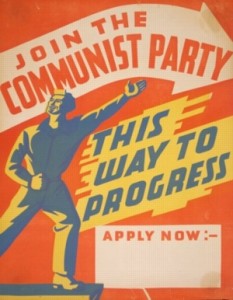 In a previous article about socialism, I outlined the basic reasons why profit-seeking capitalists are essential to the productivity and income of workers and to satisfying the desires of consumers, why increasing government controls over the economy plays into the hands of exploitative corporatist elites, and why socialization of the means of production ultimately requires central planning to coordinate production and preserve a division of labor, which in turn necessitates the evils of totalitarian tyranny in spite of the democratic aspirations of many well-meaning socialists. In brief, ordinary people cannot gain a greater voice and a freer life through curtailment of private ownership; socialism necessarily leads to the mass poverty and mass regimentation of totalitarian tyranny.
  This should surprise no one:
  “You always take care of your men before you take care of yourself.” Fred Behrens lived this truth on every mission he flew until his luck ran out on April 23, 1971.
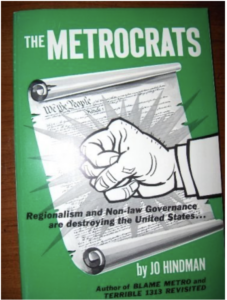 We, at American Policy Center and numerous other organizations here in the U.S. and other countries (Norway, England and Canada to name a few), have been speaking out against the many ways our countries have been working toward a one-world government. We started only some 30-40 years ago, but others were speaking out well before we woke up.to the destruction planned by those seeking to control the entire globe. One of those was Jo Hindman, who focused on Regionalism. Thankfully, she was on it; she was quite intelligent and was able to explain and expose it. Regretfully, those in power – both in D.C. and in the states – either remained ignorant as to what they were burdening their constituents or liked being in on the power.
  Digital