
Oh No… Another Artificial Intelligence Rant…
Or… “When was the last time a hammer chose the nail?”
Or… Should we ask, “Who’s Zoomin Who?”
…But the title has been bouncing around on my list for some time now. Jeff Bennett suggested it ages ago. It came to mind this morning as I perused the news feeds. What’s new, and what counts as news, is a recent controversy; by recent, I mean the past 20 years or so, but even more so today, as AI offers compelling inputs and responses. Who’s lying, bragging, bluffing, or talking big, all based on an assumed position, job, power, or importance?
A hammer doesn’t look around a room, select a nail, and strike it out of malice or political bias. The human hand selects the target; the tool merely delivers the force. The mainstream media desperately wants us to believe that the synthetic narratives filling our feeds are the organic result of objective algorithmic curation. They cloak their bias in the sterile language of technology, pointing to “trending models,” “automated feeds,” and “AI optimization.” But this is a calculated misdirection meant to train us to ignore a fundamental truth: the tool does not choose the target.
 It’s early, even for me. I read the opening quote before falling asleep, and it stayed with me all night. The metaphor didn’t hit me until about 3 AM. So here I am. Rising from a fitful slumber with that quote echoing in my mind, and unsure where it could lead.
 It happened in a day and grabbed our attention, but it took years of preparation. We’ve been lamenting and memorializing it for 25 years, yet we still haven’t learned a goddamned thing — look where we are today.
 At first, the bargain seemed harmless. Who would object to carrying a phone in a pocket? It promised convenience, safety, speed, and connection. We could reach our loved ones anywhere. We’d never miss an important call. In an emergency, help would be only a tap away. It sounded less like technology and more like protection. That was the sales pitch, and most of it was true.
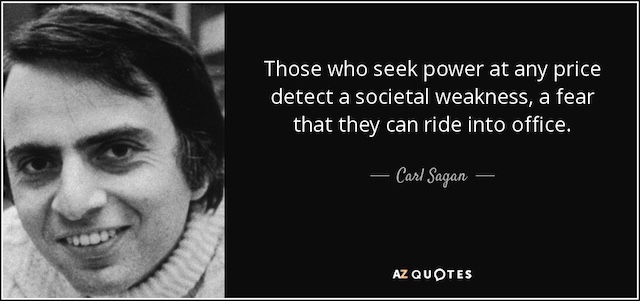 Power rarely announces itself as domination; more often, it appears as procedure, opportunity, expertise, influence, or common sense.
 It began the way these things often do: with my morning coffee steaming beside me, the first bitter sip still on my tongue, the news still turning over in my mind, and one ordinary click. I was looking for information on drug interactions and their possible link to cognitive decline – a subject personal enough to make me sit up a little straighter and pay closer attention.
 For the past several years, probably more than I care to admit, decisions have been made that affect nearly all of us. I’m referring to the
  I’m talking about the creeping stranglehold of socialist ideology in this country – not merely as a slogan, a campus argument, or some far-off theory, but as a practical effort to make ordinary people more dependent on centralized power.
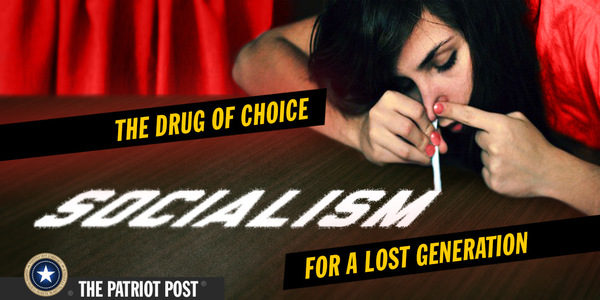 Every promise has a price. Every political bargain sends someone the bill. The question is not whether America should help those in need; it is whether Americans understand what they may be asked to surrender once the word “free” enters the room.
 As I was writing the column listed above, another question kept surfacing: If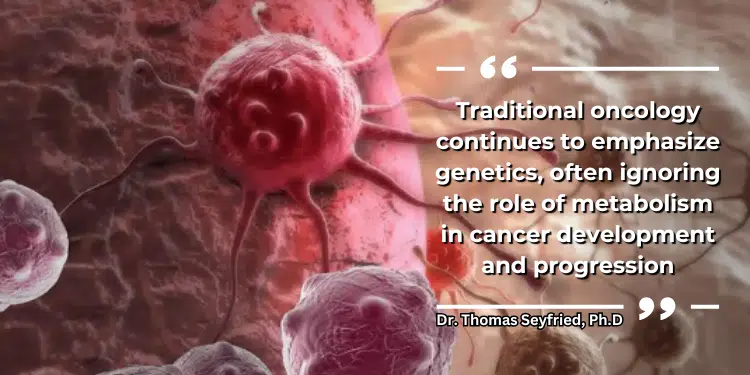

 This may sound like another article about AI, but it is really about something older and larger. AI is simply the newest layer in a familiar story: each generation is promised that technology will simplify life, save time, and reduce friction. Lived experience often tells a different tale.