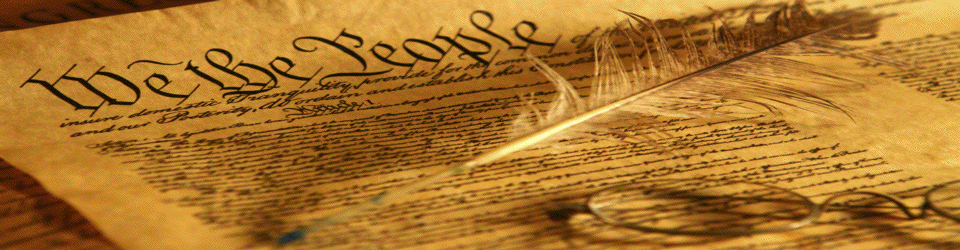
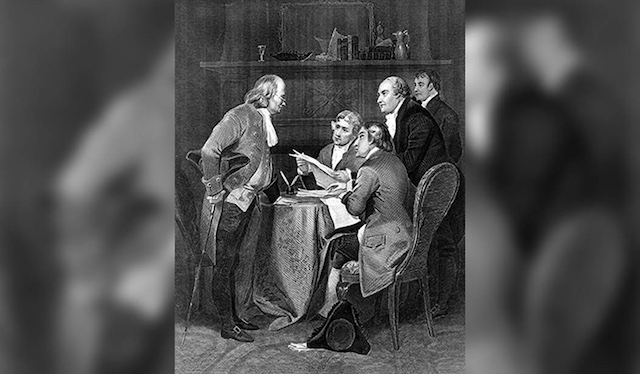
You can trace a line from the Magna Carta to the founding of America. It wasn’t just a few dozen men in a Philadelphia Hall debating ideas either.
This well-known rhetorical flourish at the beginning of the Declaration of Independence needs closer consideration: “We hold these truths to be self-evident, that all men are created equal, that they are endowed by their Creator with certain unalienable Rights, that among these are Life, Liberty and the pursuit of Happiness,” it states.
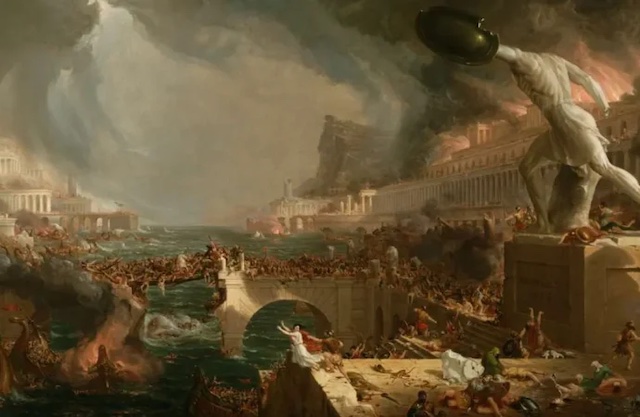
Look through history and you’ll find little evidence that most people experienced these self-evident truths. Until the West led the way in abolishing it, slavery was an accepted historical institution. Notre Dame Professor Keith Bradley once estimated that “in Rome and Italy, in the four centuries between 200 B.C. and A.D. 200, perhaps a quarter or even a third of the population was made up of slaves.” Continue reading →
The Budweiser Clydesdale horses bow in tribute, with the Statue of Liberty in the background, ten years after the 9/11 tragedy.
In an idyllic rural setting, a team of eight horses pull an antique red wagon out of a vintage barn. There are two uniformed riders on the wagon.
A close-up reveals that these horses are stunningly beautiful Clydesdales.
A transition montage shows the horses walking and trotting along a green pasture, then along the cobblestone road of a small town, and then across the Brooklyn Bridge. Beyond the bridge, the Clydesdales reach a field where skyscrapers can be seen in the distant background.
The distant skyline becomes recognizable as New York. The team of horses become recognizable as the Budweiser Clydesdales.
With the Statue of Liberty in the background, the Budweiser Clydesdales stop walking and begin to bow their heads in unison. A wider camera angle then shows “Budweiser” painted on the side of the beer wagon. Wistful background music reaches its emotional crescendo.
In Paul Clayton’s collection of short stories, “Seeing Sunny Again,” we meet Carl Melcher. It’s the early 1960s, and Carl, who will enter high school in a week or so, has spent the summer hanging out on a beach longing without success to find a girlfriend. On this particular evening, he decides to try his luck at Luigi’s, a pizza parlor.
In Luigi’s, six girls who are about his age are sitting around a table in the back. Carl notices the redhead who seems to be the group’s ringleader, but it’s the girl beside her who attracts his attention. Too intimidated to approach them, he’s eating his pizza when the redhead appears and encourages him to ask the other girl out. With the other girls all giggling, Carl invites Janet for ice cream. She agrees, then reaches for a pair of crutches and stands. It’s then that Carl sees “the smooth, pinkish stump below her knee where one of her legs should have been.” Continue reading →
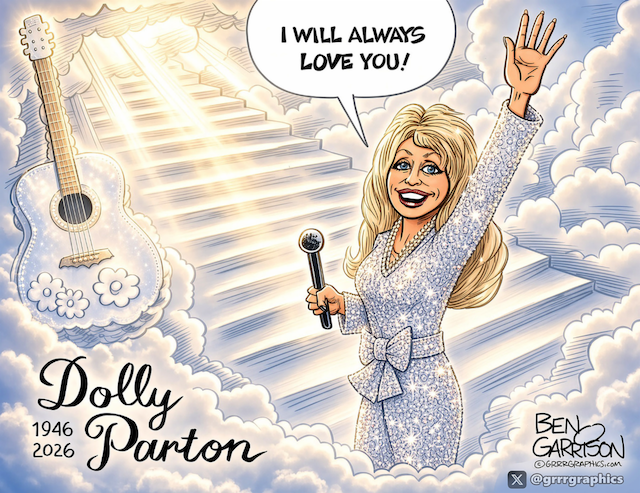
Dolly Parton lived a life that felt bigger than life itself. Born in a one-room cabin in the Smoky Mountains of Tennessee, she turned grit, talent, and that famous smile into one of the most remarkable American success stories of our time. Continue reading →
Major League Baseball legends and current players introduced at MLB at Field of Dreams Game!
The Phillies and Twins take the field ahead of the 2026 MLB at Field of Dreams Game, featuring 26 Hall of Famers from baseball history on August 13, 2026.
“Today we are engaged in a final, all-out battle between communistic atheism and Christianity.” ~ Sen. Joseph McCarthy
Senator Joseph McCarthy: American hero
There were and still are domestic enemies in the form of Marxists ready to devour our great nation. This time let’s not worry about whose feelings we hurt. For those younger people who didn’t get a well-rounded education, and that is probably the majority of people under 50 years of age, Joseph McCarthy was a Republican senator from Wisconsin from 1947 to 1957.
Senator McCarthy is best known for his post-war struggle to make America aware that under Democrat administrations communists had infiltrated our institutions, including the United States government and our entire education system. Now, even the Smithsonian has succumbed to this infection.
McCarthy was accused many times of “odorous tactics” in his hunt for those who would destroy our country. Continue reading →
Remember when I was young and so were you
And time stood still and love was all we knew
You were the first, so was I
We made love and then you cried
Remember when
I’m just a singer, a natural born guitar ringer
Kind of a clinger to sad old songs
I’m not a walk-behinder, I’m a new note finder
But my name’s a reminder of a blues man that’s already gone
“If a nation expects to be ignorant and free, in a state of civilization, it expects what never was and never will be.” – Thomas Jefferson
That Democrats and other Leftists hate America’s Founding Fathers and the country’s Judeo-Christian heritage is a fact I’m not going to waste time in the article attempting to prove. Everything the Left does is designed to uproot and destroy the principles our Founders tried to build the nation upon. One of those principles, a very vital one, is a correctly educated populace. We have been complaining for many years now, and rightly so, what the Left has done to America’s education system since getting control of it about a century ago. Our Founders warned us about it, but, of course, Americans in general have paid no attention to them on this as on most matters they taught us. Continue reading →
Modern America has a strange way of measuring importance.
If it trends, it matters. If it makes money, it matters. If it gets applause, builds a brand, lands a television contract, or goes viral online, then we’re told it has value.
Meanwhile, some of the most civilization-shaping work ever done happens every single day in near-total obscurity.
No cameras. No standing ovations. No audience rising to its feet.
Just mothers quietly holding entire worlds together while the culture barely notices. Continue reading →
Things may be somewhat different now, but when I was a kid the school system required us to read books; a lot of books. We had the typical text books that taught us subjects such as history, science, and math. Then, once we got past the basics in learning how to read and write, we were given reading assignments, a specific number of chapters from a book assigned by the teacher; which we would then discuss the following day in class. Finally, there were the book reports.
For those of you who have never had to write a book report, the teacher would assign a book to read, then give you a specific amount of time to read it, then write a report on what you had read. Continue reading →
Every revolution promises freedom. That’s the lie that gets people into the streets.
What comes after victory is not freedom at all. It’s control. Control of institutions. Control of speech. Control of memory. Control of what is allowed to be said out loud without consequences.
Once the old order collapses, the new regime faces its first unsolvable problem:
Who gets to define reality now?
That question decides everything. It decides who gets rewarded, who gets disciplined, and who quietly disappears once the cheering stops… and history shows something deeply ironic: the people most confident they’ll be safe after a communist revolution are usually the first to discover they’re not. Not because they opposed the revolution, but because they helped it win. Continue reading →
Do you think that God cares about what you look like? Do you think He cares if you are rich/poor; if you are a Democrat or a Republican; if you are a famous actor or just some working stiff trying to make ends meet? All God cares about is what is in your heart; whether or not you believe what John 3:16 tells us, “For God so loved the world, that he gave his only begotten Son, that whosoever believeth in him should not perish, but have everlasting life.”
Yet there is more to being a Christian than simply believing that Jesus is the Christ, the son of the Living God; He who offered His life as a sacrifice for our sins; dying on the cross and rising on the third day into glory. Satan not only believes that, he knows that to be true; yet he is still condemned to eternal damnation for seeking to elevate himself above the Most High. Continue reading →
The Internal Revenue Service (IRS) has unveiled substantial updates to federal tax deduction rules for individuals, families, and businesses.
Why It Matters
It follows the passage of the One, Big, Beautiful Bill Act (OBBB), signed into law on July 4, 2025.
These changes, which take effect this year, are designed to provide tax relief across a broad range of categories, from working Americans and seniors to business investment and family support. Continue reading →
I’m guessing that many of you have heard the saying, Thinking outside the box. For those that haven’t, what it basically means is: to explore ideas that are creative and unusual and that are not limited or controlled by rules or tradition. Those who think outside the box are not limited to, or confined by, traditional thoughts and beliefs. What I find ironic about thinking outside the box is the fact that those who are able to do it effortlessly are often praised and admired; except when it comes to politics and government. I am of the firm belief that the biggest obstacle that prevents us from solving the problems we face as a nation is our refusal to think outside the box. Continue reading →
When the Framers drafted the Constitution in 1787, the first three words were “We the People.” The rest of the document repeatedly refers to “the people,” a term clearly denoting citizens of the United States, those whose rights the Constitution addressed. Additionally, the Tenth Amendment to the Bill of Rights identifies the states and “the people” as the repositories of plenary power, in contrast to the limited powers delegated to the federal government. Continue reading →
 This well-known rhetorical flourish at the beginning of the Declaration of Independence needs closer consideration: “We hold these truths to be self-evident, that all men are created equal, that they are endowed by their Creator with certain unalienable Rights, that among these are Life, Liberty and the pursuit of Happiness,” it states.
 In Paul Clayton’s collection of short stories, “
 Dolly Parton lived a life that felt bigger than life itself. Born in a one-room cabin in the Smoky Mountains of Tennessee, she turned grit, talent, and that famous smile into one of the most remarkable American success stories of our time.
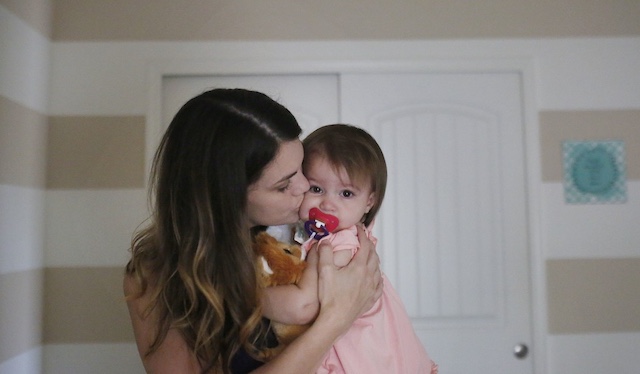
 Things may be somewhat different now, but when I was a kid the school system required us to read books; a lot of books. We had the typical text books that taught us subjects such as history, science, and math. Then, once we got past the basics in learning how to read and write, we were given reading assignments, a specific number of chapters from a book assigned by the teacher; which we would then discuss the following day in class. Finally, there were the book reports.
 What comes after victory is not freedom at all. It’s control. Control of institutions. Control of speech. Control of memory. Control of what is allowed to be said out loud without consequences.
 Do you think that God cares about what you look like? Do you think He cares if you are rich/poor; if you are a Democrat or a Republican; if you are a famous actor or just some working stiff trying to make ends meet? All God cares about is what is in your heart; whether or not you believe what John 3:16 tells us, “For God so loved the world, that he gave his only begotten Son, that whosoever believeth in him should not perish, but have everlasting life.”
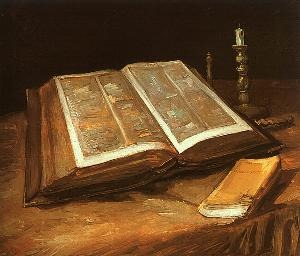 I’m guessing that many of you have heard the saying, Thinking outside the box. For those that haven’t, what it basically means is: to explore ideas that are creative and unusual and that are not limited or controlled by rules or tradition. Those who think outside the box are not limited to, or confined by, traditional thoughts and beliefs. What I find ironic about thinking outside the box is the fact that those who are able to do it effortlessly are often praised and admired; except when it comes to politics and government. I am of the firm belief that the biggest obstacle that prevents us from solving the problems we face as a nation is our refusal to think outside the box.
 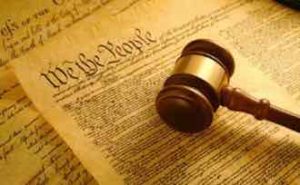 When the Framers drafted the Constitution in 1787, the first three words were “We the People.” The rest of the document repeatedly refers to “the people,” a term clearly denoting citizens of the United States, those whose rights the Constitution addressed. Additionally, the Tenth Amendment to the Bill of Rights identifies the states and “the people” as the repositories of plenary power, in contrast to the limited powers delegated to the federal government.