
Students can’t learn when the instructor doesn’t show up
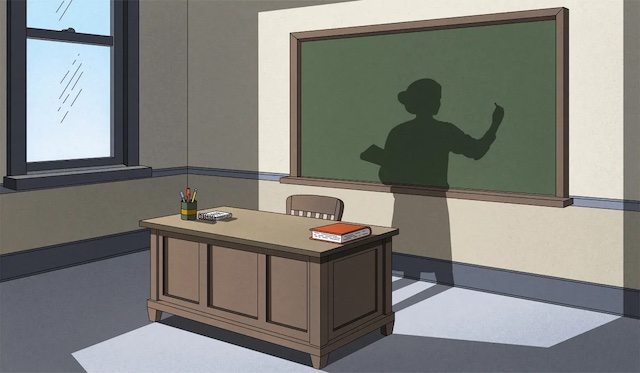 Children cannot learn if they’re not in school. Yet rarely do we think about the corollary — that children don’t learn much if their teacher isn’t in the classroom.
The issue of student attendance generally attracts more attention because it is carefully monitored and reported as part of states’ education accountability dashboards. In contrast, far less is known about teacher attendance. Despite numerous indicators showing that student outcomes have fallen off a cliff since the pandemic, few journalists or researchers have paused to consider whether and how the pandemic has affected teacher attendance. Unfortunately, the federal government stopped collecting this information the same year that classrooms emptied out, leaving states and independent researchers to fill the gap.
In the meantime, think tanks have stepped into the data breach, and what they have found about the state of student as well as teacher attendance is sobering. Beginning with the herculean work of the American Enterprise Institute’s Nat Malkus, who has assembled many disparate sources, we now understand that the school disruptions during the pandemic dramatically increased student absenteeism. Despite improvements in recent years, students continue to miss school at higher rates than they did before the pandemic.
Just last year, the Brookings Institution collected teacher attendance data from four states and found evidence that absenteeism increased significantly after the pandemic — with important differences across states (South Carolina apparently bucked the trend) and within them (in Nevada, the increase was driven only by Clark County, home to Las Vegas). We have worked to collect more informative records from a fifth state, Ohio. Our Ohio data are unique in that we can observe the attendance rates of individual teachers and track them over time, even when teachers move between schools and across school districts. Overall, these data paint an alarming picture of the state of public education in the Buckeye State. Consistent with the trends in other places, they show that teacher attendance fell significantly during the 2021–22 school year, the first academic year in which all districts had resumed in-person learning. (Interestingly, none of the states experienced decreases the year before, when quarantines and other disruptions were most common and districts used different instructional modalities.)
But even the 2021–22 dip in teacher attendance proved to be a temporary blip in most communities, with one important exception. In large urban school districts, the initial rise in teacher absenteeism was steeper and persisted at least through the end of spring 2025, even as attendance recovered in rural and suburban areas. Last year, the average teacher in an urban Ohio district missed an additional 2.5 days of school compared with before the pandemic.
Jonathan Kozol’s book Savage Inequalities offers a historical parallel that helps put this figure in context. Published in 1991, the book became a national cause célèbre among Great Society liberals eager to connect educational failures to the resource disparities across America’s school districts. In one of the book’s most memorable passages, describing the terrible state of Chicago’s public schools, Kozol noted that 5,700 students in 190 classrooms in that city came to school on an average day to find that they had no teacher. Our estimates suggest that, across Ohio’s eight large urban districts — which today collectively employ a fraction of the teachers Chicago did during the years covered by Kozol’s book — 160 additional classrooms go unstaffed daily because of the increase in teacher absenteeism since the pandemic. In other words, the issue today is even more serious.
Unlike in Kozol’s account, however, these teacher attendance issues cannot be blamed on a lack of funding. Spending in these districts last school year was 40 percent higher than it was five years ago and exceeded the state average by $5,000 per student. What’s more, nationwide, the resource inequities on which Kozol shined a light have been remedied.
Nor does the increase in teacher absenteeism appear to be due to lingering health impacts of the pandemic (such as the chronic condition known as long Covid) that may have affected urban educators disproportionately. Ohio data show that teachers who worked in urban districts but later found teaching jobs elsewhere have seen their attendance improve significantly. By contrast, educators who were employed outside urban schools during the pandemic but moved to such positions afterward have seen their attendance subsequently decline. We see similar patterns for brand-new teachers who entered the profession after the pandemic. Those who began their first jobs in urban schools recorded lower attendance than those who found teaching positions in other parts of the state. This had not been the case in the years before the pandemic.
There are two possible explanations for these trends. The first is that prolonged school closures — which in Ohio, like most places, happened almost exclusively in urban districts — have reshaped norms. Taking a day off simply carries less stigma than it did before. The second is that teaching has become much harder in urban districts, contributing to burnout and absenteeism. In surveys and focus groups, teachers have reported that students’ mental health has worsened significantly, and many say that student behavior has deteriorated. Indeed, more teachers expect student discipline to be the greatest challenge to their job this coming school year.
Well-meaning policy changes may be making the problem worse. Increased sensitivity to racial disparities — ignited by the racial reckoning in the summer of 2020 — has prompted many school systems to shift away from punitive forms of student discipline toward alternative approaches rooted in “restorative justice.” These efforts may be laudable in theory — after all, an absence that is due to a suspension disrupts learning as much as truancy does — but they can backfire if keeping misbehaving kids in class causes their teachers to stay home. The data do not allow us to discern how much of the increase in teacher absenteeism in urban areas is due to deteriorating norms as opposed to deteriorating student behaviors, but we suspect that both play an important role.
Regardless of the cause, improving teacher attendance is more important than ever. Older research found clear evidence that every day a teacher is out of the classroom harms student achievement. There is strong reason to believe that the negative effects are even larger today. In the aftermath of the pandemic, school districts saw the number of substitute teachers plunge. As a result, many more teacher absences went uncovered, a trend that continued at least through 2023. A class without a regular teacher affects students, but a class without a teacher or a substitute can disrupt the entire school. Partly to address these shortages, states lowered the educational requirements and qualifications demanded of substitute teachers. Although students in the past probably didn’t learn much on days when their teacher was out, they are almost certainly learning even less on such days now.
Urban school districts suffered some of the largest learning losses during the pandemic, and increased teacher absenteeism now stands in the way of their academic recovery. Unfortunately, policymakers are not doing enough to address it, in part because few seem to understand the scale of the problem.
We have several ideas for what state and local leaders can do to begin to change that.
First, school districts should review their union contracts to ensure that they don’t perversely encourage teachers to take time off. Better yet, they should consider incentivizing attendance by, for example, using financial bonuses linked to unused sick days.
Second, and more important, policymakers should reverse the recent retreat from accountability. In recent years, the National Council on Teacher Quality has reported that most states have abandoned robust teacher evaluation systems that tie performance ratings to objective and not easily gameable measures of student learning.
Finally, it is widely known that teacher absenteeism tends to spike on Mondays and Fridays. (Last year, Columbus City Schools, Ohio’s largest district, intentionally scheduled its professional development sessions on Tuesdays and Wednesdays to maximize the number of teachers in attendance.) School officials must vigorously monitor repeat absences on these days and impose consequences for the abuse of sick leave, which can serve as an effective deterrent.
 Regardless of what sets of policies school districts ultimately adopt, the first step is for them to simply acknowledge the scale of the problem. The 1986 comedy Ferris Bueller’s Day Off follows a high school student who pretends to be sick to skip school and spend a day on the town with his friends. We see scenes from a high school economics class where a teacher (played by Ben Stein) calls out the missing student’s name while taking attendance (“Bueller? Bueller?”) and drones on about the harms caused by the Smoot–Hawley tariffs during the Great Depression. If the movie were to be remade today, much of it could remain the same (including, perhaps, a discussion of the economic harms of tariffs). One change to reflect the times, however, would be to have the economics teacher play hooky just like the students. No one would be there to call the roll.
Editor’s NOTE: The school, from which Ferris (Matthew Broderick) bunks off to spend a day freewheeling around the big city, is Glenbrook North High School, 2300 Shermer Road, Northbrook, Illinois – (which was MY school), a northern suburb of Chicago on the Metra rail North Line from Chicago’s Union Station. In addition, the opening and closing of the film, The Breakfast Club was filmed at Glenbrook.
OH – and by the way… My wife retired from teaching High School 15 years ago – and as of this date – is still teaching as a full time substitute teacher. ~ Jeffrey Bennett, Editor
Written by Michael Hartney and Vladimir Kogan for National Review ~ August 20, 2026