The real question facing America is not whether we can quote scripture, but whether we know it, understand it, and live it.
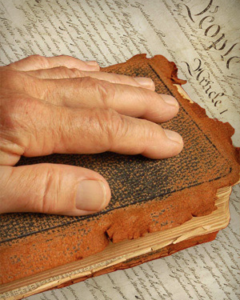 As Americans look ahead to the 250th anniversary of our founding, there is a renewed emphasis on returning to the principles that shaped this nation. One encouraging sign is the growing participation in efforts like this week’s “America Reads the Bible” — a public acknowledgment that Scripture has been, and must remain, foundational to our national identity.
I had the privilege of participating, alongside several others from the American Family Association and American Family Radio, joining voices across the country to read the Word of God aloud. It was a meaningful reminder of something our culture too often forgets: Scripture is not merely a historical artifact. It is living truth.
It is also encouraging to see leaders — including President Donald Trump and other elected officials — publicly acknowledge the importance of the Bible. In a culture increasingly hostile to faith, even symbolic gestures toward Scripture matter.
But let’s be clear: reading the Bible publicly — even by presidents and politicians — is not enough.
The real question facing America is not whether we can quote scripture, but whether we know it, understand it, and live it.
Because right now, we don’t.
As Troy Miller, president of National Religious Broadcasters (NRB), recently argued in a powerful piece for WORLD, America is facing not just moral decline, but something deeper and more dangerous: biblical illiteracy.
As Miller writes, this is not a marginal issue. It is a civilizational crisis.
When a people lose familiarity with scripture, they don’t just lose religious knowledge — they lose the very framework that makes concepts like truth, justice, liberty, and responsibility intelligible.
The moral vocabulary that once undergirded our constitutional republic begins to erode. Rights become detached from responsibilities. Freedom becomes untethered from virtue.
And what fills the void? Confusion. Sentiment. Feelings. Opinion. Ideology.
We are seeing the results of this all around us.
Public figures invoke God casually, often reducing scripture to little more than inspirational slogans or political props. Cultural influencers quote verses with confidence — but without context, discipline, or theological grounding. Even within the church, many believers lack the biblical literacy necessary to discern truth from error.
As Miller rightly observes, the problem is no longer simply that scripture is rejected — it is that scripture is no longer known well enough to be understood, applied, or even meaningfully debated.
That should alarm every Christian — and every American who cares about the future of this country.
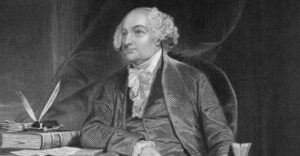
John Adams, Patriot
Because the American experiment was never designed to function apart from a morally grounded, biblically informed citizenry. John Adams famously warned that our Constitution was made “only for a moral and religious people.” Without that foundation, self-government becomes unsustainable.
Which brings us back to “America Reads the Bible.”
It’s a good start. It’s even an important start.
But it cannot be the end.
Reading scripture publicly is not the same as internalizing it. Quoting verses is not the same as obeying them. And invoking God is not the same as submitting to His authority.
We cannot treat the Bible as what Miller calls “civil religion” or “partisan ornament” — a tool to decorate our politics or validate our preferences.
Scripture is not a prop or fortune cookie wisdom. It is the very Word of God.
And if we truly believe that, then it must shape how we think, how we act, how we vote, how we govern, and how we live.
That requires something far more demanding than a one-time reading event.
It requires discipleship.
It requires biblical literacy.
It requires churches that take seriously their responsibility not just to attract crowds, but to teach truth. It requires pastors who prioritize doctrine over popularity. It requires Christian media — yes, including all of us — to handle scripture with care, context, and conviction.
And it requires individual believers to stop outsourcing their spiritual growth and instead commit to studying the Word of God deeply and consistently.
The Great Commission does not end with “go.” It continues with “teach.”
Somewhere along the way, much of the modern church lost sight of that second half.
We became comfortable with surface-level faith — soundbites instead of substance, inspiration instead of instruction. We traded theological depth for cultural relevance. And now we are reaping the consequences.
The answer is not more performative Christianity.
The answer is a return to scripture — fully, faithfully, and seriously.
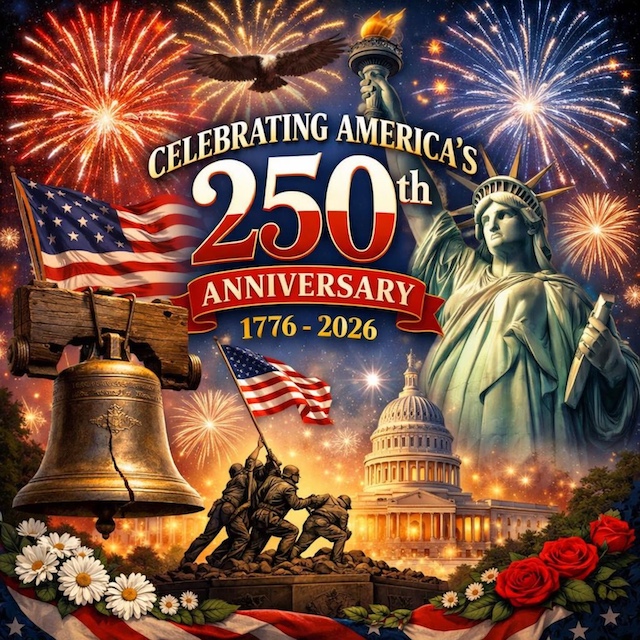 That is the challenge before us as we approach America 250.
This anniversary should not simply be a celebration of our past. It should be a moment of national reflection: Are we still a people capable of sustaining the freedoms we so proudly inherit?
Because if we have lost the biblical foundation that gave those freedoms meaning, then we are not just drifting — we are unraveling.
There is still time to turn back.
But that turn will not come through symbolic gestures alone. It will come through repentance, renewal, and a recommitment to God’s Word — not just as something we read, but as something we live.
“America Reads the Bible” is a good headline.
“America Lives the Bible” — that’s the goal!
Written by Jenna Ellis for American Family News ~ April 24, 2026
~ the Author ~
 Jenna Ellis served as the senior legal adviser and personal counsel to the 45th president of the United States. She hosts “Jenna Ellis in the Morning” weekday mornings on American Family Radio, as well as the podcast “On Demand with Jenna Ellis,” providing valuable commentary on the issues of the day from both a biblical and constitutional perspective. She is the author of “The Legal Basis for a Moral Constitution.”