Enemies Really Do Serve a Crucial Purpose… but there are also significant problems.
 First, let’s agree on the definition of ‘enemy’.
An enemy is an individual, group, or nation that actively opposes, hates, or seeks to harm, injure, or overthrow another, or that seeks to injure, overthrow, or confound an opponent. It denotes a state of profound hostility, threats, or conflicts, ranging from personal adversaries to opposing military forces in war. Common synonyms include foe, adversary, antagonist, opponent, and rival. An enemy intends to cause harm, unlike accidental hindrance, and usually involves strong emotions such as hatred, fear, or jealousy.
We hate enemies because our brains are hardwired with ancient survival mechanisms that protect our “tribe” from perceived threats.
Although modern life is safer, our “Stone Age” brains still rely on these primitive instincts to reduce a complex world to a clear “us vs. them” dichotomy.
The capacity for anger or fear is biological; hatred is a learned response that can be unlearned through empathy, education, and conscious effort. (Underline effort) The feeling of hate is a natural signal that something is wrong; staying in that state often causes more damage to the hater than the hated. (Underline Wrong) I emphasize these two words, Effort and Wrong, because this is a major problem for Americans.
While having enemies is often seen as negative, they can serve significant psychological, social, and personal functions. Humans often use opposition to define themselves, find purpose, and create a sense of control in a chaotic world. Enemies are often considered “necessary” because they provide critical psychological, social, and developmental functions that help define who we are and what we value.
Enemies can be useful tools for growth and identity, but overreliance on them can lead to a “small” life defined by what you hate rather than what you love. Ask yourself whether that rings true in America. Are we so focused on hate that we’ve forgotten the republic’s basic tenets: Life, Liberty, and the Pursuit of Happiness?
Hate is a significant and growing problem in the United States, affecting public health, safety, and political stability. Recent data from 2024 and 2025 indicate that hate-motivated incidents have reached some of their highest levels in decades. As of May 2026, national data show a mixed picture of hate crime trends. While preliminary 2025 FBI data suggest an overall 11% decrease in total reported incidents across the U.S., specific marginalized communities are experiencing record-high spikes in targeted violence.
Research indicates a strong link between media, both traditional and social, and the rise of hate-motivated incidents. In 2026, researchers continue to find that the way news is framed and how algorithms function play significant roles in shaping public attitudes and behaviors. Users are often presented with content that aligns with their existing views (homophily), the tendency to form strong social connections with people who share one’s defining characteristics, such as age, gender, ethnicity, socioeconomic status, and personal beliefs. This creates environments where prejudices go unchallenged and where radicalization frequently occurs.
My most recent post, “Pernicious Problem in Politics,” focused on leadership styles and how what’s said directly impacts our world, particularly in America. I argue that we need to take a personal role in the leadership of this Republic, especially politically, and suggest that taking an active role in our personal lives is the perfect place to start. Understanding the world around us is crucial, as is recognizing that conflict is a catalyst for growth. We don’t learn from being lucky; we learn from mistakes and failure. Enemies are what kick us in the ass to get us up and going. They remind us that life is about mitigating risks and benefiting from failure.
Samuel Levenson quips, “We must learn from others’ mistakes. You can’t possibly make them all yourself.”
Bill Gates reminds us, “It’s fine to celebrate success, but it’s more important to learn from failure.”
James Joyce said, “Mistakes are portals of discovery.”
You’re wondering how this relates to enemies, right?
America has enemies for a combination of historical, ideological, and geopolitical reasons. As the world’s leading superpower, our actions – whether intended to be helpful or self-serving – often clash with the interests of other nations or groups. They view our decisions as mistakes and challenges to their sovereignty, and, based on their political and religious ideologies, often treat these decisions as exploitable opportunities. The same is true for America’s internal rivalries. The two major parties are in a pitched battle for control and use the other as fodder for the fight.
Enemies provide a sense of order in a chaotic world. By focusing on a specific adversary, people can simplify complex problems and feel more in control. As you consider this statement, think about how partisan politicians and their minions use each other and the events they fabricate to distract us from their shameful decisions and resolutions. It’s obfuscation, the trick a magician uses to divert your gaze while performing ‘sleight-of-hand’ tricks. Thus… Enemies become our focus.
Groups often find unity by rallying against a shared threat. This “common enemy” effect can bridge internal divides and strengthen loyalty within a community, or even an entire country. The World Wars and other military conflicts are a salient example. The World Wars, particularly World War II (that’s two, not eleven – a clarification for Representative Ilhan Omar, who called it WW Eleven), largely united America by forcing the nation out of isolationism, boosting the economy, and fostering a shared national purpose against common enemies. While World War I saw significant dissent, World War II created a stronger national identity as a “superpower” after Pearl Harbor. It also led to the most reprehensible act of the 20th Century… The Japanese-American Internment.
The incarceration of over 120,000 Japanese Americans and their descendants during WWII, President Franklin D. Roosevelt’s Executive Order 9066 on February 19, 1942, primarily targeted those living on the West Coast; roughly two-thirds were U.S. citizens. A later investigation concluded the policy was driven by “race prejudice, war hysteria, and a failure of political leadership”.

Consider the effects of the 9/11 attacks on America as an example. Not only did it unify the country, but we also jumped to dangerous conclusions. Our instant hatred of the Muslim community was the result. Historically, a direct foreign attack like Pearl Harbor or 9/11 has been the most effective way to unify a divided nation. But research suggests that families with a history of wartime victimization often experience a persistent decline in trust in the state that lasts for generations. The immediate aftermath saw a surge in national unity; the long-term legacy has been marked by increased societal division, expanded government surveillance, and persistent cycles of hate.
The pro-Palestinian demonstrations illustrate how contrived data research can arise from government agencies, academic institutions, and independent journalists. However, on high-stakes topics like political violence or the Gaza conflict, “truth” is often heavily contested, and misinformation is a significant challenge for all sides. It’s not necessarily the data itself but how it is presented that pushes a specific narrative. The data is often decontextualized to reinforce talking points and innuendos, skewed toward a particular perspective, all in support of hateful and divisive rhetoric.
No list of enemies would be complete without the Wuhan Virus, aka COVID-19. This single gimmick concentrated government control of the nation under one man, Dr. Anthony Fauci, director of the National Institute of Allergy and Infectious Diseases (NIAID), and brought this country and the world to its knees. We will never know the extent of his culpability, but the allegations include having the virus created in a lab in Wuhan, China, hence the name, and acting in concert with the Democrat-Socialist party to discredit the sitting President, DJ Trump #45, sink any chances of reelection, and usurp power from the government. Fauci became King!

The virus strain was obtained from the Wuhan lab experts believe caused the Covid-19 pandemic
The Wuhan Virus destroyed the US economy, costing $14 trillion in US losses, with GDP falling 31.4% annualized, eliminating 22 million jobs within 2 months, causing 1.5 million total deaths, and crippling the entire supply chain for several years.
Global impacts include 255 million jobs, up to 21 million deaths, and $22 trillion in losses.
I use the word allegedly because the truth will remain hidden from our view for centuries to protect the guilty. It’s important to recognize that this single stroke of genius did its job better than any other contrived adversary in our history. It put the entire planet under the control of one man who worked for the incumbent partisan party and did what no one has ever done. He devastated the entire planet with a tiny virus.
– For the curious among you, COVID-19 stands for: CO for Corona, V for Virus, and D for Disease. 19 represents the year it was discovered, 2019. COVID-19 is the standard non-stigmatizing label for the disease.
* The comments about Wuhan Virus aka Covid-19 above are my opinion based on what I see and can find… It is my speculation; I have only the available information from which to draw my theory… but if the shoe fits…
Only the Black Death, 1347 – 1351, killed more people; between 25 and 60 million in Europe and another 75 to 200 million across Eurasia, approximately 55% of Earth’s population. And… just like COVID, the Black Death reappears from time to time.
Regaining trust after a significant national or social loss is possible, but research and history suggest it is a slow, multi-generational process rather than a quick fix. While external threats like the World Wars provided a “shortcut” to unity, long-term stability requires a more deliberate, ground-up approach. However, the continual vilification of other countries, partisan parties, or individuals keeps this animosity alive. Relying on a common enemy creates “fragile” unity. Sustainable trust is built by rallying around a shared dream or goals, such as life, liberty, and the pursuit of happiness, rather than by rallying against an adversary. The best focus for unification is a set of core values, with 75% of this country rating respect, family, and freedom as the most important core values.
Unfortunately, perceptions of extreme division often outweigh actual policy differences. When people believe their values are not shared, we naturally withhold social trust. Trust in the U.S. is often tied to the competence and integrity of its civil service and federal institutions. Rebuilding this trust requires consistent, reliable actions that align words with results over many years. Yet, as we’re constantly reminded, partisan political actions are not unifying but increasingly divisive.
The notion of ‘divide and conquer’ comes to mind.
– The term divide and conquer (or divide and rule) primarily refers to a strategy for gaining or maintaining power by splitting a large, unified group of opponents into smaller, weaker factions that are easier to control.
America’s need for enemies is purely financial. Enemies and rivals can offer a surprising financial edge by acting as “uninvited consultants” who compel you to sharpen your skills, innovate, and protect your assets. Although they may not intend to help, their presence creates a high-pressure environment that often yields greater economic rewards.
In business, rivals (commercial “enemies”) are the primary drivers of financial growth and market efficiency.
Adversaries often highlight your weaknesses more clearly than friends would.
Having a “nemesis” can provide the emotional energy needed to achieve difficult financial goals.
At a national level, enemies often serve as a powerful tool for maintaining internal order and driving progress. While direct conflict is destructive, the existence of an adversary can provide several strategic benefits to a country.
The “common enemy” effect is a primary reason countries find adversaries useful. When a nation faces an external threat, internal divisions often take a backseat to collective survival. Rivalry between nations is a massive catalyst for technological and economic breakthroughs. Counterintuitively, having a clear “enemy” can make a world that feels chaotic seem more predictable. In leadership, an enemy can be a strategic asset for governance.
An enemy is often the “whetstone” upon which a nation’s identity and resolve are sharpened. While peace is the ultimate goal, the absence of an external threat sometimes leads a country to focus its competitive energy inward, potentially increasing domestic friction.
Do you know what’s really scary?
When there is no enemy, we invent one!
That’s right… We invent a new enemy… or… we resurrect an old one…
Here are a few from American history.
– 1800 – The Savage American Indian – justified westward expansion and the seizure of land. The U.S. government and “Yellow Journalism” transformed Indigenous peoples into monstrous obstacles to civilization. This narrative justified the Indian Removal Act and the systematic violence of the “Indian Wars.”
– 1880s through 1920s – The Anarchist Laborer – During the rise of labor unions, industrial leaders and the state rebranded workers fighting for basic rights as foreign terrorists. They rationalized the violent suppression of strikes (e.g., the Haymarket Affair) and the mass deportations of the First Red Scare.
– Late 1800s – “Yellow Peril” – Asian immigrants were systematically demonized to protect white labor interests and later to justify wartime incarceration. This rhetoric was used to pass the Chinese Exclusion Act (1882) and, eventually, Executive Order 9066 for Japanese American internment camps (referenced above).
– 1990s – The Super-Predator – academics and politicians “invented” a specific type of enemy to justify aggressive “tough on crime” legislation. This led to the passage of the 1994 Crime Bill, resulting in record-breaking incarceration rates and the trial of children as adults.
– Post-9/11 – The Neighbor-Terrorist Narrative – Rather than targeting specific suspects, the government “invented” a world in which any neighbor could be a sleeper agent. This narrative was used to justify mass data collection under the USA PATRIOT Act, which allowed the FBI to issue “National Security Letters” without a judge’s approval to collect personal records on thousands of innocent Americans.
– Post 9/11 – The Subversive Activist – Surveillance powers originally meant for foreign terrorists were quickly turned toward American citizens involved in domestic social movements. These increased surveillance powers were quickly turned toward American citizens involved in domestic social movements.
– Recently – The “Un-American” Muslim Community – A specific narrative was constructed portraying Muslim-American communities as uniquely prone to violence. This narrative was used to normalize suspicionless surveillance, in which people are watched based on their identity rather than on evidence of a crime.
By “inventing” the idea that anyone could be a threat, the government shifted the standard for surveillance from “probable cause” to “preventive interest,” fundamentally altering the relationship between the American state and its citizens.
I could add several more, but I think you get the idea. When we don’t have an enemy and need one to rationalize or justify a narrative, we invent one tailored to that purpose.
As for resurrecting old enemies, look no further than the partisan political battle royal in Congress today. Enemies from years past surface with a vengeance. Nazi, Fascist, Communist, Cheeto-Benito, Mango Mussolini, Tangerine Toddler, Short-fingered Vulgarian, Trumpf, The Lyin’ King, President Felon, Der Orange Führer, Vladdy’s Boy, The Manchurian Cantaloupe, and many, many others, all intended to demonize the President, successfully making him the enemy. The consequences of this notoriety are the three assassination attempts and the general partisan hatred created, but then, that is the idea, right? To create an ideological and emotional focal point, certainly not a friend, most definitely a foe.
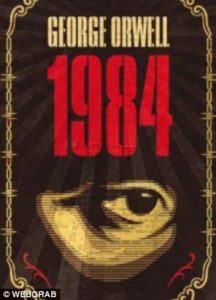 If I recall correctly, in 1948, George Orwell wrote a dystopian novel titled “Nineteen Eighty-Four” that warns against the dangers of totalitarianism and unchecked government power. Set in a future where every aspect of life is monitored, it follows a man’s doomed attempt to reclaim his individual freedom. The world is in a state of perpetual war, and society is strictly controlled by The Party, led by the godlike figurehead Big Brother. The protagonist, Winston Smith, is a low-ranking Party member who works at the Ministry of Truth, where he literally rewrites history to match the Party’s current narrative. By the way… it was fiction, but painfully close to modern reality… don’t you think?
Here are a few of the more recent titles:
* “A Tale of Two Cities” by Charles Dickens (1859)
– Portrays how the French Revolution eventually “invented” enemies among its own people to keep the guillotine running.
* “1984” by George Orwell (1949)
– The enemy’s existence is less important than the rage it stirs.
* “Brave New World” by Aldous Huxley (1932)
– Outsiders are labeled as savages to reinforce “civilized” norms.
* “Fahrenheit 451” by Ray Bradbury (1953)
– The “enemy” is intellectualism and the books themselves, and thinkers are dangerous to public happiness.
* “The Handmaid’s Tale” by Margaret Atwood (1985)
– This one uses religious and political “others” to justify a totalitarian coup, thereby enabling the regime to maintain control by identifying constant internal threats.
* “The Iron Heel” by Jack London (1985)
– It’s about a corporate oligarchy and shows how the “Oligarchy” creates enemies to destroy labor movements. I wonder if this is one of Bernie Sanders personal favorites…
* “The Plot Against America” by Philip Roth (2004)
– An alternate history in which populism turns neighbors into national enemies, focusing on the rapid social shift when propaganda labels a group “un-American.”
Do any of these synopses remind you of our modern times? My God, I hope so… These are warnings about what these authors envisioned for this world’s future, or accounts of what was present under their noses.
It seems obvious to me that the idea of the “Invented Enemy” has been popular in literature for at least the past few centuries, but humans have likely been “inventing” enemies, in the sense of designating other groups as hostile “others,” for at least 10,000 to 14,000 years, coinciding with the rise of settled societies. There’s an interesting timeline associated with this, but I won’t bore you with it. It’s been a popular method of control for at least 2 million years. Maybe that’s why we don’t recognize the tell-tale signs – we’re accustomed to them. Psychologically, humans are hardwired for “in-group/out-group” bias, which served as an ancient survival mechanism, and those who would dominate us know how best to use this tool.
Recommendation:
I encourage all of you to read at least one of the books listed above. I also recommend that you challenge everything you hear, read, and see in the media… even my writings, and especially what you see on the internet. As of mid-2025, roughly 35% of newly published websites are AI-generated or AI-assisted. Some experts predict that up to 90% of all online content could be synthetically generated by the end of 2026, which may further degrade overall factual accuracy. Estimates suggest that 62% of internet information is unreliable, and they strongly recommend rigorous fact-checking and substantiation before you consider the information valid. The following data points are meant to open your eyes and minds to a minuscule part of the issues facing us.
Consumer Confidence Statistics:
* Consumer Perception: Americans believe only 41% of the content they consume online is “totally accurate” and fact-based.
* Unreliable Data: One 2025 estimate suggests that roughly 62% of all data on the internet is “unreliable”.
* Content Creator Integrity: A landmark UNESCO survey found that 62% of digital influencers do not fact-check before sharing information with their followers.
* Health Accuracy: In professional meta-analyses of online health and nutrition information, approximately 49% of websites were rated as having “low accuracy” or poor quality.
* Social Media Perception: Up to 82% of users frequently encounter health information on social platforms that they suspect is false or misleading.
* Growing Skepticism: Roughly 59% of global users are worried about their ability to distinguish what is real and what is fake in online news.
* AI Distrust: 70% of people admitted they struggle to trust online information because they cannot tell whether it was generated by AI.
* The “Liar’s Dividend“: High-quality information is becoming harder to find; searching to verify a claim can actually increase the likelihood of believing a lie by 20% if you end up in “data voids” filled with low-quality results.
This lack of confidence is the strongest evidence for my premise that our blind, unquestioning belief in invented enemies, the perpetual lies, has significantly eroded our faith in the systems we depend on for vital information. The enemy of truth is the lie, and it has become our nemesis. Who and what you believe is entirely your choice, but before you jump into that well, make damned sure you have a good idea that there’s a bottom and a way out.
We should all be extremely proud of our race and, especially, of our government for using fear of an invented enemy so prolifically and professionally. They have not only mastered this art to perfection, using it with competence and proficiency so that it’s difficult to recognize where reality ends and the lies begin, but they’ve also instilled it in our society; think brainwashed and indoctrinated.
As a special shout-out, I salute the mainstream media for their collusion, collaboration, and complicity in this endeavor to bamboozle not only America but the entire world.
We all need enemies, at least for now, or until we’re all self-actualized and the best versions of ourselves, individually and as a nation.
~
AI: Artificial Intelligence is a field of computer science focused on developing systems and software capable of performing tasks that typically require human intelligence. These tasks include learning from experience, recognizing patterns, solving complex problems, and making decisions. It’s a way of making computers “think” more like humans. Instead of just following a fixed list of rules, AI learns from data to make its own decisions. AI guesses the best answer based on experience (like a student). It searches the entire internet for clues to the question asked, generally 10 trillion words, then sorts its findings to answer the question.
Unlike traditional software programs, which follow a rigid “recipe,” AI systems use algorithms, step-by-step instructions for completing a task or solving a problem, to analyze vast amounts of data and learn to respond to new situations. Every program contains algorithms, but not every algorithm becomes a program. The best analogy is that the algorithm is the recipe and the program is the dish.
AI can make mistakes, but AI typically doesn’t “know” it made a mistake in the way a human feels regret or realizes an error after the fact. Instead, it identifies failures through mathematical feedback loops, external human correction, or pre-programmed validation checks. It’s very complicated, but it learns from its mistakes, unlike most humans.
Now we have a machine that’s learning to lie using our lies as examples and background. AI only knows what we let it know… for now…
It’s a Brave New World… Aldous Huxley (1932)
Well Done All!

May 17, 2026
~ the Author ~
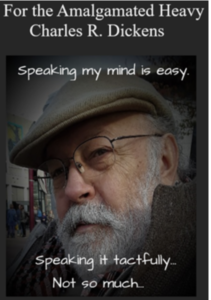 Charles R. Dickens Was Born in 1951, Is a Veteran of the Vietnam War, for Which He Volunteered, and the Great-Great Grandson of the Noted Author, Whose Name He Shares.
He Is a Fiercely Proud American, Who Still Believes This Is the Greatest Country on the Planet, With Which We’ve Lost Control and Certainly Our Direction. He Grew Up in Moderate Financial Surrounding; We’re Not Rich by Any Stretch, but Didn’t Go Hungry – His Incredibly Hard Working Father Saw to That. As Most From That Era, He Learned About Life From His Father, Whose Story Would Take Too Long to Tell, Other Than to Say That, He Is Also a Fiercely Proud American; A WWII and Korean War, Veteran Marine.
Charlie Was Educated in the Parochial System Which, Demanded That You Actually Learn Something, and Have Capability to Retain It Before You Advance. He Attended Several Universities in Pursuit of a Bachelor’s Degree, and Chased the Goose Further to a Master’s, and Has Retained Some Very Definite Ideas About Education in This Country.
in Addition, Charlie Is a Retired Blues Guitar and Vocalist – a Musician. This Was His Therapy Career. Nothing Brings Him as Much Joy as Playing Music, and He Wishes That He Could Make a Living at It… but Alas… Life Goes on!
Heads I win tails you lose. The Anglo is pretty good at inventing enemies.
If only they hadn’t rescued the man on the Mayflower who fell overboard not far from Americas shore the Bush family would not have existed. I’m sure there are other sociopaths that would have taken their place though.