
Drivers Are Noticing Higher Gas Prices in Colorado: “$4 to $5 a gallon? Yeah, that’s not good!“
As National Debt Nears $39 Trillion and Trump Promises to Balance Budget, Americans Spend More on Interest Payments Than on Defense
 As of Friday, the national debt had surpassed $38.7 trillion, according to the Treasury Department – or more than $113,000 per American. It has grown at a pace of nearly $77,000 per second over the past year, according to a tracker maintained by Republicans on Congress’s Joint Economic Committee.
“We’re $39 trillion in debt,” Rep. Michael Baumgartner said in an interview Feb. 18. “We’re running annual 20% budget deficits.”
Since the day Trump took office in 2017, the national debt has nearly doubled from just under $20 trillion to more than $38.7 trillion… (Continue to full article)
Gas Jumps 26.8 Cents In A Week, Trump Says, If They Rise, They Rise!
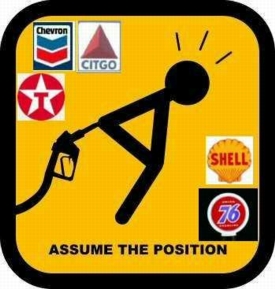 The national average price for a gallon of gasoline has soared to $3.251, up from $2.997 on Monday. Look a little further back, and the jump is even more noticeable. Prices have risen 26.8 cents over the past week.
That’s an increase of 9 percent and AAA implied this is the largest increase since the war in Ukraine began in March of 2022. This comes as even more price increases are expected as the war in Iran rages on and refineries will begin switching over to more expensive summer-blend gasoline.
In Arizona it is now in exces of $.20 per gallon of regular… (Continue to full article)
Dow Plunges More Than 1,000 Points Amid Concerns About Surging Oil
 Stocks tumbled Thursday, with the Dow Jones Industrial Average shedding almost 800 points as oil prices jumped amid the war with Iran. Higher energy prices are sparking concerns on Wall Street that they could reignite U.S. inflation.
The Dow tumbled 785 points, or 1.6%, on Thursday, after briefly dropping more than 1,000 points. The broad-based S&P 500 shed 0.6%, while the tech-heavy Nasdaq composite declined 0.3%.
Oil prices rose after Iran launched a new wave of attacks against Israel, American bases and countries around the region. The war’s escalations are raising worries about how long disruptions to the production and transport of oil and natural gas in the region could last.
A barrel of Brent crude, the international standard, rose 4.2% to $84.75. That’s up from close to $70 late last week. A barrel of benchmark U.S. crude climbed 6.9% to $79.80… (Continue to full article)
Nobel Economist Paul Krugman Says the Iran War Could Be the ‘Straw That Breaks the Camel’s Back‘ for a Fragile US Economy
 The Iran war upended markets this week, and economist Paul Krugman thinks the effects could ultimately be much more far-reaching.
The Nobel Prize winner hasn’t been too optimistic about the US economy recently, largely due to the impacts he sees from President Donald Trump’s tariffs. Yet, as the military conflict escalates, he sees severe consequences looming for the US economy.
Krugman highlighted several pressing factors that have kept uncertainty high in a recent Substack post, but also laid out why the war may be accelerating the economy’s decline.
“There are many stresses on our economy, and this could be the straw that breaks the camel’s back — a straw that becomes heavier the longer the war goes on… (Continue to full article)
Trump’s Loss of $1.7 Trillion in Tariff Revenue Will Send the National Debt to $58 Trillion by 2036
 A landmark Supreme Court ruling against President Trump’s tariffs has cost the federal government an estimated $1.7 trillion in projected revenue through 2036, according to a new analysis by the Committee for a Responsible Federal Budget (CRFB), setting the United States on a course toward a national debt of $58 trillion within the next decade if the country continues its current rate of spending.
The nonpartisan fiscal watchdog, which released its findings on Tuesday, found that the court’s decision striking down tariffs imposed under the International Emergency Economic Powers Act (IEEPA) has altered the country’s fiscal trajectory in the direction of larger debts and deficits.
Without that revenue, CRFB projects the national debt will climb to 125% of GDP—or roughly $58 trillion—by fiscal year 2036, compared to a baseline projection of $56 trillion, or 120% of GDP, that assumed the IEEPA tariffs would remain in force. “Deficits in that scenario will rise to 7.1% of GDP, or $3.3 trillion,” CRFB warned, versus $3.1 trillion under the original baseline… (Continue to full article)
In West Ky, on Thursday gas was up 30 cents from last Sat. Today it was up 60 cents from a week ago, But hey, the billionaire Chomos aren’t being arrested, so this war and the destruction it brings is A-OK!!!! (sarc)