 This is something we all hope will never come to pass in America, but the way things have gone in the country since 2008, it’s not out of the realm of possibilities, depending on what direction America chooses after Trump is gone. Let’s hope and pray this is really just a figment of my imagination and not a prophecy of things to come.
If things should ever really play out as I describe in this essay and I live to see it, I’ll be old as dirt, depending on just how fast our decline moves — I’m thinking we’ll see major civil upheavals by 2935 due to several economic factors coming into the dynamic that year – and I’ll probably be more than ready to call it a day and slip on into the Great Beyond.
But not before I take a few thousand of America’s enemies along with me – pulling the trigger while sittin’ on my front porch if it comes down to it…
America did not fall in a single day. There was no final battle at Washington, no last president standing upon the steps of the Capitol to proclaim that the Republic had ceased to exist, no thunderous exchange of artillery beneath a sky blackened by smoke while the Stars and Stripes came slowly down for the last time. History would have preferred such a moment, because historians like their endings to have beginnings and their catastrophes to have dates. But countries are not men, and nations rarely have the courtesy to die when someone is looking directly at them.
America had been dying for years before anyone thought to call it death. She had been weakened by a thousand small betrayals, a thousand compromises made by people who considered themselves too sophisticated to believe in consequences, and a thousand more by people who understood the consequences perfectly well and simply assumed that they would be somebody else’s problem.
The first shortages had seemed almost amusing. There had been jokes about empty shelves, memes about gasoline, arguments on television about supply chains and inflation and political corruption. There were speeches about temporary disruptions and unprecedented challenges, and there were always experts who assured everyone that the system was fundamentally sound. Then the medicines began disappearing. Fuel became expensive enough to alter the habits of ordinary families, and afterward it became scarce enough that money itself was no longer sufficient to obtain it. Trucks stopped moving because diesel was unavailable; factories stopped because the trucks had stopped; farms began rationing fuel because factories had stopped; grocery stores began receiving fewer deliveries because farms were producing less. The whole magnificent machine that Americans had mistaken for nature itself began making strange noises.
 Then the electrical grid failed in sections, and those sections failed again, and eventually the lights went out often enough that people stopped calling the outages temporary. The cities were the first to discover what darkness meant. The people who had spent their lives believing that police cars, ambulances, supermarkets, hospitals and clean water were natural features of the universe learned that none of those things existed without an enormous number of strangers doing their jobs every day. When those strangers could no longer reach their workplaces, or no longer wished to, or discovered that the institutions employing them could no longer pay them, civilization became considerably more fragile than anyone had imagined.
The Great Fracture came afterward. Nobody could later agree upon exactly when it had begun because everybody wanted to blame somebody else, and because there had been so many fractures that the final one was almost anticlimactic. States refused federal directives. Federal agencies ceased recognizing state authority. Military commands began receiving contradictory orders from different political factions. Governors established emergency governments. Cities declared themselves independent jurisdictions. Armed organizations appeared beneath names that had once sounded absurd and began collecting “taxes” at gunpoint. Politicians continued issuing proclamations long after the people had stopped listening. By the time the last remnants of the federal government ceased functioning as a government in anything more than the technical sense, most Americans were too busy finding food, water and fuel to notice.
The interstate highways became graveyards.
The great cities became fortresses, and then became ruins, and then became places people spoke about in the past tense.
The mountains, however, remained.
They had been there before America and would remain after every politician whose face had ever appeared on television had become dust. The Appalachians did not care about the collapse of institutions. They had watched the rise and death of coal towns, the arrival of railroads, the departure of young men for foreign wars, the coming of electricity, television, automobiles, computers and the strange glowing machines that eventually allowed men to carry the whole world in their pockets. Through it all the ridges stood beneath the changing seasons, and the hollows held their streams and farms and ancient roads. There were places in those mountains where a man could walk for three days without seeing another human being, and there were places where generations of families had lived within a few miles of one another without ever imagining that the outside world might one day cease to matter.
It was in those places that America began again.
Nobody knew exactly when the Free Born Americans had come into existence. That was partly because there had never been a founding meeting and partly because the men and women who became its first members had no interest in giving historians a convenient date. Some said it had begun with Veterans returning from the last great overseas war. Others said it began with farmers defending their wells. Some insisted that it began with a group of mothers who had decided that nobody was going to take their children. The truth was probably all of those things and none of them.
The Free Born Americans were not an army in the conventional sense. They had no uniforms at first, no rank structure that could be printed neatly on a chart, and certainly no intention of becoming another government. They were simply people who had decided that the collapse of the old order did not give predators the right to create a new one.
Caleb Mercer had been one of them from nearly the beginning, although he would have denied that distinction if anyone had suggested it. He had been a soldier once, then a mechanic, then a farmer, then something of everything because the collapse had made specialization a luxury. He was a broad-shouldered man in his late fifties with gray beginning to dominate the brown in his beard and an old scar running from the corner of his left eye down toward his jaw. He had never been particularly interested in politics, but he possessed a profound dislike of men who believed that another man’s property became theirs simply because they had acquired enough weapons to take it.
His wife Sarah sometimes said that Caleb had been born forty years too early and three hundred years too late.
Caleb said that was nonsense.
“There’s never a wrong century to tell a thief to get his hands out of your pocket,” he had once told her.
Sarah had laughed.
She was one of the few people who could.
The settlement they eventually established occupied a broad valley hidden between three ridges in eastern Tennessee. There had once been a sawmill there, and before that a farm, and before that an older farm whose foundations could still be found beneath the trees. By 2056 it had become something between a town and a fortress, although nobody used the word fortress because the people living there wanted to remember that they were building a community rather than occupying a military installation.
There were gardens and machine shops, livestock pens and a clinic, a schoolhouse and a radio station. There were bunkers hidden beneath the hills and observation posts overlooking the roads, but there were also children playing beside the creek and old women sitting on porches in the evening. The contradiction was unavoidable. They were building civilization while preparing to defend it from people who wanted to destroy it.
Caleb stood on the porch one cold November morning and watched a boy of perhaps ten years carry a bucket toward the chicken coop. The boy stopped when he saw Caleb and lifted one hand in greeting.
“Morning, Mr. Mercer.”
“Morning, Tommy.”
“Your truck’s leaking oil.”
Caleb looked toward the old pickup parked beside the barn.
“How do you know?”
“There’s a spot under it.”
Caleb nodded gravely.
“Excellent detective work.”
“I think it’s the gasket.”
“Think?”
“Pretty sure.”
“Pretty sure is how mechanics turn one problem into three.”
The boy grinned.
Sarah appeared in the doorway carrying a cup of coffee.
“You teaching him?”
“I’m trying to discourage him.”
“You’re failing.”
“Most people do.”
Sarah handed him the coffee and looked toward the southern ridge. “We’ve got company.”
Caleb’s expression changed.
“How many?”
“Unknown.”
“How close?”
“Close enough that Jacob thought you ought to know.”
Caleb put down his cup.
The boy stopped smiling.
That was another thing the children had learned during the Troubles. Adults could speak quietly when things were dangerous. They could smile when things were dangerous. They could even joke when things were dangerous. But when the adults stopped doing all three, children learned to pay attention.
Caleb looked at Tommy.
“Go get your mother.”
“Why?”
“Because I said so.”
The boy hesitated.
“Now.”
Tommy ran.
Sarah watched him go.
“He’s growing up too fast.”
“Everybody is.”
They walked toward the command room together.
Nobody called it command headquarters. That sounded too much like the government they had spent years learning to distrust. It was simply the radio room, a concrete structure buried beneath the old sawmill, with maps covering the walls and three radio operators working around the clock.
Jacob stood beside the largest map.
He was a former Army sergeant who had lost two fingers on his right hand and nearly half his hearing in the war overseas. He was also one of the best men Caleb had ever known.
“Six vehicles,” Jacob said. “Maybe eight. They stopped at the southern road.”
“Who?”
“Rourke’s people.”
Nobody spoke for several seconds.
Rourke was not the largest warlord in the region, but he was the most ambitious. He had begun with a gang of former prison inmates and drug dealers and eventually acquired enough fuel, weapons and men to control several towns. He called himself Governor Rourke, although nobody had ever elected him to anything. He collected food from farmers, fuel from truckers and people from anyone too weak to prevent him from doing so. His men called it taxation.
The people who survived it called it robbery.
“How many men?” Caleb asked.
“Maybe fifty.”
“Maybe?”
“That’s what we’ve seen.”
Caleb looked at the map.
“Why are they here?”
Jacob shook his head. “Could be scouting. Could be looking for water. Could be testing us.”
Sarah folded her arms. “Or somebody told him we’ve got food.”
Caleb’s eyes hardened.
That was the one commodity nobody could afford to advertise.
Food meant power.
Water meant life.
 And the Free Born Americans had both.
“What do we do?” Jacob asked.
Caleb looked around the room.
Nobody wanted the answer.
That was why he had been asked.
“We talk first.”
Jacob stared at him.
“You think Rourke wants to talk?”
“No.”
“Then why bother?”
“Because we’re not them.”
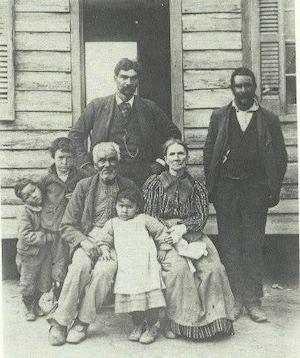 That was the answer Caleb gave whenever someone asked why the Free Born Americans did not simply become another armed faction and rule by fear. It was easy to destroy a civilization. It was harder to build one. They had already seen what happened when men with weapons decided that power was the same thing as legitimacy.
They would not become that.
Not for convenience.
Not for revenge.
Not even for survival.
The radio operator handed Caleb the microphone.
“Channel three.”
Caleb pressed the transmit button.
“This is Free Born territory. Identify yourself.”
Static answered.
Then a voice.
“Mercer.”
Caleb recognized it.
Rourke.
“You know who this is.”
“I do.”
“We’re coming through.”
“No.”
There was a pause.
“You don’t get to tell me no.”
Caleb smiled without humor.
“Apparently I just did.”
Rourke laughed.
“You think you’re the government now?”
“No.”
“You think you’re an army?”
“No.”
“Then what are you?”
Caleb looked through the doorway toward the valley, where the first children were arriving at the schoolhouse.
“We’re the people who live here.”
There was silence.
Then Rourke said, “We’ll see.”
The radio went dead.
Sarah looked at Caleb.
“You think he’ll come?”
“He already has.”
And that was the truth.
Rourke had crossed the line before he ever sent his first truck into the valley. He had made the mistake every tyrant eventually made. He had mistaken restraint for weakness.
The Free Born Americans had spent years learning the difference.
They did not want war.
But they had no intention of surrendering.
The following night, the valley went dark.
Not because the power had failed.
Because every light had been deliberately extinguished.
The children were already asleep. The livestock had been moved into protected enclosures. The women and elderly had gone into the underground shelters. The able-bodied men and women were in the hills, not because they were eager for battle but because they understood that if the battle came, they wanted it to come on ground they knew.
Caleb stood beneath a tree overlooking the southern road.
Beside him was Sarah.
“You shouldn’t be here,” he whispered.
She looked at him.
“Neither should you.”
“I was going to say because you’re sixty-two.”
“And I was going to say because you’re fifty-eight.”
“Fifty-seven.”
“Your beard is sixty.”
Caleb grinned.
Somewhere below, an engine started.
Then another.
Headlights appeared between the trees.
The convoy came slowly.
Rourke’s men were expecting fear.
They found silence.
They advanced another hundred yards.
Still nothing.
Then the lead vehicle stopped.
A voice shouted.
Nobody answered.
Another voice.
Still nothing.
The men climbed from their trucks.
They moved nervously.
They had entered the valley believing that darkness concealed them.
It did not.
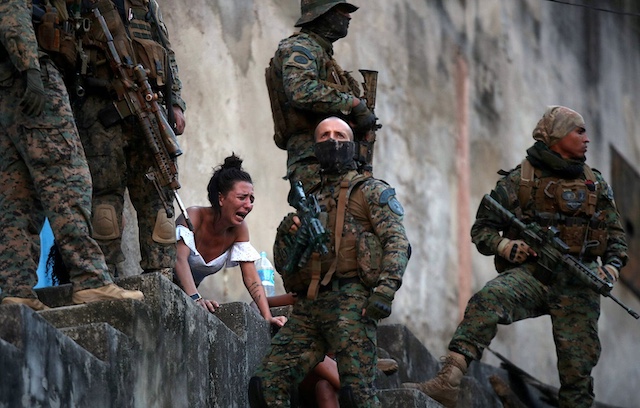 The people in the hills knew every rock, every tree, every ditch and every abandoned trail. They knew where the ground became soft after rain. They knew which roads crossed streams. They knew where an engine could be heard from three miles away and where a man could walk within twenty yards of another person without being seen.
The mountains were not merely their home.
The mountains were their ally.
And then, somewhere high on the ridge, music began.
It was quiet.
Almost painfully quiet.
A violin playing an old Irish melody.
The men below froze.
One of them whispered something.
Another answered.
Nobody understood the words.
They did not need to.
They understood the message.
The people in the hills were not frightened.
The first shot came moments later.
Then another.
The convoy broke apart.
Rourke’s men fired into darkness, but darkness gave them nothing in return. The Free Born Americans did not massacre them. They did not need to. Their objective was to stop the invasion, not to satisfy bloodlust.
Some men fled.
Some surrendered.
Some discovered that their courage had been considerably greater when they had believed themselves to be the hunters.
By dawn, the road belonged to the Free Born Americans again.
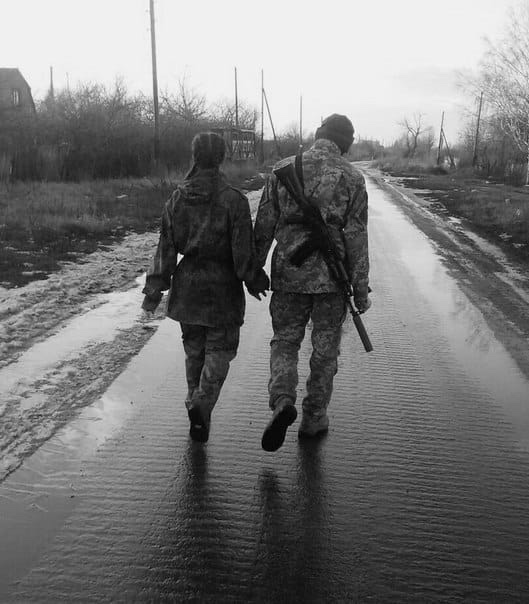 But Caleb knew the fight had only begun.
Rourke would return.
Men like Rourke always did.
They could not imagine a world in which another man’s liberty mattered as much as their own ambition.
That was the disease.
It had destroyed the old America.
And now it was trying to build a new one in her ruins.
The Free Born Americans understood that their greatest danger was not Rourke.
It was becoming Rourke.
That was the battle that would determine whether America actually survived.
Because destroying tyrants was easy compared with resisting the temptation to become one.
Caleb understood that as he stood above the valley at sunrise.
Below him, people were already repairing the road.
A farmer was fixing a fence.
Children were sweeping the schoolhouse porch.
A mechanic was crawling beneath the old pickup.
Sarah was arguing with the nurse about the number of medical supplies remaining.
Life continued.
That was the miracle.
Not the guns.
Not the victory.
Life.
People still planted things.
Still fell in love.
Still laughed.
Still argued.
Still taught their children.
Still repaired what could be repaired.
Still buried their dead.
Still believed that tomorrow mattered.
Caleb looked east as sunlight spilled over the ridges.
The mountains turned gold.
For a moment he could almost imagine that the old America was still there.
Then he remembered that it wasn’t.
And perhaps that was all right.
Nations, like men, sometimes had to lose everything before they discovered what was worth keeping.
America had lost the illusion that prosperity was permanent.
She had lost the illusion that government could solve every problem.
She had lost the illusion that freedom could survive without responsibility.
She had lost the illusion that civilization was automatic.
What remained was harder.
But it was real.
A farmer knew the value of rain.
A mechanic knew the value of a working engine.
A mother knew the value of a safe road.
A child knew that bread came from grain and grain came from fields.
A citizen knew that liberty required courage.
And a man who had once believed that government was the foundation of freedom had learned something different.
Government could protect freedom.
It could regulate freedom.
It could threaten freedom.
It could destroy freedom.
But it could never create it.
Freedom existed before government.
And if America was going to survive, free people would have to create Her again.
Not by rebuilding the marble buildings first.
Not by recreating the bureaucracies.
Not by restoring the old political machinery exactly as it had been.
They would begin with the things that mattered.
Families.
Communities.
Schools.
Farms.
Work.
Faith.
Law.
Honor.
Responsibility.
And the simple understanding that your neighbor’s freedom was inseparable from your own.
That was what the Free Born Americans defended.
Not a government.
Not a party.
Not a politician.
A proposition.
The proposition that a human being possessed a right to live his own life without becoming the property of another.
The proposition that no man was born to rule another.
The proposition that liberty was not a gift handed down by benevolent rulers but a responsibility accepted by free citizens.
The proposition that America could fall and still rise again.
Years later, when the historians finally began writing about the Great Fracture, they would argue about the Free Born Americans.
Some would call them patriots.
Others would call them extremists.
Some would call them vigilantes.
Others would call them the first citizens of the Second Republic.
There would be arguments over their methods, their leaders, their battles and their mistakes.
There should have been.
They had made mistakes.
They had been frightened.
They had sometimes been wrong.
They had sometimes acted too quickly and sometimes waited too long.
They were not saints.
That was important.
America had never needed saints.
She needed citizens.
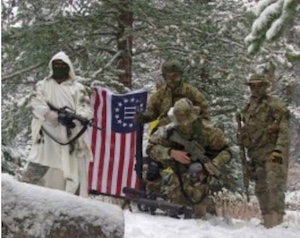 And the Free Born Americans were citizens who had discovered that freedom was not something a government gave you.
It was something you gave to your children.
You gave it to them by teaching them to work.
By teaching them to think.
By teaching them to stand when standing was difficult.
By teaching them that another human being possessed the same inherent dignity they possessed themselves.
By teaching them that power without restraint became tyranny.
By teaching them that courage without compassion became brutality.
And by teaching them that liberty without responsibility eventually became chaos.
The old America had forgotten some of those lessons.
The new America would not.
One evening, many years after the first battle with Rourke, Caleb sat beside the same creek where the first settlement had been established. He was older then, his hair almost entirely white, his shoulders no longer as straight as they had once been. Sarah sat beside him, wrapped in a blanket against the evening chill.
Across the water, children were playing.
They had never known the Great Fracture.
They had never seen the cities burn.
They had never stood beside an empty hospital.
They had never wondered whether the next meal would exist.
They knew only the America that had been rebuilt.
Caleb watched them for a long time.
Sarah leaned against him.
“Do you think they understand?”
“Not yet.”
“They should.”
“They’re children.”
“They’ll need to know.”
“They will.”
“When?”
Caleb looked toward the mountains.
“When they are old enough to understand that freedom isn’t free because somebody wrote it down.”
Sarah smiled.
“That’s a hard lesson.”
“The important ones usually are.”
The sun disappeared behind the ridgeline.
The mountains became dark.
For thousands of years they had watched men build kingdoms and lose them.
They had watched wars begin and end.
They had watched generations pass like leaves upon the wind.
They would watch this generation too.
And perhaps that was why the people who lived there loved them.
The mountains did not promise that tomorrow would be easy.
They promised only that tomorrow would come.
What happened afterward was up to the people.
Caleb Mercer rose slowly.
Sarah took his arm.
Together they walked toward the lights of the settlement.
Behind them the creek continued its ancient journey through the valley.
Ahead of them, children laughed.
Above them, the first stars appeared.
And somewhere on the ridge, beneath the darkening trees, the American flag moved gently in the evening wind.
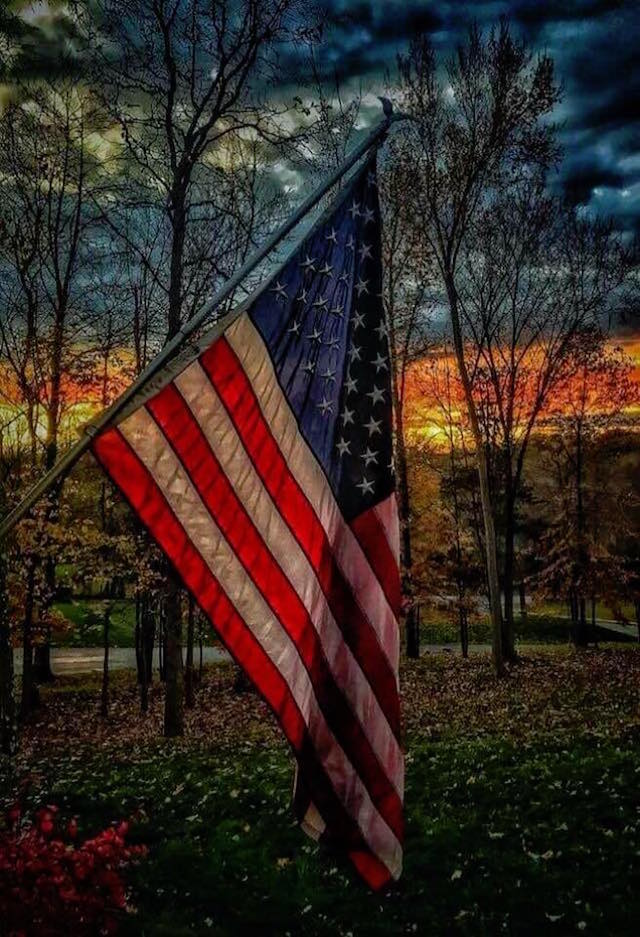
Scarred.
Patched.
Weathered.
Still flying.
The mountains remembered… and so would they!
August 13, 2026
Justin O. Smith ~ Author
~ the Author ~
Justin O. Smith Has Lived in Tennessee Off and on Most of His Adult Life, and Graduated From Middle Tennessee State University in 1980, With a B.S. And a Double Major in International Relations and Cultural Geography – Minors in Military Science and English, for What Its Worth. His Real Education Started From That Point on. Smith Is a Frequent Contributor to the Family of Kettle Moraine Publications.