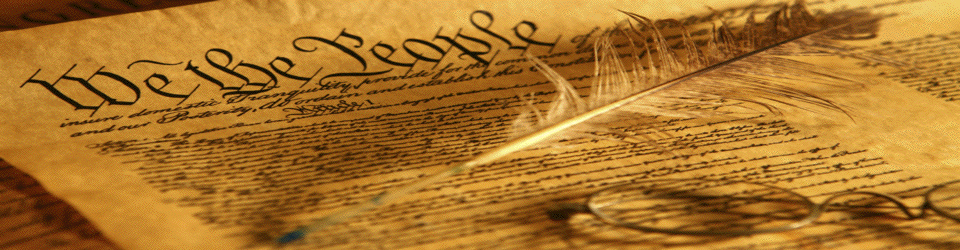
The actual title of this piece is Freedumb. Be patient… you’ll understand.
I marvel at what this country is and what it’s become, frequently wondering out loud and, more often, in writing, my favorite way to think. It’s enlightening that I can begin with an idea, and in the process of explaining it, it becomes whole in my mind. I find that by giving my thoughts form, they coalesce, gaining substance… I always discover more than I choose to share, mostly personal things you don’t need to know and will never understand.
I consider myself a very lucky man. I have a loving wife/partner and a comfortable home. It is the freedom America offers that brought us to where my wife and I are today. For us, that freedom is opportunity. It’s the liberty to make choices and decisions that allow us to follow our chosen paths, and that’s given us everything we have, including each other, and although we don’t always agree, we honor that freedom and the country that provides it.
Our life together hasn’t been easy, and it hasn’t grown any easier over time, except that we’re learning to make better choices. That’s part of the opportunity I mentioned. We’re free to decide what’s best for us. We can choose our own paths as partners and as Americans. That’s real Freedom.
Freedumb in Merka
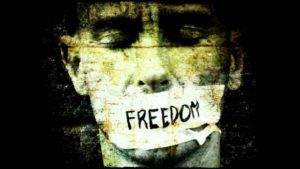 The subtitle is a play on words – a portmanteau: the blending of two words to create a new one. Free – not under the control or in the power of another; Dumb – lacking intelligence, stupid. Freedumb is not being entirely under the control or in the power of anyone else, and being too stupid to recognize it or understand how to use it.
Freedom, we don’t deserve it, so… we have Freedumb!
Freedom is widely regarded as both a precious gift, often seen as a divine, inherent, or societal blessing, and a profound responsibility that requires effort, choice, and discipline to maintain. While it is a “gift of God” that enables humans to act with reason, it is also viewed as a “goal” and a “burden” that must be earned and protected.
I call your particular attention to the words “discipline” and “responsibility” in the paragraph above.
This commentary is about what we were given and how we’ve used that gift.
In the process of connecting the dots to make this picture appear, I’ve worked through several possible scenarios, and the shortest distance between two points is always a straight line. So here it is.
Nearly everything you see, hear, and read is manipulated to tell a specific story. We call it communication, and through eons of trial and error, we’ve perfected the art of narrative. That is, a spoken or written account that connects events, creating a story. The art lies in connecting events that would not normally connect, building a bridge to link them.
A story is an account of real or imaginary people and events told for entertainment.
News is noteworthy information, especially about recent or important events.
So, if I take these definitions literally, a news story is a collection of noteworthy events that, when linked, tells an entertaining account of real or imagined people. Voila… we have the news story!
There are millions of examples of this if you stop and consider the events and individual points, probably unrelated, and create a narrative story.
Narratives can be positive or negative, like everything else in the news.
Research from the London School of Economics and Political Science indicates that humans have a “negativity bias,” meaning we are biologically and psychologically wired to pay more attention to and give more weight to negative news than to positive news.
According to the National Institute of Health, people often claim to prefer good news. However, studies show that negative headlines consistently generate higher click-through rates, increased sharing on social media, and stronger physiological reactions.
Which catches your attention first, the positive or the negative news story?
According to psychologists, we are predisposed to negative news by an evolutionary negativity bias that prioritizes threats to ensure survival. The amygdala [uh-mig-duh-luh] (the brain’s central processor for emotions) processes negative information more intensely, making bad news “sticky” (Velcro) and good news forgettable (Teflon). This “doomscrolling” is driven by a need for safety, since negative information feels more urgent and critical than positive stories. Btw – the mainstream media is well aware of this fact, too.
Only 28% of U.S. adults report a “great deal” or “fair amount” of confidence in newspapers, television, and radio to report the news fairly and accurately. This decline, which has persisted since the 1970s, is driven by concerns about partisan bias, misinformation, and corporate influence.
Here are the key reasons for media distrust:
– Low Confidence in Journalists: A majority of Americans (57%) have low confidence that journalists act in the public’s best interests.
* Partisan Divide: While trust has declined overall, it is notably lower among Republicans than among Democrats, particularly regarding national news organizations.
* Generational Gaps: Only 52% of adults under 50 trust information from national news media, compared with higher levels of skepticism among younger demographics, particularly Republicans.
* Factors in Decline: The public increasingly questions the quality of reporting and the business motives behind news organizations.
* Source Reliability: Despite low overall trust, certain outlets maintain higher trust levels, though ideological divides still affect perceptions of even those sources.
My assessment of the credibility collapse in America is based on willfully ignoring the obvious signs of the partisan political divide in our republic. We should all know that George Washington warned us that the two-party system would eventually destroy the country, but it was already too deeply ingrained in the process. We discounted President Washington’s warning and instead aligned with the partisan political parties. They promised what their constituents wanted and warned that the other side wanted to ruin the fragile and tenuous affiliation just created.
It was all about their power to control this new republic, and it still is; nothing has changed.
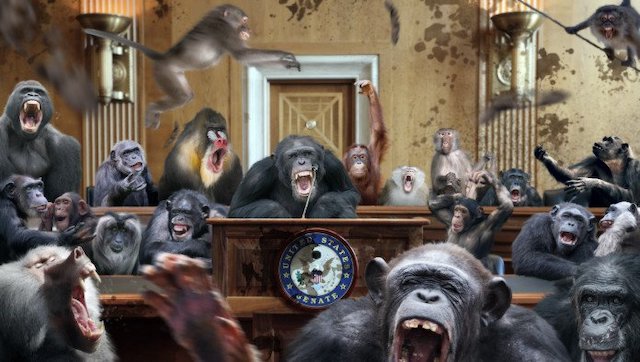
Monkey’s – It is what they have become!
They cried wolf… and that is the basis for everything we hear from Congress, ‘the opposite of progress’.
– Reference my last article, “I’ve Had Enough!”
The mainstream media has been with us since the very beginning of this republic, doing what they do best… selling information to their customers. The first newspaper in America, Publick Occurrences Both Forreign and Domestick, was published in Boston on September 25, 1690, by Benjamin Harris. It was suppressed by the government after only one issue. The first continuously published newspaper was the Boston News-Letter, which debuted on April 24, 1704.
Newspapers are not legally required to publish only the truth, largely because of First Amendment protections against government regulation of content. While ethical standards emphasize accuracy, there is no “truth-in-reporting” law. However, they can be sued for libel if they knowingly publish false statements that cause harm.
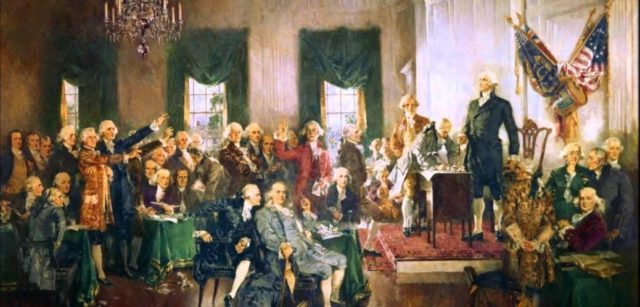
Constitutional Convention
Here’s an aside… A significant number of the delegates who wrote the U.S. Constitution were lawyers, though not exclusively. Of the 55 delegates at the 1787 Constitutional Convention, 35 were trained in law. The final document was heavily influenced by James Madison, and the final text was largely penned by lawyer Gouverneur Morris. I cannot imagine anything created by a lawyer that would allow common sense to enter negotiation or conversation without their involvement. In this context, common sense implies that anything printed for public consumption would be required to be truthful, but this is not about common sense; it’s about litigation and the perpetuation of their profession. I’ve heard comments that bankers are leeches and are obsessive about control. If that’s true, lawyers are a close second.
Lawyers are ethically and professionally prohibited from lying to courts, clients, or opposing parties because they are bound by the rules of professional conduct. While most adhere to these rules, some may lie or mislead due to greed, to gain an advantage in a case, or to hide negligence. The line between lying and misleading hinges on whether the statement is explicitly false or merely a tactical omission. Lying is stating something known to be untrue (a false assertion), while misleading is saying something technically true but intended to lead someone to a false conclusion. Lying is asserting a falsehood; misleading is manipulating the truth.
So there you have it… This is the foundation of distrust. When the absolute truth is based on the perception of facts and on their tactical and technical application, it’s OK to lie if doing so provides a tactical or technical advantage. “The Ends Justify the Means.”
Or is it “The Meanies Justify the End”?
Recommendation:
Read and understand fables and parables. These short, didactic (instructive and advisory) narratives teach moral or spiritual lessons, often using allegory to make their point. Fables, commonly associated with Aesop, typically use personified animals or inanimate objects to convey straightforward moral lessons. Parables feature human characters in realistic, often spiritual situations.
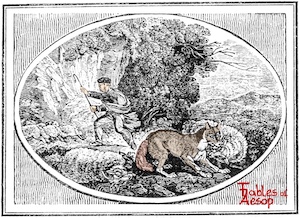
The Boy Who Cried Wolf – Fables of Aesop
Aesop’s fable ‘The Boy Who Cried Wolf’ tells the story of a bored shepherd boy who repeatedly tricks villagers into believing a wolf is attacking his flock. When a real wolf finally appears, the villagers ignore his cries, thinking it is another prank, and the wolf destroys the flock. The moral is that “Liars are not believed, even when they speak the truth.” Today, it serves as a powerful metaphor for eroded trust and alarm fatigue across technology, politics, and social issues. Repeated false alarms or exaggerations desensitize audiences, making it harder to respond to genuine crises.
This fable warns that excessive lying leads to distrust, and that’s precisely where we are in America. Public confidence in the U.S. federal government is at near-historic lows, with only about 17% to 33% of Americans trusting the federal government to do what is right, down from a high of 77% in 1964. Distrust has grown significantly due to political polarization, economic concerns, and perceptions of wastefulness or corruption. As of last year, public confidence in our government in Washington to do what is right “just about always” 2% or “most of the time” was just 17%. Public trust has fallen from roughly 75% in the early 1960s to below 20% in recent years, marking a long-term erosion in confidence.
Congress, ‘the opposite of progress’, spends roughly 35% of its time on legislative or policy work, while the remaining 65% is split between constituent services, administrative duties, and political/campaign work. If the average salary is $174,000 per year and they spend only 35% of their time doing the job we hired them to do, that means they owe us $113,100 in overpayment for the time they’re not doing their assigned jobs. If this were you or me, we’d be fired for failure to perform…
Recommendation:
A serious reexamination of Congress, ‘the opposite of progress’ requirements and activities, including term limits and extracurricular activities – those not associated with the administration of the republic, such as campaigning, fundraising, and constituent services. They are paid by the US Treasury, which suggests that States with greater House of Representatives (HoR) representation benefit from the general fund rather than being supported by the States they represent.
Salaries:
– California has 52 seats at a cost of $9.05 million.
– Texas has 38 seats at a cost of $6.6 million.
– Florida has 28 seats at a cost of $4.9 million.
– Alaska has 1 seat at a cost of $174,000.
– Total budget for salaries = $850 million
When you consider that there are 535 total Congressional seats, the cost balloons to $1.9 billion annually.
The Congressional budget for 2026 is $1.2 trillion, according to the Congressional Budget Office (CBO). Congress, ‘the opposite of progress’, accounts for 33% of that budget. The total for 2026 is $3.66 trillion…
Holy Sheep Shit!
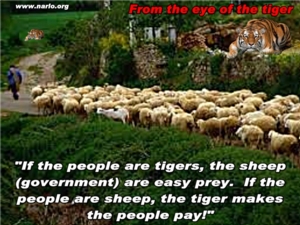 It doesn’t seem equitable for citizens to fund the HoR activities of representatives from other states, especially those who are not working on their behalf. The most equitable solution would be for individual states to fund their representatives, since they primarily work for the benefit of the state they represent.
Representation should be limited to a total of four, ideally two from each party, with the distribution left to the state, but the state shall not create an imbalance or a majority for one party. This would shift funding from the US Treasury to the states’ responsibility.
I know what the Constitution says, but it was intentionally written to allow amendments, and by God, it’s time to make some significant changes.
While low public confidence does not immediately cause a government to collapse, it creates a fragile, “corrosive” environment that erodes the state’s core functions: managing internal affairs, providing public services such as safety and education, and regulating commerce within its borders. There are others, but they are a subset of those listed. Historical and contemporary political analysis suggests that governments can endure low trust for decades, though at a high cost to long-term stability and effectiveness.
A government can technically survive indefinitely with low public confidence, provided it maintains control of its legal, financial, and security institutions. However, low trust transforms a government from an active, leading force into a “hollowed-out” institution that primarily manages its own decline.
The “Resignation” Phase (Years to Decades). Governments can endure for long periods when the public is disillusioned yet passive. We’ve given up, believing that nothing can be done.
– Historical Context: The U.S. federal government has maintained trust levels below 50% for nearly 50 years, since the late 1970s.
– The “Rot” Effect: While the state doesn’t collapse, it becomes “corrosive.” Citizens may stop voting, refuse to provide data, or shift their reliance to private or community-based organizations.
– Employer of Last Resort: As trust declines, elite talent often avoids government careers, leading to a loss of technical expertise – such as managing complex contracts or responding to disasters, which further fuels public distrust in a “death spiral.”
The Threshold of “Systemic Failure” – A government usually collapses only when low trust coincides with a triggering crisis the state is too weak to handle.
– The Breaking Point: Historians note that empires such as the Late Qing Dynasty and the Soviet Union endured decades of deep corruption and low public faith until an external shock (such as war or economic collapse) proved the government could no longer “deliver.”
– Reduced Compliance: When trust falls below a psychological threshold, citizens may begin “opting out” of the social contract, for example, by evading taxes or ignoring public health mandates, thereby undermining the government’s fiscal health and legitimacy. The mass exodus of businesses from California is a salient example.
Why the U.S. System Has Not Collapsed – Despite trust at historic lows (17% to 22% in late 2025), several “stabilizers” prevent an immediate collapse:
– Local Trust: Most Americans (67%) still trust their local government, which provides the most immediate daily services.
– The “Shadow” Civil Service: While politicians are distrusted, the 90% support for a nonpartisan civil service suggests that the public still believes in the “machinery” of the state, even if they loathe the “drivers.”
– Partisan Balancing: Trust is often “contingent.” Because each side believes it is only one election away from “taking back” the government, it remains invested in the system’s survival rather than in its total overthrow.
 Consequently, the democratic process is seen as ineffective, and as alternative ideologies are introduced, the door opens to Socialism, Marxism, and ultimately Communism. These alternatives to representative democracy work diligently to create openings like these by fostering discontent, aggravating it, and amplifying lies through carefully chosen rhetoric and antagonism. It’s part of their ‘divide and conquer’ stratagem. It’s the same way a virus takes over an entire body, similar to cancer.
Communism’s path to taking over involves a phased dismantling of capitalist structures through ideological infiltration, societal destabilization, and the centralization of power. Strategies include controlling education, unions, and the media to shift public opinion, often through a “vanguard” party that leads to a workers’ revolution. The ultimate goal is to nationalize property and establish a state-controlled, classless society.
The two-party system in America is now fragmented, and the once-powerful Democratic Party has morphed into the Democratic-Socialist Party, which now has near-absolute control of the Left. The Socialists expertly exploited an opening. This is a salient illustration of the divide-and-conquer tactic.
Does any of this sound familiar?
It should! We’re right in the middle of it.
This is what we’ve done with the freedom we were given… it happened because too few of us were paying attention… We grew lazy…
Freedom… We Don’t Deserve It!
If this is all it means to us, we most certainly do not deserve it.
I’m not going to say “I told you so…” about our responsibility for this mess. I’ve beaten that drum for too long, and no one listens. Too few citizens will admit their role in this until it’s too late. Folks, it may already be too late. I can already hear the weaseling, hedging, and blame-shifting…
I can hear the rationalization now…
“Oh… I guess there were a few noticeable signs, but nothing definitive. You know… I had an inkling that things were amiss. But you know how busy a Senator can be… and the great weight we bear…” ~ Senator Alpheus Felch, from The Great State of Stagnation
I asked AI whether it was possible to rebuild trust in our government.
AI’s Recommendation:
Rebuilding trust is a slow, multi-generational effort. Experts and researchers (Pew Research and the Partnership for Public Service) generally identify four key “levers” to reverse the trend:
– Focus on “Customer Service” (Competence)
* People trust what works. When basic services like getting a passport, receiving Social Security, or visiting a National Park are seamless and digital-friendly, trust goes up.
– The Goal: Shift the government from a “bureaucratic black box” to a service provider that values users’ time.
* Increase Transparency in Real-Time
Trust erodes when people feel the “game is rigged” behind closed doors.
– Data Accessibility: Providing clear, nonpartisan data on how tax dollars are spent (e.g., USASpending.gov) helps counter the perception of “waste and fraud.”
– Explanation of “Why”: Agencies that explain the reasoning behind a new regulation or policy, rather than simply announcing it, tend to face less public backlash.
* Protect the “Non-Partisan” Civil Service
A major driver of distrust is the perception that the government is merely a tool of whichever party is in power.
– Stability: Highlighting and protecting the 2 million+ career civil servants who remain across administrations provides a sense of institutional “floor” that doesn’t shift with every election.
* Localize the Connection
Since Americans trust local government (65%+) much more than Washington, “turning it around” often starts at the bottom.
– Federal-Local Partnerships: When federal agencies work through local leaders or community groups to solve problems (such as infrastructure or disaster relief), the federal government benefits from a “halo effect” of greater trust from local entities.
Overcoming the “Partisan” Hurdle is the hardest part, and polarization is the main obstacle. Currently, trust is “contingent”; it rises among Republicans when a Republican is in office and vice versa. Breaking this requires leaders to communicate across the aisle and for the public to see “wins” that benefit everyone, regardless of how they vote.
Recommendation:
Congress can recover its low trust rating by shifting from partisan brinkmanship to institutional stewardship. Recent reforms and expert proposals for 2025–2026 indicate that rebuilding confidence requires a mix of ethical accountability, procedural stability, and tangible results.
Here are some suggested steps:
* Enact Ethical Guardrails; the primary driver of distrust is the perception of lawmakers’ self-interest.
– Banning Stock Trading: In early 2025, a bipartisan coalition introduced the Bipartisan Restoring Faith in Government Act, which would prohibit members of Congress and their families from trading individual stocks to eliminate conflicts of interest. Nancy Pelosi has earned $130 million in stock profits over her 37-year career, a whopping 16,903% gain. – No, you didn’t misread that… I checked it three times.
– Strengthening Ethics Oversight: Proposals from groups such as the Brennan Center call for establishing a unified, powerful ethics agency with the authority to issue binding rules and impose civil penalties, closing loopholes in the Stock Act.
* Restore “Regular Order.”
– Public frustration often stems from governance by crisis—such as constant threats of shutdowns and massive “omnibus” bills.
– Predictable Budgeting: Reclaiming institutional trust requires passing budgets on time and holding predictable votes, rather than resorting to secret negotiations or making take-it-or-leave-it deals at the last minute.
– Robust Oversight: Experts recommend moving away from “flashy,” performative hearings toward routine, bipartisan oversight of federal agencies. Publishing annual oversight plans can help the public see that Congress is actively managing taxpayer dollars.
* Modernize the Institution:
The Subcommittee on Modernization and Innovation (formerly the Select Committee on the Modernization of Congress) has finalized more than 130 bipartisan recommendations to enhance the House’s effectiveness.
– Constituent Engagement: Recent efforts focus on using technology to make the Capitol more accessible and on ensuring that House websites meet high accessibility standards.
– Collaborative Culture: Modernization advocates promote “human-centered” changes, such as shared committee-scheduling tools and voluntary seminars for new lawmakers, to foster cross-party collaboration.
* Demonstrate Tangible Results:
Trust often follows action. Analysts suggest that when Congress addresses high-priority issues with broad support – such as prescription drug affordability, infrastructure upgrades, Social Security, Medicare, Medicaid reforms, or election security – public approval shifts more than it does in response to political rhetoric.
There are a couple of items I’d like to add, in no particular order…
– Stop using our taxes to fund frivolous, self-promoting pork-barrel projects!
– Balance the Gorram Budget – a $40 trillion deficit is unsustainable, and the predictably rising interest payments will kill this country. 2030’s payment is predicted to reach the $2 trillion mark.
– Bring back the gold standard.
– Remember that you work for us, not vice versa, and that you’re in that position as an “Elected Representative” from your home state because we put you there. Enact state term limits.
– The citizens of America come first, above everyone else in this country.
My cynical side tells me this will never happen in my lifetime, if ever. The people in control will never relinquish power; they have too much to lose. As long as we allow this to continue, we will have Quasi-freedom, a state of partial or conditional liberty in which an individual or business operates with some autonomy yet remains under significant legal, economic, or physical constraints. It describes a gray area between full independence and total dependence or bondage, often marked by restricted rights.
The world was our oyster. We had boundless opportunities and optimism. Success was within our grasp. Just as an oyster may contain a valuable pearl, America held many hidden “riches” or rewards for those willing to seek them. Freedom of choice was ours, and we were in a position to take advantage of life’s opportunities because we had youth, talent, or means. The opportunity still exists for those with the dogged determination and chutzpah (hoot-spuh – Yiddish for balls) to take the chance.
You see, we had a chance at Freedom, but we squandered it, trading it for shiny beads, cloth, trinkets, and the promise of more if we’d just trust them with our country.
Who is ‘them’?
Why? It’s the people we elected to manage and administer this republic.
We traded it all away for Freedumb – Freedumb is not being entirely under the control or in the power of anyone else, but being too stupid to recognize it or to understand how to use and safeguard it.
I’ll leave you with this thought…
“Great minds think alike… and fools seldom differ.”
Suggesting that both geniuses and fools can agree quite readily…
– It’s a warning against groupthink. Groupthink is a psychological phenomenon in which the desire for group cohesion and conformity overrides critical analysis, leading to irrational or poor decision-making.
Yep… That’s Merka for ya…
‘The Devil you say…’ ’cause Who in the Hell Can Afford this Crap Anymore?
April 21, 2026
~ the Author ~
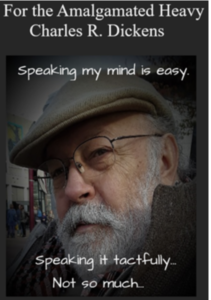 Charles R. Dickens Was Born in 1951, Is a Veteran of the Vietnam War, for Which He Volunteered, and the Great-Great Grandson of the Noted Author, Whose Name He Shares.
He Is a Fiercely Proud American, Who Still Believes This Is the Greatest Country on the Planet, With Which We’ve Lost Control and Certainly Our Direction. He Grew Up in Moderate Financial Surrounding; We’re Not Rich by Any Stretch, but Didn’t Go Hungry – His Incredibly Hard Working Father Saw to That. As Most From That Era, He Learned About Life From His Father, Whose Story Would Take Too Long to Tell, Other Than to Say That, He Is Also a Fiercely Proud American; A WWII and Korean War, Veteran Marine.
Charlie Was Educated in the Parochial System Which, Demanded That You Actually Learn Something, and Have Capability to Retain It Before You Advance. He Attended Several Universities in Pursuit of a Bachelor’s Degree, and Chased the Goose Further to a Master’s, and Has Retained Some Very Definite Ideas About Education in This Country.
in Addition, Charlie Is a Retired Blues Guitar and Vocalist – a Musician. This Was His Therapy Career. Nothing Brings Him as Much Joy as Playing Music, and He Wishes That He Could Make a Living at It… but Alas… Life Goes on!