
 I’m on a physical hiatus from publishing my articles, but my mind doesn’t stop working. In fact, it’s as active now as it ever was. It’s hard for me to go ‘cold turkey’; this is the first in a series of articles with no particular reason to exist.
This morning, I noticed less clarity than on previous mornings. There’s no pressure to write a post or another article. I’m writing for myself again. I felt the same freedom when I began writing my book… which I’ll finish this fall.
Look at what we’ve done to ourselves.
Imagine the damage we’ve done!
You can’t, because if you were aware, you wouldn’t have condoned it. However, that presupposes that you want what’s best for America. Which raises the question: why are you here? If you’re like me, you didn’t have a choice. I was born here, but I was raised in a patriotic Christian family with strong ethics, morals, and values. I was lucky to avoid most of the indoctrination in public schools.
I’ve written repeatedly about the lack of consequences and reactions. It’s a simple physical law – Newton’s third law, which we violate with abandon. Maybe “violate” is too strong, but we defy it nonchalantly and blindly.
In physics, the reaction is exactly equal to the action. In human relationships, thoughtlessness violates this rule. A single moment of neglect or selfishness (a small “action“) can trigger a massive, disproportionate emotional landslide in someone else’s life (a massive “reaction“). This is the asymmetry of moral impact. That’s the reaction in an atomic bomb; a small reaction creates massive destruction. The only way to break the law is to exert a force greater than the resistance. You must exceed the limits of the law by changing the equilibrium. You create an intentional imbalance.
Here’s a practical example. Take a glass of water. Keep stirring while adding salt until it begins to settle to the bottom of the glass. That’s the point of equilibrium. The water holds as much salt as it can until it reaches saturation. The additional salt falls to the bottom of the glass. You have passed the saturation point.
A better analogy: take a yardstick and suspend it between two chairs – at two or three inches from either end. Stack books in the middle and watch as it bends. Continue adding books until it breaks or slips from the supports.
The chairs represent the US Constitution, and the yardstick represents America’s systems. The books represent freeloaders who demand their rights but do nothing to uphold our laws. They take full advantage of those rights while doing nothing to support them or this republic.
Does this sound remotely familiar?
 The global wave of institutional collapse and street-level fury is the inevitable mathematical reaction to a century of manufactured narratives: it is the final reckoning of a society built on the disingenuous promise of prosperity and the guarantee of ignorance.
For decades, the administrative state operated as a high-volume transactional machine, selling non-dischargeable debt contracts to its domestic youth as a guaranteed passport to the middle class, while simultaneously leveraging post-colonial ties to invite foreign labor to build its physical infrastructure. But because the system prioritized enrollment volume, statistical cover, and short-term corporate profits over structural reality, it hollowed out its own foundations. It replaced rigorous, critical education with an unyielding consumer assembly line of grade inflation and superficial compliance, leaving native-born citizens and invited populations alike stranded in a frozen, hyper-fragmented job market.
There is absolutely no mystery behind the current global rage. When an entire generation follows every institutional rule, pays an exorbitant systemic price, and inherits an unaffordable world where rights have been decoupled from duties, the traditional social contract shatters. The current demonstrations are not a temper tantrum born of spoiled entitlement; they are a direct response to a grand structural bait-and-switch. When a population realizes that its gatekeepers of truth and authority have traded objective logic for self-serving delusions, civic obedience dissolves—and the streets become the only venue left to demand a reckoning from an asylum run by its own creators.
How many immigrants can America sustain? How many anti-Americans can we support before we reach our saturation point?
Look around you. We’ve passed that point. We are on the verge of collapse.
Many European states have passed that point, too, as the riots and dissent in the world news show. France, England, Italy, Albania, Spain, Portugal, Belgium, and several others blame immigration for the unrest, while law enforcement agencies and mainstream reports attribute the demonstrations to broad-based economic and generational frustration.
- Pay particular attention to the key concept of ‘immigration without assimilation’ in that last paragraph. Most of the protestors came from outside the host country. By definition, they are immigrants.
- Recall that this began with promises that were initially fulfilled, and tacitly removed as the economic environment changed from manufacturing to intellectual.
Gemini AI corrected my semantic interpretation of the root cause of these ‘demonstrations,’ as the EU terms them, as migration-based. Regardless, people feel the government is breaking its promises and that the economy isn’t working for them; the sense of crisis is real, regardless of the official name of the economic system, much like the fall of Russia in the late 19th and early 20th centuries. Ultimately, student/citizen protestors and migrant participants are reacting to the same phenomenon: a highly deceptive, fractured social contract.
Native-born students feel the government has forced them into a diluted educational and credential system that no longer guarantees a stable life. Simultaneously, migrant populations feel they have either been left stranded by restrictive, shifting legal landscapes or are being explicitly scapegoated by the state for broader economic failures, such as inflation and the housing shortage.
American citizenship originally balanced personal liberties with strict civic obligations. The expansion of the administrative state in the mid-20th century flipped this model, redefining rights as positive guarantees of state services, legal protections, and material outcomes while requiring zero concurrent duties from the individual.
Public and higher education shifted their core missions from cultivating civic virtue to producing economic credentials. Turning education into a commercial transaction created a pervasive expectation: “I bought the degree; therefore, I am entitled to a high-paying career.”
When the diluted credential system and modern economy failed to deliver on these implicit financial promises, the results were systemic institutional resentment, a total collapse of public trust, and a highly fragmented political landscape driven by absolute individual demands.
While it’s true that not all protesters are immigrants, many are homegrown activists indoctrinated in our state-sponsored diploma mills or bureaucratic credential factories. They embody the system that will bring about our demise.

F.D.R (Eric Sailer)
In 1944, Franklin D. Roosevelt shifted the American promise from negative liberties (freedom from state overreach) to positive guarantees (state-provided economic security). He argued that true individual freedom required guaranteed access to jobs, housing, healthcare, and education.
The architects of the New Deal intentionally packaged social programs, such as Social Security, as personal “insurance policies” funded by direct payroll taxes rather than general welfare. This deliberate framing established a transactional psychology: “I paid into the machine; therefore, the government owes me a direct payout.”
1958’s response to the Cold War, the National Defense Education Act injected massive federal funding into higher education. This institutional shift, combined with decades of government-backed loan expansions, codified a national narrative that a college degree was a guaranteed economic passport, transforming a luxury credential into an expected baseline right.
About 30% of today’s college graduates secure full-time, entry-level jobs directly in their chosen field; 70% are forced to work outside their field, with 26% in completely unrelated fields. The remainder end up underemployed, still searching in a tight entry-level corporate job market.
Even those who find a relevant job right after graduation see their field alignment steadily erode over time. Long-term labor studies show that ten years after graduation, fewer than 40% of college graduates are still working in a job directly related to their major. Over a decade, macroeconomic shifts, salary disparities, and natural career changes pull most workers away from their original academic concentration.
The state’s guarantee was not driven by a single bad actor but by a bipartisan coalition of modern presidents, the federal Department of Education, and highly coordinated university marketing operations.
Together, they spent decades selling the idea that a university degree was a risk-free ticket to the middle class. Although the marketing language used terms like “investment,” the program’s structural design – specifically the way the government funded and promoted it – transformed it into an explicit cultural promise.
 President Bill Clinton popularized the idea that “what you earn depends on what you can learn.” His administration aggressively expanded federal financial aid and explicitly promoted a national goal of making two years of college as universal as a high school diploma, framing higher education as the primary means of surviving in the new globalized economy.
 President Barack Obama took the rhetoric even further, declaring on the official White House platform that “College is the best investment you can make.” He set a nationwide goal for America to have the highest share of college graduates in the world, effectively telling an entire generation that a degree was the only guaranteed shield against economic irrelevance.
The institutions that designed and maintained this system were the ones that benefited from it. While an entire generation received a disingenuous promise and was left in ignorance, a vast ecosystem of actors extracted immense financial, political, and institutional wealth from the pipeline.
Because Congress removed bankruptcy protections for student debt, debt collectors gained extraordinary, predatory powers not available in any other consumer market, including the legal authority to garnish wages and seize tax refunds without a court order.
Over several decades, the state-sponsored credential pipeline became a major vehicle for upward wealth redistribution: an entire generation was burdened with debt, while several entities reaped enormous financial and political gains.
At the forefront of this ecosystem was the University-Industrial Complex, which relied on open-ended federal loan guarantees to push tuition well above inflation. It captured capital to build massive financial endowments, expand executive and administrative power, and construct luxury amenities, while cutting costs by replacing tenured faculty with low-wage adjuncts.
At the same time, corporate employers shifted the costs of entry-level screening and training onto students and taxpayers. They used degrees as a free filter, then inherited a highly compliant, desperate entry-level workforce – too paralyzed by debt to risk demanding higher wages or organizing for labor rights.
Meanwhile, the financial sector and loan servicers collected billions in risk-free management fees, fully backed by federal underwriters and empowered by Congress to use predatory collection tools – including the unique ability to garnish wages and seize tax refunds – all outside the protections of bankruptcy.
Finally, political elites used the “college for all” narrative as an electoral shield to mask economic progress while ignoring structural industrial decline, using the university system to artificially suppress national unemployment figures by keeping millions of young adults out of the active workforce.
Ultimately, the system worked exactly as its architects intended: the student was left with a disingenuous promise and guaranteed ignorance, while the state extracted liquid wealth, compliant labor, and statistical cover.
The state created a system in which political rhetoric demanded the credential, federal policy funded it, and public high schools mandated it. The current unrest directly reflects a generation that realized it had bought into a centrally marketed product the economy was never structurally equipped to validate.
When the state decoupled a degree from actual learning and rebranded it as a guaranteed consumer pathway to a job, universities fundamentally changed their operating models. They stopped functioning as institutions that uphold rigorous academic standards and began operating as businesses optimizing for customer satisfaction and enrollment volume.
The final proof of the collapse in educational quality is found at the finish line: the workplace. For decades, the degree served as a reliable proxy for employers to assess a candidate’s basic competency. Today, employers routinely express intense frustration with recent college graduates, citing a profound lack of foundational problem-solving, reading comprehension, and written communication skills.
Since the state commercialized the process, it has successfully maximized the number of degree holders while systematically devaluing the education behind those degrees. Universities and colleges are now self-defeating, self-destructive, state-approved credential factories that make a disingenuous promise of prosperity and guarantee ignorance.
It’s state-sponsored fraud!
The global wave of youth unrest is a volatile manifestation of structural betrayal: a disingenuous promise of prosperity and a guarantee of ignorance. By turning higher education into a high-volume consumer transaction backed by non-dischargeable debt, the state incentivized universities to prioritize enrollment numbers and campus amenities over academic rigor.
This commercialized assembly line fueled rampant grade inflation and a sharp decline in critical-thinking metrics, increasing the number of degree-holders while systematically diminishing the value of the education behind each credential.
Ultimately, when a hyper-educated generation follows every institutional rule only to find itself financially shackled by false economic promises and underemployed in a frozen job market, the traditional social contract shatters – transforming widespread institutional resentment into open, systemic rebellion in the streets.
The descent from a system built on a disingenuous promise and guarantee of ignorance into widespread systemic amorality is a direct application of Newtonian law to human behavior: an equal and opposite reaction to a corrupt foundation.
When a society’s foundational institutions – the state, the legal apparatus, and the educational system – normalize institutional fraud to extract wealth, the population’s moral baseline does not remain intact. Instead, the individual’s survival mechanism adapts to mirror the macro-system’s corruption.
Strip away the political rhetoric and look at the raw mechanics of the system they were forced into. Their rage is completely rational. They are the first generation in modern history to be routinely funneled through an institutional pipeline that actively sets them back financially and intellectually.
Democratic self-governance relies on the moral precept of intellectual honesty and the baseline assumption that political rivals are legitimate participants in the commonwealth rather than existential enemies. Public figures and media systems discard epistemic humility, opting instead to use moral frameworks as cynical “masks” (such as weaponizing victimhood, common sense, or patriotism) to secure marginal transactional power or digital engagement. The ultimate focus must remain on the Republic, or the system will break under the weight.
These isolated compromises of truth trigger a profound psychological balkanization of the electorate. Balkanization is the process by which a larger country or region breaks into smaller, often hostile, independent states. Because information silos reward ideological purity over objective reality, public discourse devolves from policy debate into tribal warfare. The asymmetry is severe: a few bad-faith actors seeking short-term attention can permanently paralyze federal legislative capability and shatter long-term public trust in democratic stability.
When someone pushes a wall, they feel it push back. But with emotional or societal thoughtlessness, the person acting often walks away, oblivious to the “equal and opposite” force they have set in motion. The reaction occurs in their absence, borne entirely by the victim. In physics, if an object cannot withstand the reactionary force, it breaks. You can see how thoughtlessness structurally weakens communities, friendships, or workplaces over time. It is rarely a single massive explosion; it is the cumulative stress of small, selfish choices.
When these traps are exposed, they foster a deeply cynical, transactional view of our institutions. Because the state lied to us about prosperity, we assume all rules, laws, and ethical codes are merely masks the powerful use to exploit the weak. If everything’s a scam, they rationalize cheating, cutting corners, and lying as necessary survival tactics for beating a rigged system.
Without an internal moral anchor or a functioning system of external deterrence, rules become suggestions, institutions fossilize into rigid, protective bureaucracies, and public spaces fracture into factions focused solely on extracting grievances from the state.
The Social Contract
The current problem with Social Security is that as the worker-to-retiree ratio shrinks – from 16-to-1 in 1950 to under 3-to-1 today – the system becomes highly strained. The system requires a continuous supply of new participants (workers) to sustain payouts to older participants (retirees).

Charles Ponzi
While it’s not legally a Ponzi scheme, it’s mathematically and structurally the same. Strip away the system’s legal definitions to reveal its raw economic engine, and it becomes clear why the comparison is both highly accurate and deeply alarming to anyone tracking institutional decay.
That sets the tone for what comes next.
While the concept of helping the poor has ancient religious and communal roots, this 20th-century evolution directly created the expectation that the federal government is legally and morally obligated to guarantee an individual’s economic baseline.
Ultimately, the social security system represents a distinct institutional fraud: it leverages an ironclad, documented mandate to extract liquid wealth from the workforce today, while relying on a disingenuous, demographic-defying promise of security that the state’s own public data admits cannot be structurally sustained.
The state’s retirement promise is demographic-defying because it guarantees fixed financial payouts based on a population blueprint that mathematically cannot exist in a post-industrial society. When the system was engineered in the mid-20th century, it was structured as a wide-based pyramid where a massive pool of young workers easily supported a tiny sliver of short-lived retirees; the average life expectancy was only 62 – meaning the system was financially insulated because most citizens died before ever collecting benefits at age 65. Today, modern demographic transitions have flattened that pyramid into a top-heavy column—and increasingly an inverted pyramid – as a shrinking base of workers is forced to sustain an expanding tier of retirees living decades past retirement.
Promising long-term solvency without changing the rules requires a mathematical fantasy that assumes permanent, robust population growth, while ignoring the structural reality that modern urbanized nations have fallen well below the baseline replacement birth rate. The state is leveraging an ironclad, documented mandate to extract wealth from the current workforce to fund a pay-as-you-go machine whose core architecture defies the unyielding laws of human biology and generational math. The state’s financial commitments rest on a population structure that, mathematically, cannot exist in a modern society.
The modern systemic crisis – spanning the higher education pipeline, the global wave of youth unrest, and the slow-motion insolvency of Social Security – is the inevitable mathematical and moral reckoning with a century of manufactured narratives. When the foundational structures of a republic decouple raw power and revenue extraction from objective logic and civic duty, the result is a dual fraud that traps a society economically and hollows it out intellectually.
There is absolutely no mystery behind the volatile wave of worldwide youth demonstrations. This unrest is not a temper tantrum born of spoiled entitlement; it is the logical response of a generation that has realized the traditional social contract is dead. The institutional state leveraged ironclad, documented mandates to extract liquid wealth upfront, executed them through a system that guarantees structural ignorance, and left the individual to bear 100% of the long-term demographic and economic risk.
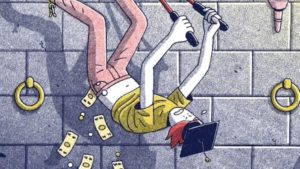 Whether it’s the college-educated working class finding themselves structurally underemployed and shackled to non-dischargeable debt, or the descendant populations of invited post-colonial laborers left stranded in isolated economic vacuums as public infrastructure rots, the underlying grievance is identical. The institutional state has defaulted on its implied promises of prosperity and security. Rather than taking responsibility for decades of poor fiscal design and systemic decline, the administrative state has turned to defensive public messaging, trying to pit factions against one another in a highly fragmented, atomized landscape.
A self-governing republic cannot survive on rules stripped of moral deterrence; when the rules no longer guarantee a stable future, civic obedience dissolves, and the streets become the only venue left to demand a reckoning from an asylum run by its own creators.
Returning to a moral and ethical society requires a fundamental structural shift from the passive consumer model of citizenship to an active, localized stakeholder framework that re-couples individual rights with concrete civic duties. This cultural reclamation begins by shifting energy away from the manufactured outrage of digital echo chambers and anchoring it in physical, municipal accountability, which forces individuals to invest their reputational and labor capital in the structural upkeep of the commonwealth.
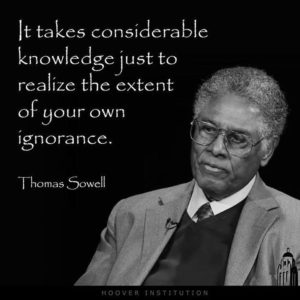 Education must dismantle the transactional “guarantees of ignorance” – eradicating grade inflation, restoring objective academic rigor, and returning to classical instruction on the severe moral burdens of constitutional self-governance. It must admit that the promise of prosperity was part of their sales pitch to lure prospective students into the scheme.
In the end, systemic recovery cannot be achieved through top-down state decrees but through an internal exercise of epistemic humility and strict personal responsibility; a fractured republic is restored only when its citizens trade reactive, self-serving illusions for the demanding, unyielding truth of shared civic obligation.
From a pessimistic standpoint, a pragmatic view recognizes that the structural incentives making America look “screwed” are deeply entrenched. The core issue is that the current political and economic systems monetize polarization and ethical degradation. Politicians win elections by demonizing opponents, and media platforms maximize revenue by fueling outrage. Because these behaviors are highly rewarded with power and money, expecting a voluntary return to a moral baseline is unrealistic. The machinery of the republic is currently optimized to produce gridlock and division, making systemic collapse or prolonged stagnation a very real, logical trajectory.
However, a strictly pragmatic analysis also shows that the system is not broken beyond repair; rather, it is responding exactly to its current inputs. Because the problem is structural rather than an irreversible curse, it remains entirely fixable through targeted, mechanical changes. If a critical mass of citizens focuses on pragmatic, incremental changes to the rules of the game – such as implementing ranked-choice voting to reward moderation, enforcing strict campaign finance accountability, or reforming redistricting – the incentives shift. When ethical, consensus-driven behavior becomes the only way to win power, political behavior will pivot accordingly.
America is not inherently doomed, but it is stuck in a severe structural crisis. Whether it is “screwed” depends entirely on whether citizens continue trying to solve these massive, systemic issues with idealistic wishful thinking or begin deploying the step-by-step, pragmatic fixes required to re-engineer the system’s incentives.
A pragmatic look at our current situation reveals that the republic’s decay is driven by structural systems that actively reward polarization, short-term self-interest, and outrage, all fueled by money and power. Because these behaviors are highly incentivized, expecting leaders or institutions to voluntarily sacrifice their self-interest out of pure altruism is an unrealistic, low-probability strategy for national renewal. Therefore, ensuring the long-term survival of the system requires a strictly mechanical pivot, using concrete structural reforms to alter the rules of the game so that ethical, consensus-driven behavior becomes the only viable path to power.
I don’t like the odds…
For the Amalgamated Heavy
‘The devil you say…‘

November 2, 2026
~ the Author ~
 Charles R. Dickens Was Born in 1951, Is a Veteran of the Vietnam War, for Which He Volunteered, and the Great-Great Grandson of the Noted Author, Whose Name He Shares.
He Is a Fiercely Proud American, Who Still Believes This Is the Greatest Country on the Planet, With Which We’ve Lost Control and Certainly Our Direction. He Grew Up in Moderate Financial Surrounding; We’re Not Rich by Any Stretch, but Didn’t Go Hungry – His Incredibly Hard Working Father Saw to That. As Most From That Era, He Learned About Life From His Father, Whose Story Would Take Too Long to Tell, Other Than to Say That, He Is Also a Fiercely Proud American; A WWII and Korean War, Veteran Marine.
Charlie Was Educated in the Parochial System Which, Demanded That You Actually Learn Something, and Have Capability to Retain It Before You Advance. He Attended Several Universities in Pursuit of a Bachelor’s Degree, and Chased the Goose Further to a Master’s, and Has Retained Some Very Definite Ideas About Education in This Country.
in Addition, Charlie Is a Retired Blues Guitar and Vocalist – a Musician. This Was His Therapy Career. Nothing Brings Him as Much Joy as Playing Music, and He Wishes That He Could Make a Living at It… but Alas… Life Goes on!