Real Freedom in America Never Came for Free!
 Come what may over the next decade, should I be so fortunate to live so long, I won’t go quiet if things take a turn for the worse – Heaven Forbid – and our nation’s commies take all three branches of government into their destructive, filthy hands. I won’t back down.
The future promises to be one helluva ride…
The countercurrent free born Americans have provided against the abuses of government and those who would be our masters has never died within America. For myself and many other like-minded, we refuse the quiet life of managed compliance, understanding ourselves to be free men and women answerable ultimately to no earthly master but to whatever God or conscience we acknowledge at life’s end. Our stance is not abstract philosophy but lived defiance: the refusal to go quiet when told to lower our head, to surrender convictions, to fall in line. We have been shaped by loss and scars, by the knowledge that pain teaches more than comfort, that ordinary people have always been the ones who stood their ground and paid the price for every right that was won.
We watch Veterans return to a society that scarcely recognizes the burdens they carry, and we recognize in that dissonance a larger truth — that freedom is never a gift bestowed by institutions and some fat-assed bureaucrats but a hard-won inheritance defended by those who will not let their voices drown. Against the easy road of accommodation, we set the harder one: the determination that the things which matter most are worth defending, that a heart which will not surrender and the fire within it that burns for freedom forever are not negotiable. A sane society cannot debate its way out of collective psychosis; it must name the disorder with precision and restore the ancient distinction between the mad and the free. In that restoration lies the only durable path back to the original American promise — not the comfort of masters, but the austere dignity of men and women who stand on their own two feet, claim what is theirs by right of effort and courage, and answer to no authority that has not first answered to them.
In his article today, September 7th 2026, Paul Cudenec, author and anarchist, offers a bit that he wrote in 1985 at the age of 22, which stated:
“They keep me well so I will not complain. Without them I would have no home. My wife depends on the security they offer. It is their gifts that feed my children. They grant me days in the year for myself and they give me entertainment to pass the time.
It is thanks to them that I have met my friends. We work together and are glad of our good fortune. Others have no work at all. We all know that work makes us free.
We may act as we please, so long as we abide by their rules. I may think as I will, so long as I think no ill of them.
When I was young, I dreamed of flight. I was foolish. There is nowhere to flee to. Without them I would die.
I give them nothing but my body, my soul and my time. I am not a slave for I see no chains.”
His words seem to ring with a certain fatalism – the same sort of fatalism running through the expressions of much of America’s youth of today – that I reject, inasmuch as I know that no free born American would ever accept the notion of fleeing from an out-of-control tyrannical government, and when push comes to shove, we will stand to the man to fight and defend freedom and individual liberty against all violations, abuses and oppressive policies. And we sure as hell do not believe for a New York second that the-powers-that-be, the Big Government, Big Brother Nanny State is the only vessel and means by which we can survive as individuals and people as a whole. The mere suggestion to me seems to emanate from a weak will and a forgetfulness of what men have done throughout history by way of their own free will.
The enduring paradox of the American experiment lies not merely in the mechanics of its institutions but in the deeper currents of the human spirit that shape them: the stubborn, almost gravitational pull that draws so many toward the shelter of masters and expansive government rather than the harder path of standing unmastered, sovereign, and free upon their own two feet. This preference is no sudden invention of the modern age; it is an ancient dynamic, rooted in the twin phenomena of fear and the hunger for security, magnified by the peculiar flaws of democratic mass society. Men and women, born into a world of contingency and risk, often trade the sharp edges of independence for the softer promises of collective provision – protection from want, from uncertainty, from the consequences of their own choices. What begins as a reasonable desire for order becomes, over generations, a habituation to dependence.
The American state, once limited, has grown into a vast administrative apparatus that claims not only the power to tax and regulate but the moral authority to define the good life. In this process, the individual who might have claimed a plot of earth, built upon it, and answered only to conscience and consequence finds himself instead navigating a landscape where more than a quarter of the nation’s land is held as “federal,” reserved by distant authority for purposes that rarely include the ordinary citizen’s chance to begin anew. The justification offered is stewardship, conservation, the public interest; yet the practical result is the enclosure of opportunity, the elevation of bureaucratic claim over the older American impulse to take up land and make a life. One need not deny the value of preserved wilderness to notice that the scale of this reservation reflects a deeper assumption: that the people cannot be trusted with their own inheritance, and that the state must hold it in trust for them.
In all matters where a man’s actions or a woman’s actions do not harm anyone, I have always been a strong believer in the old adage that “Free men don’t ask permission”, and for me personally, I’m also a firm believer that illegitimate so-called “law” is something to be reviled, ignored and disobeyed until such time the people may rescind or otherwise eradicate it. But the idea of freedom in modern day America brings to mind many other valid concerns from my perspective on things and the current horrible state we find both freedom and individual liberty to find themselves today.
There is a question beneath nearly every other political question of our age, and it is a question that Americans have become increasingly reluctant to ask because the answer leads somewhere uncomfortable: why do so many people who are born free willingly accept the authority of institutions that increasingly govern the details of their individual personal lives? Why does a people descended from men and women who once crossed oceans, wildernesses, mountains, and frontiers in search of the freedom to govern themselves now so readily accept a government that taxes their labor, regulates their property, prescribes the institutions through which their children are educated, determines which lands may be used and by whom, and steadily enlarges the sphere of things over which the individual is expected to ask permission? Why, having inherited the extraordinary American proposition that legitimate government exists by the consent of the governed, have so many Americans come to regard government not merely as an instrument for securing their liberty but as the indispensable provider of their security, prosperity, education, retirement, health, employment, infrastructure, and even their moral vocabulary?
The answer is not simply that politicians are corrupt, although corruption exists, nor that bureaucrats are power hungry, although institutions naturally tend to accumulate power. The deeper answer lies within human nature itself. Freedom is demanding. Dependence is seductive. Sovereignty requires judgment, courage, responsibility, and the willingness to bear the consequences of one’s own decisions. A master, by contrast, offers something that free men can never receive from freedom itself: the promise that someone else will carry the burden.
Freedom does not promise comfort. It promises the right to pursue one’s own conception of a meaningful life without an earthly master standing above one’s shoulder dictating every important decision. It means possessing enough authority over oneself that one’s failures belong to oneself as well as one’s victories. It means accepting that nobody owes you success, that nature does not guarantee prosperity, that life contains injustice and catastrophe, and that no government can eliminate risk without simultaneously eliminating some portion of liberty. The free man therefore lives with an uncomfortable truth: if he wishes to remain sovereign, he must assume responsibility. He must work when work is necessary, save when times are good, endure when times are bad, learn from mistakes, defend what is his, and make decisions without waiting for an official institution to tell him what to do.
The psychological temptation to escape that burden is enormous. Give me security, people say, and I will surrender a little freedom. Give me guaranteed provision and I will surrender a little responsibility. Give me protection from competition, from failure, from want, from uncertainty, from consequences, and I will allow the state another small piece of authority. The bargain almost always begins with the word “little.” The tragedy is that little concessions accumulated over generations can eventually produce a political order very different from the one anyone remembers agreeing to follow and obey, which perfectly illustrates the method and means whereby the Constitution, so many Americans have sworn to protect and defend, has been bastardized beyond recognition.
The phenomenon is therefore not adequately explained by stupidity. Millions of Americans who accept expansive government are not necessarily fools, but I will note that all those who advocate for limited government are infinitely wiser. But the current hardest driving dynamic is that human beings possess a powerful instinct for security, belonging, and predictability. The frontier virtues of self-reliance are admirable precisely because they are difficult. A man who has spent his life solving his own problems develops a different relationship with adversity from the man who has learned that every problem eventually has a government office assigned to it. The first instinctively asks, “What can I do?” The second increasingly asks, “What will somebody do for me?“
Neither question is inherently wicked, and civilized society requires cooperation, but the difference becomes politically consequential when the second question evolves into an expectation that other people must be compelled to provide the answer. At that point, government ceases merely to protect the individual’s freedom to act and begins redistributing responsibility itself. One person’s security becomes another person’s obligation; one person’s desired outcome becomes another person’s legally enforceable duty. The machinery of government expands accordingly because every new promise requires an institution to administer it, money to finance it, regulations to govern it, and authority to enforce it. The people may still call themselves free because no one has literally placed chains around their wrists, but political freedom can erode long before physical coercion becomes visible.
That is why the ancient distinction between a servant and a master matters so profoundly. Government was never intended to be God and our father, mother and nanny all rolled into one. It was not supposed to become the author of human purpose. In the American conception of limited government, political institutions exist because individuals possess rights that need protection precisely because no individual can reliably protect those rights alone against every other individual or against organized force. “Government” of some sort is therefore necessary, however loosely it may be formed, but its necessity is not proof of its unlimited legitimacy. A sheriff protects a man’s life; he does not thereby acquire ownership of the man’s life. A court settles a dispute; it does not thereby become the rightful owner of the property in dispute. A legislature may collect taxes for legitimate public purposes; that power does not transform every dollar earned by a citizen into the government’s property. The distinction is essential because once the institution established to protect liberty begins treating liberty as something granted by the institution, the relationship has been inverted. The servant — in this case our U.S. Federal Government — has begun behaving as though it were the master, much as we have witnessed from 2004 to the present.
This is also why the question of land is so emotionally powerful in the American imagination. The old American promise was inseparable from the possibility of beginning again. A person could go somewhere, acquire land, build a cabin, clear fields, establish a business, raise children, and create something that did not previously exist. Land represented more than acreage. It represented independence. A man who possessed a piece of ground upon which he could sustain himself possessed a degree of freedom that no government program could duplicate. The enormous amount of land held by the federal government therefore raises a legitimate philosophical question even when one recognizes that some federal lands serve purposes of immense public value. Wilderness preservation, national parks, military installations, forests, watersheds, and other federal purposes cannot simply be dismissed as illegitimate because the government owns them. Yet the existence of extensive federal ownership also embodies a fundamentally different conception of land from the old frontier conception. The question is no longer merely, “Who can work this land and build a life upon it?” It becomes, “Which governmental authority has determined what this land is for?” That difference matters. When access to the physical foundation of independence is increasingly mediated by distant institutions, the individual becomes more dependent upon the institutions that control access.
The same transformation has occurred in America today, without a single law explicitly declaring, “You are no longer free.” It has happened through layers of regulation, taxation, licensing, zoning, permitting, educational requirements, administrative rules, environmental restrictions, professional credentialing, and financial obligations. Each individual rule may have had a justification, legitimate or not. Some may be wise and necessary. Some have been proven to be totally unnecessary. Some may protect one citizen from genuine harm caused by another. But the cumulative effect has become something entirely different from the purpose of any individual regulation.
A man who must obtain permission to build, permission to operate a business, permission to alter his property, permission to engage in certain occupations, and permission to use resources upon land that he supposedly owns begins to experience ownership as conditional rather than absolute. The deed may say his name. The practical reality may be that dozens of authorities possess the power to determine what he may actually do with what he owns. That is not slavery in the literal historical sense, and it is important not to cheapen the word by pretending that every modern tax or regulation is equivalent to chattel slavery. But it is certainly a question of political liberty: how much authority can an institution exercise over an individual before ownership becomes merely nominal and citizenship becomes a relationship of managed dependency?
Education presents another and perhaps even more consequential dimension because the battle for sovereignty begins long before a person is old enough to understand politics. Every civilization educates its young in more than arithmetic and grammar. It teaches them what constitutes virtue, what history matters, what authority deserves respect, what obligations individuals owe one another, and what kind of society is desirable. That makes education inherently political in the broadest sense, even when it is not partisan.
Public education was initially created with legitimate republican purposes, including the cultivation of an informed citizenry capable of analyzing information and facts in order to better participate in self-government. The danger began to arise when education and so many numerous school districts ceased to teach young people how to think and instead started teaching them what conclusions they must reach, after America’s communists had largely infiltrated the education institutions. And now, to a far too large degree, political fashions and Marxist-Maoist gibberish have largely replaced enduring intellectual disciplines – everywhere Democrats hold power and are in control — and schools demand the conformity of students to Marxist-Maoist ideology over critical thinking and independent judgment.
The complaint that American schools are largely operated by those of a collectivist bent is not empty rhetoric; curricula and administrative cultures often prioritize group identity, managed equity, and deference to expert authority over the older disciplines of literacy, numeracy, historical continuity and America’s actual true heritage, and the capacity to reason without permission. The result is the near universal indoctrination of a single party line, wherever such strategies are implemented, and a steady erosion of the habits that make genuine self-rule possible. Philadelphia, Pennsylvania, once the crucible of freedom in America, is one of the worst products to emerge from this Marxist-Maoist machination aimed at subverting America’s republic.
However, it is too sweeping to say that every public school is an indoctrination center or that every teacher is a communist; the reality is considerably more complicated than that holistically. Millions of teachers work sincerely to educate children, and many schools cultivate precisely the independence of thought that a free society requires. But the danger of institutionalized intellectual conformity is real, regardless of which political ideology happens to dominate it. A free people cannot remain free for long if generation after generation is trained to regard obedience as virtue and independent judgment as rebellion.
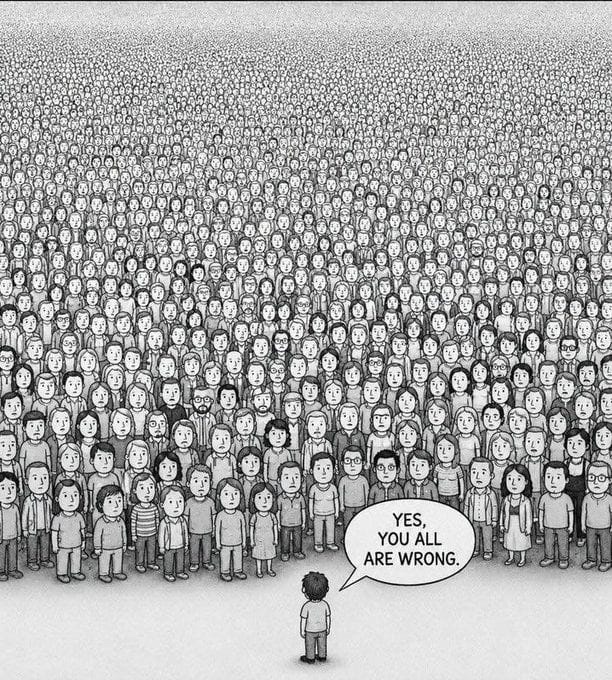 I always ask whether any newly proposed law will increase or decrease individual liberty and freedom for myself, my family and my countrymen. This practice has made me largely disassociate myself from the GOP as it exists today, and although it still represents more closely the beliefs I hold, it still is far and away from the virtues and principles I hold most dear which built America up from a war-ravaged country to a thriving, prosperous nation and the best country on earth. And this same line of reasoning has brought me to hate the Democrat Party communists with every fiber of my body, as they have sought and worked to destroy the American founding and America Herself for as long as I can remember.
There isn’t any way to view taxation as anything other than the theft of the product of a free born American’s property. But the effect isn’t too dissimilar from what we might see in regard to necessary efforts undertaken by private concerns, such as we might see in mounting defenses against common foreign enemies, in order to defend our borders and the sovereignty of our nation. And in the sense that most Americans have seen this as a critical venture, no one has ever raised too many objections over paying taxes to the U.S. government for that purpose and to keep a standing Armed Forces, contrary to admonishments from our Founders.
Could we do as well simply by relying on the hope that we could rapidly raise private monies and an army each time a threat to the nation arose, for the defense of country, people, family and home? Truthfully, probably not, especially as we note the technological advancements in the weapons systems of our enemies abroad and the length of time it took to produce them. While the citizen army of our War for Independence saved the day, these are far different times, and our traitorous elected officials across the decades have flooded our country with so many foreign enemies and anti-Americans that we now face many other troubling problems and the rising specter of a possible civil war in the not-too-distant future.
Taxation exposes the same tension in another form because taxation is simultaneously necessary to nearly all government and inherently coercive. A civilized state cannot defend its borders, operate courts, maintain legitimate public institutions, or provide common infrastructure without resources. The question, therefore, is not whether taxation should exist. The real question is where legitimate taxation ends and political appetite begins.
Once government becomes accustomed to spending enormous sums, every program creates constituencies, every constituency creates political pressure, and every political pressure creates arguments for still more spending. Citizens are repeatedly told that additional revenue is necessary for the next great project, the next emergency, the next reform, the next initiative, the next investment in the future. Sometimes the expenditure produces something valuable. Sometimes it produces waste. Sometimes corruption occurs. Sometimes the program simply survives long after its original justification has disappeared. What the citizen experiences is the aggregate rather than the individual transaction. He sees more of his paycheck disappear, more prices rise as taxes and regulatory costs work through the economy, more complexity intrude upon ordinary life, and more political arguments insist that the solution to the burden created by government is still more government.
Eventually he asks the question that every government should fear: “At what point does the institution established to serve me begin consuming the resources and independence it was created to protect?”
In fits of frustration over the current direction of America under this Leviathan that now directs her course, I have often stated, “What good is government except for NOTHING!!!” – nothing that is other than taking our hard-earned money and violating our Inalienable God-given Rights.
This is where the above-mentioned phrase requires an important refinement. Government is not nothing. Government is an instrument, and instruments can be either useful or destructive depending upon the purpose for which they are used and the limits placed upon them. The government that prevents one man from murdering another is performing a profoundly legitimate function. The government that enforces contracts, maintains courts, protects the nation from foreign aggression, and preserves the constitutional order performs functions without which liberty itself can become impossible. The danger begins when government mistakes its ability to do something for its rightful authority to do it. The fact that a legislature can pass a law does not establish that the law is wise. The fact that an agency can regulate something does not establish that it should. The fact that taxation can finance a program does not establish that the program is legitimate. And the fact that a majority desires something does not automatically make it compatible with individual rights. Constitutional government was designed in part because the founders understood that majorities can become tyrannical just as easily as kings can.
Parallel to this is the fiscal reality: citizens are born into an obligation they never contracted, compelled to surrender an ever-larger share of their labor to fund projects whose benefits are diffuse, delayed, or illusory, while the apparatus that demands the revenue grows more opaque and more insulated from accountability. Trillions pass through the machinery; much disappears into debt service, administrative overhead, and programs whose outcomes fall far short of their justifications. The ordinary person experiences this not as abstract theory but as a concrete diminution of agency – less capital with which to start a family, buy land, build a business, or simply refuse the next demand. Government, in this light, is not nothing; it is an unnecessary evil that becomes an unnecessary master when it ceases to be limited by the consent of the governed and the hard boundaries of enumerated powers. Its utility is real where it secures rights, adjudicates disputes, and provides for the common defense; beyond those bounds it becomes a rival claimant to the individual’s time, property, and moral autonomy.
The central flaw in modern political culture, then, may be less a love of tyranny than a loss of confidence in ourselves. The dependent citizen increasingly doubts his own capacity to survive without institutional assistance. He doubts that he can educate his children without a bureaucracy. He doubts that he can provide for old age without a government entitlement. He doubts that he can find work without government intervention. He doubts that communities can solve problems without federal programs. He doubts that individuals can negotiate their own affairs without armies of regulators, lawyers, administrators, and experts. The consequence is psychologically profound. A people that ceases to believe in its own capacity for self-government will eventually demand government strong enough to compensate for that loss of confidence. The government then grows stronger, which further weakens individual responsibility, which creates still more dependence, which produces another demand for government. The cycle feeds itself.
Against that cycle stands the free man. He is not necessarily wealthy. He may possess very little. He may fail repeatedly. He may endure hardship that a more sheltered person would regard as intolerable. But his defining characteristic is not what he owns; it is what he refuses to surrender. He refuses to surrender responsibility for his own life. He refuses to surrender his conscience merely because conformity is easier. He refuses to believe that comfort is the highest human good. He understands that independence is not the absence of all obligations but the right to determine which obligations he accepts according to conscience, law, family, faith, and principle rather than because some distant authority has decided that obedience is the proper condition of citizenship. This is the man represented by the repeated declaration, “I won’t go quiet.” The words are not merely a boast of defiance. At their deepest level they express a refusal to permit fear to become the governing principle of one’s life.
That refusal has always been necessary because every important expansion of liberty has required somebody to resist the prevailing assumption that things must remain as they are. The American founding itself was an act of resistance against concentrated political authority. Abolition of slavery required resistance against an institution defended for generations as normal. The civil-rights movement that ended Jim Crow and segregation required ordinary citizens to challenge established power. Women demanding political equality, workers demanding basic protections, Americans defending freedom of speech, and generations of citizens contesting abuses of governmental power all participated in the same broad American tradition: the belief that legitimacy must continually answer to principle. Freedom is therefore not a possession that can simply be placed in a vault and forgotten. It is a living political inheritance. Every generation receives it, modifies it, sometimes abuses it, and eventually passes it onward – or fails to do so to the detriment of all.
That is why the image of the Veteran returning from war carries such weight. A man can spend years accepting danger in defense of a country only to return and discover that the society he believed he was protecting has changed in ways he barely recognizes. He may carry wounds that nobody can see and memories that nobody wants to hear. Yet his experience contains a brutal lesson: political freedom cannot be preserved merely by sending people to fight foreign wars. It must also be preserved by citizens willing to understand what freedom actually means when they return home. A nation can possess the world’s strongest military and still lose the character necessary for self-government. It can have magnificent institutions and hollow citizens. It can proclaim liberty while quietly teaching dependence. The external defense of freedom and the internal character required to sustain it are inseparable.
The deepest question, therefore, is not whether government should exist. It is whether Americans still possess the character necessary to govern themselves. Self-government is more demanding than being governed. It requires citizens capable of saying no not only to tyrants but to their own appetites. It requires people who can distinguish a genuine public necessity from a personal desire disguised as a political right. It requires the wealthy to recognize that liberty applies to the poor, the poor to recognize that liberty applies to the wealthy, conservatives to defend principles even when doing so inconveniences their own side, liberals to acknowledge that government power can eventually be used against causes they cherish, and everyone to understand that constitutional limits matter most when they prevent us from getting what we personally want. Freedom is not the right to command everyone else. It is the right to live without being arbitrarily commanded and ruled over from upon high by tyrannical edicts and diktats when no legitimate or righteous reason exists for it.
And this is ultimately why the quest for individual liberty remains so deeply personal. A man who says he will answer ultimately to God rather than to an earthly master is making a claim about the proper hierarchy of authority. He is saying that political institutions may possess legitimate jurisdiction over certain conduct, but they do not possess ownership of his soul. They cannot dictate what he must believe. They cannot compel genuine conviction. They cannot make obedience morally virtuous merely by issuing an order. They can tax him, regulate him, imprison him for violating legitimate laws, or even take his life under certain circumstances of law and war, but they cannot become the final authority over what he believes is right. That boundary between political authority and moral sovereignty is one of the most important boundaries a free civilization can preserve.
The scars matter because they teach this lesson more effectively than comfort ever can. A person who has never endured failure may believe that security is everything. A person who has suffered and survived begins to understand that resilience itself is a form of wealth. The individual who has been knocked down and risen again knows something that institutions cannot teach: human beings are capable of carrying burdens they once believed impossible to carry. The pain does not become good merely because it was painful, but the strength developed in overcoming it can become part of one’s character. That is the meaning behind the declaration that every time a hard man comes close to breaking, he comes back harder. It is not an argument for seeking suffering. It is an argument against becoming terrified of it. A free people that becomes incapable of tolerating hardship will eventually trade freedom for protection from hardship.
Therein lies the final paradox. The government that promises to remove every hardship must eventually acquire the power to regulate every activity that produces hardship. The institution that promises to make everyone secure must eventually decide what risks citizens are permitted to take. The government that promises equality of outcomes must increasingly control the conditions that produce those outcomes. The authority that promises to protect people from their own mistakes must acquire authority over the decisions that produce those mistakes. The path begins compassionately enough, often with legitimate intentions, but the destination can become paternalism: the transformation of citizens into dependents who are treated as though they cannot be trusted with the dangerous privilege of making their own choices.
A free society cannot survive indefinitely on that premise. At some point its people must recover the old conviction that adulthood means responsibility, that property means stewardship and independence, that citizenship means participation rather than entitlement, that education means the cultivation of judgment rather than ideological conformity, and that government is a servant whose legitimacy depends upon remaining within the boundaries established for it. None of this requires total hatred of government. It requires something far more easy for most liberty-minded Americans: distrust of concentrated power in the hands of those who mean to destroy traditional America and our republic in favor of a totalitarian tyrannical form of government under the ideas of communism and/ or the Mother of All Totalitarianisms — the Theocratic Leviathan of Islam.
That is the ancient boundary between the free man and the subject. The subject asks what he is permitted to do. The free man asks what authority has the legitimate power to forbid him from doing. The subject waits for permission. The free man begins from the presumption that his life belongs to him. The subject sees government as the source of rights. The free man understands government as an institution that exists, at its best, to secure rights that precede government. The subject seeks security first and liberty second. The free man understands that security without liberty can become merely a comfortable cage.
Perhaps that is why the hardest road has always appealed to those who truly understand freedom. The easy road says: keep your head down, make no waves, surrender another little piece of independence in exchange for another little measure of security. The hard road says: think for yourself, accept responsibility, defend your convictions, endure the consequences, and refuse to surrender your conscience merely because surrender is easier. The easy road promises peace purchased through accommodation. The hard road promises something more precious and more dangerous: dignity.
And dignity is precisely what cannot be provided by government. Government can provide benefits. It can build roads. It can defend borders. It can administer justice. It can collect taxes and distribute services. It can establish institutions that make civilized life possible. But it cannot manufacture the character of a free people. That must come from the people themselves. No Constitution can save a nation whose citizens no longer value liberty. No law can make people courageous. No government program can teach self-reliance to someone determined never to accept responsibility. No bureaucracy can manufacture moral independence. Those qualities must be cultivated in families, communities, churches, schools, workplaces, and within the individual human conscience.
People choose masters because masters can be comforting. They choose expansive government because dependence can feel safer than responsibility. They surrender pieces of sovereignty gradually because each surrender seems too small to matter. They accept authority because authority often arrives dressed in the language of compassion, efficiency, fairness, security, or necessity. They forget that every power granted to government is ultimately exercised by human beings, and that human beings are no less susceptible to ambition, corruption, vanity, incompetence, and greed simply because they have been elected or appointed — and as viewed through the prism of American society in 2026, that translates to the corrupt electing the corrupt.
The answer is found in something more closely akin to a right-leaning anarchy and a movement that cuts this current U.S. government by half. Should the Democrat Party retake all the powers of government in the coming years, whether in 2028 or 2032, all freedom minded Americans must be prepared to do violence in order to remain free, because no matter how peaceably our nation’s communists and Muslims may take power in the future, their agenda for America will most assuredly be implemented from the barrel of rifles pointed at America’s people. A Liberty-minded Free Born American cannot hate these tyrant wannabes enough.
And in the meantime, we American patriots must recover the American habit of self-government. It is the recovery of the belief that ordinary men and women are capable of making decisions about their own lives. It is the restoration of property as a foundation of independence, education as a means of cultivating judgment, taxation as a limited means of financing legitimate public functions, and government as an accountable servant rather than an omnipresent parent or a tyrannical Big Brother like something straight out of Orwell’s ‘1984’. It is the willingness to say that some problems must remain ours to solve, because solving them ourselves is part of what makes us free.
And that is why the voice that refuses to go quiet matters. Not because every conviction spoken loudly is correct. Not because every institution deserves to be destroyed. Not because every government action is tyranny. But because a free civilization requires people willing to speak when silence becomes the easier choice. It requires people who can stand beneath the pressure of the age and say that their conscience is not for sale. It requires people who have been knocked down and discovered that they can rise again, people who have failed and learned rather than surrendered, people who have suffered and therefore understand the value of choosing their own path. Such people do not need to believe themselves infallible. They need only refuse to believe themselves helpless.
If tomorrow comes and the hair has turned gray, the final measure of a life lived in freedom will not be how comfortably that life was managed by institutions. It will be whether the person can look backward and say that he remained his own man. That he worked. That he endured. That he stood for something beyond convenience. That he refused to exchange his conscience for acceptance or his independence for comfort. That when somebody told him to keep his head down, he remembered that a free man was not born to spend his entire life looking at the ground. And if there are children listening, the inheritance worth giving them is not merely money, land, possessions, or government promises. It is the knowledge that they possess something no institution should ever casually claim: the responsibility and dignity of being human beings capable of governing themselves.
Freedom never came free. It never will. It demands vigilance, sacrifice, courage, restraint, and sometimes the willingness to stand alone. But perhaps that is precisely why it is worth defending. A life in which every hardship has been removed by somebody else may be comfortable, but comfort is not sovereignty. A life in which every important decision has been made by authority may be orderly, but order is not liberty. A life in which the government promises to care for everything may be secure, but security is not the same thing as freedom. The free man understands that the price of independence is responsibility, and he accepts the price because he would rather carry his own burdens than live beneath a master.
That is the heart of the American question. Not whether government is good or evil in some abstract sense, but whether the American people still possess the courage to insist that government remain what it was meant to be: powerful enough to protect liberty, restrained enough not to consume it, and accountable enough to remember that the individual citizen is not the servant of the state. The state is the servant of the people.
The answer from the free man must remain stubbornly simple. He may be pushed, but he will not break. He may be threatened, but he will not surrender his conscience. He may be told to fall in line, but he will continue to think. He may be offered comfort in exchange for independence, but he will remember what the bargain costs. He will understand that there are things more valuable than safety, more important than popularity, and more enduring than political power. He will defend the things that matter because they are worth defending. He will speak because silence, when truth is at stake, can become its own form of surrender.
And when all the arguments are finished, when the politicians have made their promises and the bureaucracies have issued their regulations and the commentators have exhausted themselves explaining why the present arrangement cannot possibly be changed, the free man will still be standing there, scarred perhaps, older perhaps, poorer perhaps, but standing. He will remember that he entered this world with no earthly master. He will remember that his conscience is not a government program. He will remember that his labor is not an inexhaustible public resource. He will remember that his children are not possessions of the state. He will remember that his property is not simply whatever the government permits him to use. And above all, he will remember that legitimate authority has boundaries.
For beyond those boundaries lies the place where the individual must ultimately stand alone: before his own conscience, before the consequences of his own choices, and, for the man of faith, before whatever God he believes will judge him when this life is finished. There, finally, no politician can speak for him, no bureaucracy can substitute for him, and no master can stand between him and the answer he must give.
That is sovereignty.
That is responsibility.
And that, more than comfort, is what it means to be free!
September 24, 2026
Justin O. Smith ~ Author
~ the Author ~
Justin O. Smith Has Lived in Tennessee Off and on Most of His Adult Life, and Graduated From Middle Tennessee State University in 1980, With a B.S. And a Double Major in International Relations and Cultural Geography – Minors in Military Science and English, for What Its Worth. His Real Education Started From That Point on. Smith Is a Frequent Contributor to the Family of Kettle Moraine Publications.