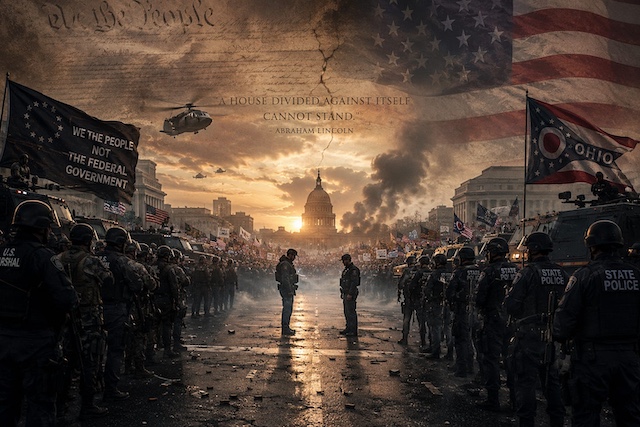
 The first shots were fired in Ohio, although for several weeks afterward nobody could agree upon what they meant. There had been violence before, enough of it that Americans had grown accustomed to the vocabulary devised to make violence sound less frightening than it was. A shooting outside a courthouse became an “altercation.” An attack upon a federal facility became an “isolated incident.” A confrontation between opposing political demonstrations became a “disturbance.”
Armed groups that appeared in the streets were described according to the sympathies of whoever was doing the describing, so that one faction’s militia became another faction’s domestic terrorists, while one side’s revolutionaries were another side’s defenders of democracy. There had been assassinations and attempted assassinations, attacks upon police, assaults upon politicians, riots in several cities, and occasional gun battles between organizations whose names were becoming familiar to Americans who had once known little about political extremism. Yet the government and the press had been reluctant to use the one phrase that might have forced the country to confront the truth.
That phrase was civil war. The words carried too much history. They belonged to photographs of dead boys in gray and blue uniforms, to burned towns and amputated limbs, to Appomattox and Gettysburg, to a generation that had once believed its political differences were so fundamental that bloodshed was preferable to compromise. Americans of the twenty-first century preferred to believe they were more civilized than that. They were about to discover that civilization is not something a people possesses permanently. It is something a people must continually choose.
The immediate crisis began with a dispute that, on paper, seemed almost embarrassingly small compared with the forces already gathering around it. The governor of Ohio had ordered the state police to prevent federal agents from entering several state facilities without warrants issued by an Ohio court. The administration in Washington declared the order unconstitutional and obtained an injunction from a federal judge. The governor refused to comply. The United States Supreme Court ordered him to obey. The governor answered that the Court no longer possessed legitimate authority because its composition had been deliberately transformed by the administration that now sought to use it against the states. Washington denounced the statement as insurrectionist rhetoric. The governor replied that he was defending the constitutional division of powers. Each side believed it was enforcing the law. Each side possessed lawyers who could construct formidable arguments. Each side had millions of Americans prepared to believe those arguments. That was the difficulty. The crisis had reached the point at which legality itself had become dependent upon political allegiance.
The federal marshals arrived at the state facility shortly after sunrise on November 5th 2032. They were not soldiers, though many wore body armor because the previous months had taught law enforcement officers that uniforms had become targets. Across the street, behind another line of vehicles, stood the Ohio State Police. There were perhaps one-hundred and sixty or seventy men on each side. Most were young. Some had served together in training. One federal marshal recognized an Ohio trooper whom he had known twelve years earlier, when both had been recruits at the same academy. They saw one another across the street and for a moment the absurdity of the situation seemed almost enough to dissolve it. Two men who had once learned the same procedures from the same instructors were now standing on opposite sides of a barricade, each waiting for an order that might force him to confront the other.
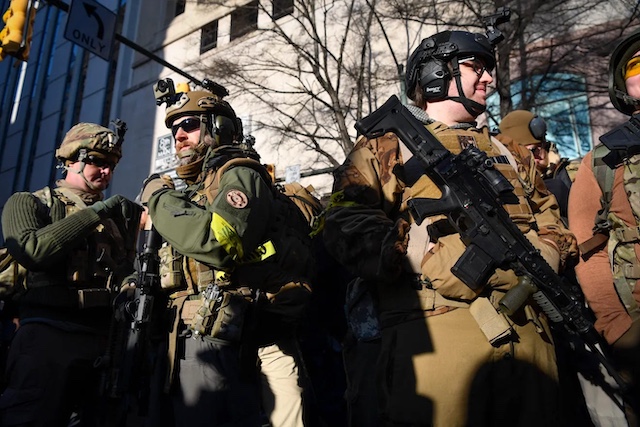 The order came. Nobody later agreed upon precisely what had been said first. One officer moved forward. Another shouted that the state police would not permit the federal agents to enter. Someone pushed a barricade. A federal officer reached for the arm of a state trooper. Another man moved to intervene. Then came the first gunshot. It was followed almost immediately by another, and then by a burst of fire that seemed to come from everywhere at once. Men who had spent their careers learning to distinguish lawful orders from unlawful ones suddenly had only seconds to decide whether the man standing opposite them was a fellow officer, an enemy, or a threat to their lives. When it was over, twenty-six men were dead and dozens more were wounded. By nightfall the number of dead had risen to thirty-seven.
The President appeared before the cameras that evening and called the incident an armed insurrection against the lawful authority of the United States. The governor appeared an hour later and called it an act of federal aggression against the sovereign authority of the State of Ohio. Both the Governor and President Alexandria Ocasio-Cortez spoke solemnly. Both invoked the Constitution. Both called for peace. And both announced measures that made another confrontation more likely.
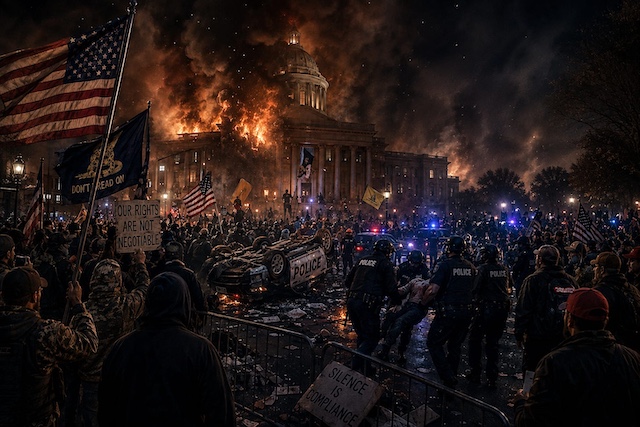
By midnight, armed citizens had begun gathering outside government buildings in several states. Some carried American flags. Others carried state flags. Some carried political banners. Others carried no signs at all. They came because they believed their government was under attack, though half believed the attack was coming from Washington and half believed it was coming from the people standing outside the building with them. The television networks showed the same images throughout the night: smoke above the state facility, overturned police vehicles, wounded officers being carried away, frightened civilians running through streets filled with sirens. The commentators argued over who had fired first. They argued about constitutional authority. They argued about the meaning of insurrection. By morning, millions of Americans had chosen a side in an event most of them had not witnessed.
 The governors of fifteen states announced the creation of what they called the Interstate Compact for Constitutional Sovereignty. They were careful to insist that it was not an attempt at secession. The administration in Washington was equally careful to call it secession without using the word itself. The states claimed that they were asserting powers reserved to them by the Constitution. Washington claimed that the governors were attempting to nullify federal law. The Supreme Court ordered the states to comply with federal directives. Several governors did. Several did not. A few attempted to remain neutral, but neutrality proved difficult in a country where every question was increasingly interpreted as evidence of allegiance.
Cities within conservative states remained overwhelmingly “progressive” — falling in line with the country’s Marxist-Maoist communist, Muslim and illegal alien invader hordes , while rural counties within Democratic states remained overwhelmingly conservative. There were Democrat and DSA and Muslim mayors who supported the federal government and Republican sheriffs who refused its directives. There were National Guard commanders who believed their first loyalty belonged to the President and others who believed it belonged to their governors. There were soldiers who refused to take sides at all. The country was not dividing cleanly along party lines, and that made the situation more dangerous rather than less.
A clean division permits boundaries. This division ran through neighborhoods, counties, police departments, military units, churches, universities, workplaces, and families.
The federal government attempted to regain control of the National Guard units in several states. Some commanders obeyed. Others refused. A few simply locked their armories and declared that they would not participate in domestic political operations for either side. The Pentagon issued orders. Governors issued counterorders. Lawyers filed suits. Courts issued injunctions that local officials ignored. The language of constitutional government remained everywhere, but its substance was beginning to disappear.
On a cold morning in January 2033, a military convoy traveling toward a communications facility in Indiana was attacked. The convoy burned beside the highway for nearly six hours. The federal government blamed a militia organization. The militia denied responsibility and accused federal intelligence agencies of manufacturing the attack to justify a crackdown. A third group claimed responsibility two days later, though nobody could determine whether the claim was genuine. The dead were nevertheless real. After that incident, the government stopped calling the armed groups “extremists” and began calling them “insurgents.” Their opponents began referring to the administration as “the regime.” Words that some Americans had once belonged to the vocabulary of political exaggeration had acquired the weight of official descriptions, but they were based in realpolitik and no other words sufficed — except that the “extremists” were the true American patriots fighting to preserve freedom and individual liberty and the so-called federal government had become nothing less than a communist dictatorship, a military junta.
The cities suffered first because cities depended upon systems that were both intricate and fragile. Fuel shortages appeared within weeks. Police departments found themselves divided over whether to enforce federal or local orders. Courthouses closed because judges and clerks could not agree which authority governed them. Federal offices were evacuated from several metropolitan areas.
Banks imposed withdrawal limits as people began moving their savings into cash. The government assured citizens that the banking system remained stable, and for a while the reassurance worked. Then a major regional bank failed. The government announced that depositors would be protected. The announcement was meant to calm the public, but by then the public had learned that assurances from Washington were no longer necessarily worth what they had been before the war. People lined up outside banks. Others emptied grocery stores.
Families began storing gasoline, bottled water, canned food, batteries, and medicine. Hoarding created shortages, and shortages created further hoarding. In Chicago, a supermarket manager opened his doors one morning to discover three hundred people waiting outside. He knew there was probably enough food for perhaps two days, if everyone purchased reasonably. The people outside did not know that. When somebody shouted that the store was hiding supplies, the crowd began pressing against the doors. The manager climbed onto the entrance canopy and tried to explain. A bottle struck the glass. Another followed. By afternoon, the store was empty and the windows were broken.
That evening, the manager sat in his darkened living room beside his wife and listened to the radio. The announcer spoke of emergency measures and federal assistance. The manager stared at the floor. His wife asked what they were going to do. He told her he did not know. It was a sentence that millions of Americans would eventually learn to speak without embarrassment. For decades they had lived inside a society in which uncertainty was treated as a temporary inconvenience. If the power failed, it would return. If a bank closed, another would open. If the government made a mistake, another election would correct it. If a recession came, prosperity would eventually return. If politicians behaved badly, the voters could remove them. Those assumptions had formed the invisible architecture of ordinary American life. Now one after another they were disappearing, and the people who had depended upon them were discovering that institutions could fail much faster than they could be rebuilt.
The countryside changed more slowly. Farms still had to be planted, animals fed, machinery repaired, and harvests gathered regardless of which party controlled Washington. Food did not care about constitutional theory. A tractor required diesel whether the farmer voted Republican or Democrat. In western Pennsylvania, Tom Mercer spent a cold November morning helping a neighbor repair a tractor. The neighbor had been a Democrat for as long as Tom had known him, and the two men had argued about politics across fences and over beers for twenty years. The neighbor’s son was a Republican. His daughter-in-law had voted for the President. None of that mattered that morning because the tractor had to run before the weather turned.
When they finally got the engine running, the neighbor wiped his hands on a rag and looked toward the highway. He had heard that Pittsburgh was experiencing shortages and that the National Guard had established checkpoints outside the city. He asked Tom whether he thought the fighting would reach them. Tom considered the question before answering.
“Everything reaches somewhere eventually.”
His neighbor looked at him.
“You think it’s really a war?”
Tom listened to the tractor ticking as it cooled.
“I think it’s becoming one.”
The neighbor shook his head.
“Neither side seems to understand what it’s doing.”
Tom looked across the fields, where the last leaves were blowing through the gray afternoon.
“Maybe that’s always been the problem.”
The first refugees arrived before Christmas. They came out of the cities in old cars and pickup trucks, carrying suitcases, blankets, children, and whatever food they had been able to gather. Some had money. Most did not. Churches opened their doors. Schools became shelters. Farmers gave away food. People who had spent years screaming at one another over politics found themselves carrying mattresses into classrooms for strangers. Tom volunteered at the church because there was little else to do. One evening he spoke with a young woman who had come from Pittsburgh with two children. Her husband had disappeared while attempting to reach his workplace after the transportation system collapsed. She did not know whether he was dead or alive.
“Is it safe here?” she asked Tom.
He looked at the children sleeping on a folded blanket near the wall.
“For tonight.”
She understood.
That was the cruelest part of the new America. Safety had become something that could be promised only by the day.
The fighting became more organized in January. At first there were only small engagements: a highway interchange, a communications station, a National Guard depot, a bridge, a fuel terminal. The newspapers called them skirmishes. Then they became engagements. Then battles. Eventually the word war became unavoidable. The President addressed the nation and said that the United States was confronting an armed rebellion against the lawful government. The governor of Texas answered that the country was confronting an unconstitutional attempt by the federal government to impose political control upon sovereign states. Both speeches were carried live. Both were persuasive to millions. Both contained enough truth to make compromise almost impossible.
The terrible characteristic of the conflict was that almost nobody believed himself to be the villain. The President believed she was defending democracy against armed reactionaries. The governors believed they were defending constitutional government against an increasingly centralized federal authority. The militias believed they were defending their communities. Federal troops believed they were preserving the Union.
The Marxist-Maoist Democrat Communists knew exactly what was happening — murderous anti- American thieving cutthroats and liars that they were, but still they spread their false narrative that they were defending the nation against people who would restore an “unjust past”, if they regained power. Conservatives believed that allowing the regime to continue would mean the permanent destruction of the constitutional order. Each faction could point to their respective grievances, with only the conservative and independent patriots holding any real grievances. The most horrific abuses were largely committed by the Democrat, BLM, DSA and illegal alien communists, aided by gleeful Muslims screaming “Allahu Akbar” across the killing fields, as gory, bloody photographs and videos documented the enemies’ atrocities.
For many, the war eventually seemed to acquired the peculiar moral quality of a conflict in which everyone possessed enough truth to justify his anger and enough blindness to prevent him from understanding the whole. But once the photos and videos of one communist and Muslim atrocity after another emerged in public, the good and decent hard conservative men became the monsters the American people needed if they were to remain free, and they unleashed unholy Hell upon those who sought to destroy them along with the republic.
The first winter was brutal. Electrical failures spread. Fuel became scarce. Heating oil disappeared from some regions. Hospitals began rationing supplies. County governments printed emergency identification cards. Local authorities established checkpoints. In several places federal currency remained trusted; elsewhere people traded in ammunition, food, fuel, tools, or precious metals. The country still had a central government, but increasingly the practical authority of government ended where the next checkpoint began.
Tom’s town tried desperately to remain outside the conflict. The effort lasted until a convoy stopped at a local fuel station. Nobody knew which faction the convoy belonged to. The men demanded diesel. The owner refused. An argument followed. A gunshot was heard. The owner fell. The convoy left before the sheriff arrived. By evening, the town hall was filled with people demanding that something be done. Some wanted armed patrols. Others opposed them. Some wanted the town to recognize the state government. Others wanted it to recognize Washington. One man shouted that they needed to choose a side.
Tom stood near the back of the room.
“Which one?” he asked.
The man looked at him.
“One of them.”
Tom shook his head.
“That’s easy to say until you know what choosing means.”
Nobody answered.
Because everyone understood.
Choosing meant telling the other side that you were its enemy.
The first organized refugee movement reached the town in the spring. Families came from Pittsburgh, Columbus, Cleveland, and other cities where the fighting had become more intense. Some had relatives in the countryside. Others had nowhere else to go. The church became crowded. The school became crowded. A local farmer gave up an empty barn for storage. Tom’s neighbor slaughtered two cattle and distributed the meat among the families. For a few weeks, the town experienced something resembling the old America. People worked. They shared food. They repaired buildings. They prayed. They argued about politics but quietly, because everyone had begun to understand that the person sitting beside him might have buried somebody that week.
One evening, Tom was walking through the church basement when he heard a young man arguing with an older woman.
“Those people are the reason we’re in this mess,” the young man said.
The woman turned toward him.
“Which people?”
He hesitated.
“You know.”
“No,” she said. “I don’t.”
He looked angry.
“The outsiders.”
The woman stared at him.
“The woman in that room lost her husband.”
“That doesn’t change anything.”
“It changes everything.”
Tom stopped at the doorway.
The young man looked at him.
“Whose side are you on?”
Tom stared at him for a long moment.
“I’m on the side of the people still trying to live right, willing to work and not believing they are owed something for nothing.”
The young man turned away.
Tom continued down the hallway.
It was a small moment, almost meaningless amid the larger catastrophe, but such moments were everywhere. There were federal officers who refused unlawful orders. There were militia commanders who treated prisoners humanely. There were Democratic mayors who sheltered conservative families. There were Republican sheriffs who protected immigrants from mobs. There were doctors who treated wounded men from both armies without asking which uniform they wore. There were Black pastors who opened churches to soldiers from opposing factions, Muslim physicians who continued treating patients while the tyrannical commies and the freedom-loving patriots on one side or the other demanded that they choose, and Mexican-American farmers who fed refugees without asking how they had voted, and old women who kept cooking for whoever was hungry.
Human decency had not disappeared.
It simply proved incapable of stopping the war.
That was perhaps the saddest discovery of all.
By the summer, the conflict had spread across much of the country. It was no longer a rebellion in the ordinary sense, because there were too many governments, too many armies, too many militias, too many territories, and too many competing claims of legitimacy. There were no continuous front lines. A town could be controlled by one faction in the morning and another at night. Bridges were destroyed to prevent troop movements. Electrical substations were sabotaged. Railroads were attacked. Communications towers disappeared. Political leaders were assassinated. Local officials vanished. Prisons emptied in some places and became military detention centers in others. The federal government issued proclamations. Governors issued counter-proclamations. Courts continued to issue opinions even when there was nobody willing to enforce them — actually nobody any longer left who was willing to respect and honor any ruling that too often was being issued by a deceptive, duplicitous, backstabbing commie activist judge.
It was then that the Republic suffered its deepest wound.
The Supreme Court issued a sweeping decision affirming federal authority over the states. The opinion was brilliant. It was carefully argued. It cited precedent. It invoked the Constitution, history, federalism, and the nature of the Union. Lawyers praised it. Professors debated it. Newspapers printed it.
Nobody obeyed it.
That was the moment Tom understood that the Constitution could survive an unpopular law, a corrupt politician, even an unjust court. What it could not survive was its treasonous traitors from within and a Supreme Court that had long ago become unmoored from anything remotely resembling a legal and Constitutional entity. But even so, when only one side honored the Constitution, one could not allow oneself to be bound in such a manner as to give the communists the upper hand. He came to understand that the Constitution was never intended to be a national suicide pact.
The words remained.
The legitimacy did not.
President Alexandria Ocasio-Cortez was killed in the autumn.
Tom heard the news on a battery-powered radio while sitting in the church basement. The first report said she had been wounded. The second said she had escaped. The third said the government had denied the report. Finally, hours later, the official announcement came. The President was dead.
Nobody in the room celebrated.
Tom had despised her policies. He believed that her regime had helped lead the country into catastrophe. He believed she had abused the power of her office and that the political movement surrounding her had treated constitutional limitations as obstacles rather than safeguards. Yet when he heard that she was dead, he felt only an enormous emptiness.
A woman near him began crying.
“You hated her,” someone whispered.
Tom nodded.
“Then why are you crying?”
He looked toward the radio.
“Because I’m relieved for America. Maybe She’s got a chance now.”
The woman stared at him.
Tom lowered his eyes.
“And because now I don’t know what happens next.”
The war continued for another two years.
There were victories, defeats, massacres, ceasefires, betrayals, and negotiations that collapsed at the last moment. Entire communities disappeared. Some cities became shells. Millions were displaced. The death toll was impossible to calculate because neither government possessed reliable records and because many Americans simply disappeared. Some died in combat. Some died of disease. Some starved. Some were murdered by criminals who discovered that the collapse of government offered opportunities that politics had never provided. Some were killed because of their political affiliations. Others because they happened to be in the wrong place when a checkpoint changed hands.
And yet the country did not become entirely monstrous.
That was the thin thread upon which everything eventually depended.
A federal soldier refused an order to fire upon civilians.
A militia commander released prisoners rather than execute them.
A Republican sheriff protected Democratic families.
A Democratic mayor protected Republicans.
A Muslim doctor remained in a hospital after being offered safe passage because the wounded still needed treatment.
A Black pastor continued preaching that his countrymen were not enemies simply because they disagreed.
Farmers continued planting.
Nurses continued working.
Teachers continued teaching children in basements.
Mothers continued making dinner.
Fathers continued repairing roofs.
People fell in love during the war.
Children were born.
People buried their parents.
Life continued with the stubbornness it had always possessed.
That did not make the war less terrible.
It made it more terrible.
Because every act of kindness demonstrated how unnecessary so much of the destruction had been.
The ceasefire finally came in 2035.
There was no single ceremony resembling Appomattox. There was no triumphant army marching beneath banners while its defeated enemy surrendered in a field. There were agreements, withdrawals, exchanges of prisoners, constitutional conventions, regional settlements, amnesties, prosecutions, and years of negotiations. The United States survived, although the country that emerged was profoundly different from the country that had entered the conflict.
The federal government was weaker.
The states were stronger.
Congress restored procedural barriers that made it considerably more difficult for temporary majorities to transform the fundamental machinery of government. Emergency powers were restricted. The Supreme Court was reconstituted. Federal taxation was reduced. The military’s domestic role was sharply limited. Immigration laws were rewritten and finally enforced. Energy policy was rebuilt upon the uncomfortable recognition that a modern nation required abundant and reliable power. The banking system was reconstructed. Infrastructure was rebuilt slowly.
But no constitutional amendment could resurrect the dead.
No law could return a child to his mother.
No election could repair a family divided by war.
No court could erase what Americans had done to one another.
Years later, historians would argue about when the civil war had actually begun. Some would point to Ohio. Others would identify the assassination of a senator, the first military convoy destroyed, the first state to refuse federal authority, or the fraud-ridden election that had brought the original Ocasio-Cortez regime to power. Others would go still farther back and identify the economic collapse, the political polarization, the erosion of institutional trust, the politicization of the courts, the transformation of the media into competing realities, the normalization of political violence, the growing conviction that one’s opponents were not merely wrong but illegitimate, and the dangerous belief that losing an election was equivalent to losing the country itself.
Tom Mercer had a simpler answer.
He was eighty years old when he returned to the place where the steel mill had once stood. The buildings were gone. The smokestacks had been demolished. Grass grew through cracks in the concrete. A young man working for a reconstruction crew was standing beside a truck when Tom approached.
“Are you looking for something?” the young man asked.
Tom looked across the empty field.
“America.”
The young man smiled uncertainly, thinking perhaps that the old man was joking.
Tom wasn’t.
He had spent his life believing that America was indestructible because he had never seen it break. Now he understood that the opposite was true. The country had survived precisely because it had been breakable, because the people inside it were human beings rather than saints, because institutions depended upon habits of restraint rather than magic, and because every generation had to decide anew whether political disagreement was something to be settled through government or something that justified destroying government itself.
He looked across the field toward the distant hills.
The young man asked him whether he thought another war would come.
Tom was silent for a long time.
Finally he said, “That depends on whether you remember this one.”
The young man frowned.
“What should we remember?”
Tom turned toward him.
“That nobody starts a civil war believing he’s the bad guy.”
The young man said nothing.
Tom continued slowly, almost as though he were speaking to himself.
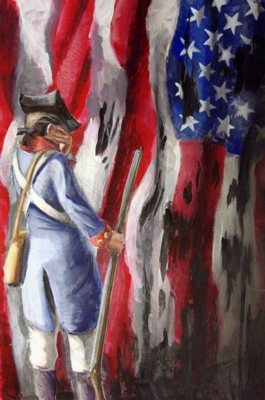
Death of the Republic
“Everybody thinks he’s saving something. His country. His family. His people. His Constitution. His future. That’s what makes it so dangerous. By the time you realize you’ve crossed the line, you’ve usually crossed it a hundred times. But some lines must be crossed when a free people are confronted by tyrants who would take their freedom from them.”
The sun was sinking behind the hills.
Tom looked once more across the ruined ground where men had once worked, laughed, cursed, raised families, complained about their bosses, and gone home tired at the end of the day. He remembered the mill whistle. He remembered his father taking him there when he was a boy. He remembered the heat of the furnaces, the smell of oil and steel, the paychecks folded into his pocket, the arguments with supervisors, the jokes in the locker room, and the men who had died before him.
He remembered the country as it had been.
Not perfect.
Never perfect.
But his.
He turned toward the road.
The Republic had survived, but survival was not victory. It was simply the opportunity to try again.
And perhaps that was the final lesson the dead had left behind.
The Founders had never promised Americans a perfect government. They had understood too well the nature of mankind for such a promise. They had instead constructed a system intended to restrain imperfect men and women from exercising unlimited power over one another. They had divided authority because they distrusted concentrated authority. They had protected speech because they distrusted governments that claimed to possess the truth. They had protected states because they distrusted distant rulers. They had protected individual rights because they understood that majorities could become tyrannical. Above all, they had built a system in which political defeat was supposed to be survivable.
That was the bargain America had forgotten.
One side had come to believe that winning gave it the right to remake the country without restraint.
The other had eventually come to believe that losing meant the country itself was being stolen.
Between those two convictions stood the Constitution, bastardized beyond recognition, battered and clearly broken.
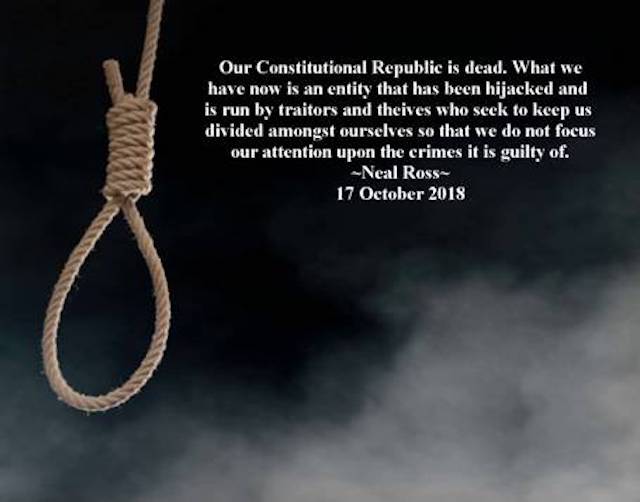 The war had demonstrated the terrible truth that neither faction had understood while it still possessed the luxury of peace: a republic cannot survive when every election becomes a battle for permanent possession of the nation.
Someone must win.
Someone must lose.
The winner must accept limits.
The loser must accept the result.
And both must believe that another election will come.
That is the fragile bargain upon which free government rests.
America had forgotten it once, and now She had forgotten it once more.
It had taken hundreds of thousands of lives to remember.
Tom walked toward his truck as evening settled over the hills. Behind him, the young workers returned to their reconstruction.
There would be another generation.
There would be another election.
There would be new arguments, new parties, new causes, new grievances, and new men and women convinced that their moment in history was the most important moment America had ever known.
Perhaps they would remember.
Perhaps they would not.
Tom climbed into his truck and started the engine.
For a moment he sat there listening to it run, reflecting on the life he had led and all he had borne witness – stories and warnings to pass on to the next generation.
Then he looked toward the road, heaved a sigh wondering what the ‘morrow would bring and drove on home to Ellen, who embraced him and held him tight as he entered the drawing room where she had just been sitting on the sofa, reading her Bible and praying for this America she loved so well.
September 15, 2026
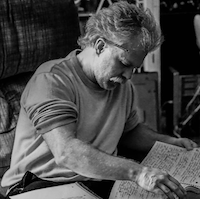
Justin O. Smith ~ Author
~ the Author ~
Justin O. Smith Has Lived in Tennessee Off and on Most of His Adult Life, and Graduated From Middle Tennessee State University in 1980, With a B.S. And a Double Major in International Relations and Cultural Geography – Minors in Military Science and English, for What Its Worth. His Real Education Started From That Point on. Smith Is a Frequent Contributor to the Family of Kettle Moraine Publications.