
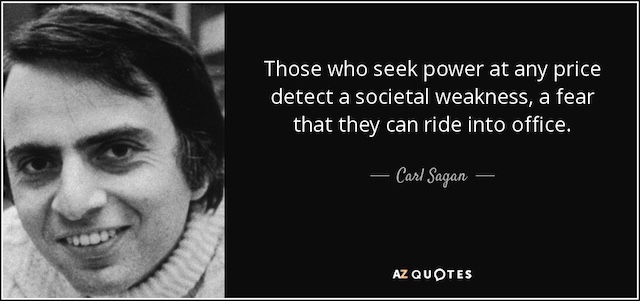
 Power rarely announces itself as domination; more often, it appears as procedure, opportunity, expertise, influence, or common sense.
For that reason, its true cost is difficult to measure until citizens begin to recognize that the choices available to them have been shaped before they ever enter the debate. What costs does American society incur when power becomes concentrated more rapidly than democratic accountability can constrain it?
This question is significant because power does not merely influence policy outcomes; it also determines whose perspectives are amplified, whose needs receive institutional attention, whose risks are minimized, and whose interpretation of reality gains public authority. The central issue, therefore, is not whether power exists in the United States, but whether citizens retain sufficient capacity to hold it meaningfully accountable.
Across political, economic, and cultural domains, authority increasingly accrues to actors that already possess money, access, and visibility. As that leverage grows, the practical range of change available to ordinary people narrows. This broader concern is most clearly visible in three interrelated forces that structure American society: political authority, economic capital, and cultural influence. Each can support democratic life when constrained, distributed, and publicly answerable; each becomes more dangerous when it helps the others evade scrutiny.
~ Three Forms of Power in America ~
Taken together, political authority, economic capital, and cultural influence shape American life through distinct but overlapping mechanisms. Political authority moves through law and institutions; economic capital through ownership, wealth, and access; cultural influence through attention, identity, and belief. The framework reveals a central dynamic: domination becomes most consequential when one form purchases, protects, or legitimizes the others.
Political authority
Political authority is the most visible form of power, exercised through public offices, statutory law, courts, and electoral systems. It determines who governs, which rights receive protection, how public resources are allocated, and how social conflicts are adjudicated. Yet campaign finance structures, partisan districting, party procedures, and judicial appointments can distance public policy from broad public consent.
These institutional mechanisms matter because procedural choices often become substantive outcomes. For instance, when state legislatures redraw electoral districts, when courts reinterpret constitutional protections, or when Congress prioritizes one public investment over another, procedural decisions become decisions about representation, protection, and access.
A particularly revealing example is Shelby County v. Holder, in which the Supreme Court invalidated the Voting Rights Act’s coverage formula for federal preclearance. Before that decision, covered jurisdictions had to obtain federal approval before changing voting procedures, a safeguard designed to prevent discriminatory rules from taking effect before they could harm voters. By disabling that formula while leaving Congress to create a new one, the Court turned a legal judgment about federalism and constitutional authority into a practical shift in electoral power. Formerly covered states could now alter voting rules without the same prior federal review.
Beyond these formal mechanisms, political authority also carries symbolic significance that other forms of power often seek to appropriate. A court ruling, executive order, or congressional investigation does not merely alter procedure; it signals what the nation is prepared to recognize as legitimate. For this reason, political power can feel deeply personal even when it appears technical, since decisions concerning voting rules, policing, immigration, education, reproductive rights, taxation, or public spending affect not only policy outcomes but also the status and dignity of those governed by them.
Consequently, the distinction between responsive and insulated authority becomes central. When political institutions remain answerable, citizens can deliberate, organize, vote, litigate, protest, and demand more representative governance. When those institutions become insulated, the same forms of participation begin to appear largely ceremonial. Citizens may still engage, but they may also perceive that major decisions have already been shaped by donors, party incentives, legal technicalities, or institutional gatekeeping before public opinion is meaningfully considered.
Economic capital
If political authority reveals how power is formalized, economic capital reveals how power is sustained. Less visible than public office, it is often more durable: wealth determines who can invest, lobby, employ, build, litigate, advertise, donate, and withstand crisis. Markets can reward innovation and productivity, but concentrated ownership and unequal access to credit, housing, health care, and education can convert civic opportunity into private advantage.
This durability becomes visible in the ways money extends beyond private exchange into public leverage. Corporate lobbying, donor access to candidates, and unequal school funding illustrate how money functions as more than a medium of exchange. It expands reach, constrains available choices, and can make structural inequality appear to be the natural result of individual decision-making.
Public school finance provides a concrete example of this dynamic. Because many American districts rely heavily on local property wealth, affluent communities are often better positioned to sustain high-quality facilities, smaller class sizes, better-paid teachers, stronger extracurricular programs, and broader academic offerings. Districts with lower property values may need higher tax rates simply to generate less revenue. They therefore face older buildings, fewer advanced courses, limited counseling support, and reduced college preparation. Economic capital does not merely reflect unequal opportunity after the fact; it helps determine the quality of opportunity before students ever enter adulthood.
Moreover, economic capital shapes not only institutions but also individual possibility. Individuals with substantial resources can endure crises, relocate, obtain expert assistance, absorb risk, or reinterpret failure as experience. Individuals without such resources may experience the same event as an irreversible loss. This distinction matters because freedom is not merely the formal right to choose; it is also the practical capacity to act on a choice without disproportionate harm.
Because economic resources shape both public agendas and private capacity, capital frequently becomes political force without formally occupying public office. Wealth can influence public agendas by funding think tanks, advertising campaigns, litigation, ballot initiatives, and advocacy organizations. Even when such activity is legally permissible, the resulting imbalance remains significant: some citizens speak primarily as individuals, while others speak through institutions designed to multiply their voice.
Cultural influence
This form of power operates before formal decisions are made by shaping what the public considers reasonable, threatening, or inevitable. For example, a viral phrase, dominant media frame, or algorithmically amplified controversy can shift public opinion before any law is enacted or any vote is cast, making socially constructed interpretations appear self-evident.
Digital platforms show how cultural influence now operates through algorithmic visibility as well as traditional institutions. Social media recommendation systems do not simply display public opinion; they help organize it. By prioritizing content likely to generate engagement – outrage, fear, identity-based conflict, or emotionally charged misinformation – these systems can make amplified narratives seem more representative than they are. Platform design thus becomes a form of cultural gatekeeping, embedding cultural power in technical systems that decide what millions of people are most likely to see, repeat, and believe.
Its influence is especially powerful because it often remains invisible to those who inhabit it. Societies do not consciously debate every assumption they inherit; many are absorbed through repetition. Narratives about success, deservingness, patriotism, danger, freedom, family, gender, race, religion, and class can teach individuals what to admire and what to fear long before they encounter formal argumentation.
For that reason, cultural authority is often more difficult to contest than institutional or economic force. A statute can be appealed and an election can be challenged, but a shared narrative can persist precisely because it appears natural. It can lead individuals to defend arrangements that disadvantage them or to distrust reforms that might benefit them. In this sense, cultural influence does not merely reflect political and economic structures; it conditions the public to accept or resist them.
How they compare
Having examined each form separately, their comparison shows why power is most consequential when these domains reinforce one another. Political power moves through institutions, economic power through resources, and cultural power through meaning. Influence becomes most durable when these domains converge, such as when wealthy interests finance campaigns, political movements shape media narratives, or cultural backlash redirects markets and electoral behavior.
The convergence is especially apparent in modern political campaigns. Wealthy donors and organized interest groups help determine which candidates have the resources to compete. Media ecosystems translate campaign messages into cultural identity, while digital platforms reward the most polarizing versions with visibility. A campaign advertisement, for example, may begin as an economic expenditure, become a political instrument through its effect on voters, and then become a cultural signal when it is shared, mocked, defended, or transformed into an identity marker online. In such cases, institutional authority, financial capacity, and cultural meaning reinforce one another, making concentrated influence appear democratic, popular, or inevitable.
Therefore, analyzing these domains together also demonstrates why no single reform is sufficient. Electoral reform may be limited if money continues to dominate campaigns. Economic reform may falter if cultural narratives persuade citizens that inequality is deserved. A cultural movement may achieve visibility without durable institutional change if resources and governing structures remain unchanged. Meaningful reform therefore requires pressure across all three domains simultaneously.
~ The Ends and the Means ~

“The Ends Justify the Means” ~ Niccolò Machiavelli, Patron Saint of Justification…Especially America’s Government
This interaction among forms of power raises a further question: what methods are societies willing to tolerate in pursuit of desired outcomes? A recurring danger in democratic societies is the temptation to defend questionable means when the desired end appears sufficiently urgent. Machiavelli is often compressed into the phrase “the ends justify the means,” and although that formulation oversimplifies his political thought, it captures a familiar American tendency: excusing abuses of power when they appear to advance one’s preferred cause.
That tendency appears across the same political, economic, and cultural arenas discussed above. In politics, this may involve bending procedural norms in the name of protecting democracy; in the economy, it may involve tolerating exploitation in the name of growth; and in culture, it may involve spreading distortion in defense of a supposedly higher truth. Once a society accepts this logic, power no longer requires accountability; it requires only a persuasive justification.
This logic appears whenever officials defend extraordinary procedural tactics as necessary to protect the nation, corporations justify harmful labor or environmental practices as necessary for prosperity, or media actors circulate falsehoods because they believe those falsehoods serve a larger political objective. A government official may invoke emergency powers because a threat appears severe. A corporation may present unsafe labor conditions or environmental damage as the unavoidable price of jobs and growth. A partisan media figure may defend misleading claims as necessary to mobilize supporters. In each case, the stated end shields the means from scrutiny, and authority preserves itself by redirecting attention from accountability to necessity.
As a result, the price of power becomes moral as well as political. If a society normalizes improper means for preferred ends, it erodes the standards that would protect all citizens when power changes hands. Short-term victories can weaken long-term legitimacy because institutions depend not only on winning, but also on public belief that rules remain binding even when they are inconvenient.
This erosion of standards does not imply that citizens should remain passive or naïve about power. Rather, the concern is that urgency can become permission. Once every faction regards its cause as too important to be constrained, democracy becomes less a system of shared rules than a competition over who can most effectively justify violating them.
~ The Illusion of Control ~
 If the ends-and-means problem concerns how power justifies itself, the illusion of control concerns how power conceals itself. Modern power is unsettling not because citizens lack all control, but because they are often offered enough participation to confuse it with authority. Voting, purchasing, posting, boycotting, donating, and commenting can matter. They do not, however, constitute meaningful power if the consequential options have already been narrowed.
This distinction between participation and authority clarifies why choice and control are not equivalent. Individuals may be presented with numerous options while still lacking power if none of those options alters the rules, incentives, or narratives that structure the system itself.
Because this confusion can make limited participation appear sufficient, the illusion is politically consequential. If citizens believe the system is already responsive, they may individualize failure when institutions do not serve them; if they believe meaningful change is impossible, they may withdraw entirely, creating still more space for concentrated power to expand.
In contemporary public life, this illusion is reinforced by constant opportunities for reaction. Americans are invited to react continuously: rate the service, choose the brand, post the opinion, sign the petition, vote in the poll, donate to the campaign, and debate the headline. These actions can be meaningful, yet they can also generate a sense of agency without transferring genuine authority over the structures that define the choices in the first place.
Social media provides one of the clearest contemporary examples. Users may feel intensely involved in public life because they can react instantly to political events, join viral debates, repost slogans, criticize officials, or participate in online campaigns. Yet platform design, recommendation systems, advertising incentives, and opaque circulation rules still govern the visibility of those reactions. A user may experience participation as direct public influence, but the platform determines whether that participation reaches thousands, disappears almost immediately, or becomes data for targeted advertising. The result is agency that feels immediate while remaining structurally dependent on systems the user does not control.
Ultimately, this distinction matters because democracy depends on citizens believing that participation can produce substantive change. If participation becomes primarily expressive rather than effective, public life begins to resemble performance. Citizens may become more vocal while feeling less powerful, more informed while feeling less capable of action, and more connected while trusting one another less.
Together, these sections show that the price of power in American society is not confined to any single institution or class of actors. Political authority determines the formal rules of public life, economic capital shapes the material conditions under which citizens exercise freedom, and cultural influence defines the narratives through which people interpret both. When these forms of power reinforce one another without sufficient accountability, they do more than produce unequal outcomes; they weaken the democratic relationship among citizens, institutions, and shared public meaning.
~ The Cost to American Society ~

Collapse of Society
The cumulative result of these dynamics is a deterioration of trust in the institutions intended to represent, protect, and inform the public. When political authority appears captured, democracy resembles performance; when economic capital controls too many choices, freedom appears conditional on wealth; and when cultural influence divides or distorts public understanding, citizens lose the shared language necessary for self-government.
Historical and contemporary examples make this cost more concrete. Voting rules can determine whose participation matters before a ballot is ever cast; school funding systems can determine whose future is adequately resourced before students ever sit for a standardized test; and digital information systems can determine which narratives dominate public attention before citizens begin forming political judgments. These examples show that power shapes not only government decisions but also the conditions under which citizens understand themselves as capable participants in democracy. When access to voting, education, and public information is unevenly structured, democratic participation remains formally available while substantively unequal.
For this reason, the consequences extend beyond institutional design into civic emotion and behavior. Concentrated power does not merely govern from above; it teaches citizens to expect exclusion, to doubt reciprocity, and to withdraw from institutions that appear incapable of responding to them. As public trust declines, concentrated power faces less organized resistance and becomes still more difficult to dislodge.
In turn, declining trust contributes to social fragmentation. When citizens no longer regard institutions as fair, they often retreat into narrower communities of trust: party, class, region, religion, media ecosystem, or identity group. Such communities can provide belonging, but they can also intensify mutual suspicion. The result is a public sphere in which Americans do not merely disagree about policy; they increasingly dispute the basic conditions of shared reality.
Yet this diagnosis should not be mistaken for resignation. The persistence of concentrated authority does not make democratic accountability impossible; it makes public answerability the central test of democratic life. A healthy society is not one without hierarchy, influence, or ambition, but one in which governing force remains visible enough to scrutinize, limited enough to challenge, and responsive enough to correct.
The United States, therefore, does not need to eliminate power; it needs to reject authority that escapes accountability. Political institutions must remain answerable to voters, economic capital must expand rather than restrict opportunity, and cultural influence must clarify public reality rather than enclose citizens within competing narratives. The price of concentrated power becomes too high when ordinary Americans are asked to sustain systems they do not trust, accept choices they did not meaningfully shape, and live within stories they did not author. At that point, the central question is no longer simply who holds power, but whether democracy retains the capacity to make governing authority answer to the people it claims to serve.
Works Cited
“Shelby County v. Holder, 570 U.S. 529 (2013).” Justia U.S. Supreme Court Center, Justia.
“Shelby County v. Holder.” National Constitution Center
“Citizens United v. FEC.” Federal Election Commission.
“Citizens United v. Federal Election Commission, 558 U.S. 310 (2010).” Justia U.S. Supreme Court Center, Justia.
Ravitch, Diane, et al. “Making the Grade 2024: How Fair Is School Funding in Your State?.” Education Law Center, 2024.
“Mixed Views about Social Media Companies Using Algorithms to Find False Information.” Pew Research Center, 17 Mar. 2022.
“How Americans Navigate Politics on TikTok, X, Facebook and Instagram.” Pew Research Center, 12 June 2024.
Disclosure: AI assistance was used only to identify and format Works Cited entries.
For the Amalgamated Heavy
‘The devil you say…‘

September 2, 2026
~ the Author ~
 Charles R. Dickens Was Born in 1951, Is a Veteran of the Vietnam War, for Which He Volunteered, and the Great-Great Grandson of the Noted Author, Whose Name He Shares.
He Is a Fiercely Proud American, Who Still Believes This Is the Greatest Country on the Planet, With Which We’ve Lost Control and Certainly Our Direction. He Grew Up in Moderate Financial Surrounding; We’re Not Rich by Any Stretch, but Didn’t Go Hungry – His Incredibly Hard Working Father Saw to That. As Most From That Era, He Learned About Life From His Father, Whose Story Would Take Too Long to Tell, Other Than to Say That, He Is Also a Fiercely Proud American; A WWII and Korean War, Veteran Marine.
Charlie Was Educated in the Parochial System Which, Demanded That You Actually Learn Something, and Have Capability to Retain It Before You Advance. He Attended Several Universities in Pursuit of a Bachelor’s Degree, and Chased the Goose Further to a Master’s, and Has Retained Some Very Definite Ideas About Education in This Country.
in Addition, Charlie Is a Retired Blues Guitar and Vocalist – a Musician. This Was His Therapy Career. Nothing Brings Him as Much Joy as Playing Music, and He Wishes That He Could Make a Living at It… but Alas… Life Goes on!