“The House of the Rising Sun” — a ballad older than the United States itself, reimagined as a dark rock lament for a generation that came home different, or did not come home at all.
A haunting arrangement of the folk song that echoed across every American war of the 20th century — and became inseparable from the memory of Vietnam.
Nobody knows who wrote it.
The oldest traces of “The House of the Rising Sun” reach back to 17th-century English folk ballads — songs about ruined lives, gambling houses, and the long road to nowhere. When the tune crossed the Atlantic, it settled into the mountains of Appalachia and the streets of New Orleans, sung by miners, prisoners, prostitutes, and drifters. Every generation rewrote the words. Every generation kept the melody.
In 1937, folklorist Alan Lomax recorded a sixteen-year-old miner’s daughter named Georgia Turner singing it in Middlesboro, Kentucky. It was published in 1941. Woody Guthrie sang it. Lead Belly sang it. Josh White sang it. Bob Dylan put it on his debut album in 1962.
Then, on a single take in May 1964, four young men from Newcastle walked into a London studio — and everything changed.
The Animals recorded their version in fifteen minutes. It was released on June 19, 1964. By August, it was #1 in the United Kingdom. By September, it was #1 in America.
That same August, the U.S. Congress passed the Gulf of Tonkin Resolution. By the end of the year, American combat troops were on their way to Vietnam.
The song and the war arrived together.
THE SONG THAT FOLLOWED A GENERATION
For the next decade, “The House of the Rising Sun” followed young American soldiers across the Pacific. It played on transistor radios in the barracks at Da Nang. It played on tape decks in the jungles of the Central Highlands. It played on jukeboxes in Saigon bars where GIs drank and did not talk about what they had seen that week.
Nobody had written it about the war… and yet it fit the war perfectly.
“There is a house in New Orleans…” — the words spoke of a place a boy should never have gone. Of a mother’s warning ignored. Of a life bound by things one could no longer escape.
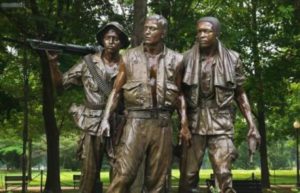 For a generation of American soldiers — many of them barely eighteen — that was the war in a single verse.
58,220 of them never came home.
303,000 more came home wounded.
And the rest came home changed in ways the country had no vocabulary for.