I did a good bit of reflection, as I churned out this piece, and decided that most people walk many a crooked mile before reaching the pinnacle point and the culmination of their life, and I suspect many a hard moments thought goes into shaping the people in America’s society who prove to be what the majority of Americans view as “successful”. But for me, it’s always been the case that what most would call “success”, I always saw as chains forged around my neck, ankles and wrists and a prison that made it hard to breathe.
Looking back in my mind’s eye, I recalled sitting on beach of Ft. San Lorenzo, drinking espresso and rolling sharks’ teeth in the palm of my hand, that I found in the shallows — sun drenched and considering a shot of whiskey later. And then I saw Deana’s [an old girlfriend] fine tight little ass as the church bells pealed on a Sunday morning, with ‘Sunday Morning Coming Down‘ playing in the background. I’m thinking of her legs, surfing the waves, and Jesus walking on the water — and the dark, chaotic night the birthed me, deep in the heart of nowhere in Ft. Riley, Kansas in 1957.
Life was full of intrigues, mysteries and adventures that only a young boy can find on his own, not too dissimilar from what one will find in Mark Twain’s ‘Adventures of Huck Finn‘.
Dad placed a .38 in my hand and taught me to shoot at eight years of age, and that was the same year I received my first rifle for Christmas. Playing Army taught me planning, tactics and cooperation. A few years later in ninth grade, algebra was threat assessment and by 12th grade and trigonometry, I had learned to use it for correcting ballistic lines.
Give a young boy a rifle today and, depending on the state, you get blue-haired freaks raisin’ hell and Child Protective Services trying to take him out of his home and away from parents who most assuredly love him, or her.
If our society would move forward with a whole lot less attention on electronics and A.I. and raise this new generation using facts and real, honest-to-God paper constructed books — the Classics and such — and stop the early access children now have to phones and video games — teach the dangers of drugs and alcohol early on — and get young teens to stop smoking weed, or meth, or whatever the drug of choice is for today, America, my, but wouldn’t America witness an entire new generation of warriors rise from their couches, like soldiers hearing a bugle blow “Charge” for the first time. The weapons keeping America’s young men and women weak aren’t firearms; they’re electronic screens and drugs and alcohol and the slow death of having never been motivated enough by their parents or some teacher or mentor to become hungry for something of substance, for something real and of worth.
Behold the weapons of mass destruction, which Aldous Huxley foresaw in his 1930s ‘Brave New World’. Sensory overload and instant gratification along with the advent of A.I. today have created a generation that is very nearly void of all critical thinking and ability to reason. And this is how a society and a culture that once most closely resembled a pack of wolves has been turned into bleating sheep over the past few decades.
Too many Americans huddle in their bedrooms paralyzed by fear and a disaster that hasn’t happened yet, while many others place their faith in miracles that haven’t happened yet — both relying on blind faith. If you’re going to believe in something, you can’t prove one way or the other, at least try to make your decisions on past experiences, your gut, and all available information. And choose the right path — the right path for you; that “right path” is different for each individual.
I remember watching a young girlfriend of mine placing flowers in an old chipped jar one morning, as though she was arranging evidence that the world was still worth loving. Man, now that was some feminine magic, and when it’s real, a man can build a life worthy of that sort of magic. And if he ever does, he should guard it like a wolf.
Most men want a woman who believes in them before they have given her a reason to believe. And while a woman will water the seed and try to help a man become a better version of himself, she cannot become the soil, the sun, the rain, the farmer, and the harvest, once the man has proven himself to be too lazy to sprout.
No young man or woman will ever regret being brave, so much as they will regret being tame.
I have killed my old self numerous times over my lifetime, trying to become something more, trying to lead a life well-lived. The version that drank far too much in my twenties; the version that almost stayed; the version that asked permission. As long as you’re breathing, you can commit the murder again and again. Most men only do it once, by accident, and everyone says, “Oh my ….. he’s going through a midlife crisis.”
One of the most dangerous lies modern Americans are far too willing to accept for truth is that some level of comfort means that their plan is working. Comfort can be a hospice nurse while they lay dying. She smiles at you in the morning and each evening, adjusts your pillow and dims the lights; and then she tells you not to worry.
Meanwhile, the part of our young men and women that wanted to conquer something is dying clean and quiet in the next room.
And isn’t it sad and almost hilarious at the same time. Some men will deadlift enormous weights — 300 or 400 pounds at the gym, and yet, they still can’t look their boss in the eye when he speaks to them, like they’re a freakin’ child. All that brawn and muscle flexing somehow, even tho’ there’s no backbone to be found. The gym doesn’t give a man balls. Life does, hard livin’ — goin’ through the fire and coming out the other side forged hard as steel. And most of these mutherflockers are still waiting for life to be gentle about it, or for someone to take them by their hand and guide them to their manhood.
I screamed in my truck on the drive to work for an entire year, once, because I was so miserable with where I was in life. Alone. Windows up or down, no matter. Throat raw by the time I hit the parking lot. I knew I could do more, knew I was worth more. I was just a loaded howitzer with no target. The rage wasn’t the problem. The aiming was. I finally pointed my anger at a blank page, a new page and a new path, and it turned into the life I had been praying to achieve, praying to find.
Today, I’ll burn a bridge while standin’ on it, just to remind a mutherflocker, I don’t mind swimmin’.
You see … my detractors and enemies best not mistake patience for fear, nor my silence for weakness. And even if some past friendliness was there once, no one should think history gives them a pass to disrespect me.
Some people hold onto bridges, guard and defend them even, because they are afraid to lose access. Me? Once that bridge stops leading with respect, it’s gone. I’ll take the water below, before I take the disrespect. ~ J.O.S.
The Greatest Treasures of Life
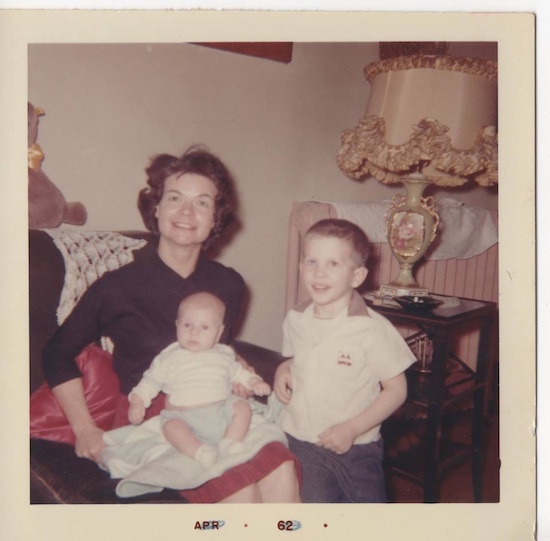
Me, Mom & Lil’ Brother
There are moments in every man’s life that arrive without ceremony yet quietly divide existence into two distinct countries: the one in which he had been living, and the one in which he now understands he must live if his years are to amount to anything worthy of the astonishing gift they have been. Such moments are rarely dramatic. They do not announce themselves with thunder or trumpet. More often they steal into ordinary mornings while coffee is brewing, while rain taps gently against the kitchen window, or while an old dog sleeps peacefully beneath the table. The world appears exactly as it did the evening before, and yet something has altered forever. A veil has lifted from the eyes. One looks across the familiar landscape of his own life and realizes, perhaps for the first time, that time has never been standing patiently at the edge of the road waiting for him to begin. It has been walking all along, keeping its own relentless pace, carrying away days that can never be reclaimed and opportunities that, once neglected long enough, quietly harden into permanent absences.
Youth conspires in this deception more effectively than any enemy ever could. It persuades us that tomorrow is a certainty rather than a privilege. We imagine our lives stretching before us like the Great Plains beneath an endless summer sky, broad enough to accommodate every dream, every ambition, every postponed beginning. There will be time to write the book after the promotion, to ask the beautiful girl to dinner after confidence finally arrives, to reconcile with an estranged brother after tempers cool, to learn another language, another craft, another instrument, another way of seeing the world. We tell ourselves that the future is a warehouse stocked with inexhaustible tomorrows, and because we believe it, we squander today’s riches with the careless extravagance of children spending an inheritance they cannot imagine ever exhausting. Only much later does the terrible arithmetic reveal itself. The warehouse was never full. It was only generously stocked for a season, and every sunrise quietly removed another crate from the shelves.
It has often seemed to me that the greatest tragedies in human life seldom arrive in the form of catastrophe. Catastrophe at least commands our attention. It forces decisions. It demands courage. It strips away illusion with brutal honesty. Far more dangerous is drift, that almost imperceptible current by which a man gradually surrenders ownership of his own life without ever consciously deciding to do so. A ship need not strike the rocks in order to be lost. It need only cease steering. Left to itself, the sea will carry it somewhere, though almost never where its captain had intended. So it is with the human soul. We congratulate ourselves on avoiding great mistakes while remaining strangely blind to the countless small abdications that, taken together over the course of years, amount to the surrender of an entire existence.
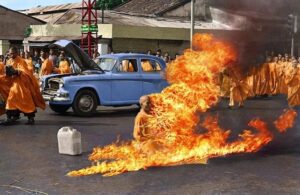
Marterdom for Freedom 1963 Saigon, Vietnam
Robert Frost understood something profound when he imagined two roads diverging in a yellow wood. Most readers remember only the road less traveled, but I have often wondered about the place where those roads separated. There is something haunting about a crossroads, for it is there that possibility reaches its fullest expression. Every direction remains open. Every destination is still attainable. Yet crossroads are not places where one is meant to live. They are places through which one passes. A traveler who pitches his tent among signposts and spends his years studying maps instead of walking eventually discovers that indecision is itself a destination, and perhaps the saddest of all. The road not taken is rarely closed by fate. More often it disappears beneath the weeds simply because we never began.
That is why discipline has always seemed to me a far nobler companion than inspiration. Inspiration is a delightful visitor, but she is notoriously unreliable. She appears unexpectedly, stays only as long as she pleases, and vanishes without apology. Discipline, on the other hand, arrives before dawn every morning carrying a lunch pail. She asks for no applause and makes no extravagant promises. She merely suggests that if one continues laying a single brick every day, eventually there will stand where there was once only open ground a wall, then a house, perhaps even a cathedral. The astonishing works of civilization have almost never been built by moments of brilliance. They have been built by generations of ordinary people who refused to despise ordinary faithfulness.
Tolstoy once observed that a man walking a thousand miles would do better to concern himself with the next twenty-five than with the distant horizon, and there is an abiding wisdom in that simple observation which our own restless age has almost entirely forgotten. We have become intoxicated with outcomes. We measure ourselves by destinations reached, fortunes accumulated, audiences assembled, reputations established. We stare so intently toward the summit that we scarcely notice the path beneath our own boots, though it is that very path, faithfully walked day after day, that alone possesses the power to carry us upward. Mountains have never yielded themselves to men who spent their lives gazing admiringly at their peaks. They belong to those who were willing to climb while the summit remained hidden behind clouds.
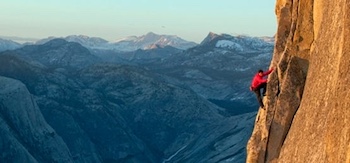
Alex Honnold, the first person to ever free climb El Capitan in Yosemite National Park
The irony, of course, is that modern civilization has furnished us with comforts beyond the imagining of kings while simultaneously making it more difficult than ever to notice the astonishing privilege of simply being alive. We possess machines capable of carrying our voices across oceans, libraries that fit within a jacket pocket, medicines that would have appeared miraculous to our great-grandparents, and opportunities undreamed of by entire generations who labored before us. Yet we move through these blessings with astonishing indifference, scarcely pausing long enough to recognize them before reaching impatiently for something else. Prosperity has not diminished our appetite. It has merely taught us to overlook abundance.
Years ago, I heard a story about a man serving a sentence from which he would never be released. What haunted him most was not the crime that had condemned him, nor even the years he would spend behind walls of stone and steel. His greatest sorrow was remembering the decade that preceded his imprisonment, those ordinary years when he had awakened each morning possessing the freedom to go anywhere, become anyone, or begin almost any worthy endeavor, and had treated those opportunities as though they were common as dust beneath his boots. Only after the gates closed behind him forever did he understand the staggering wealth he had squandered without ever recognizing that he possessed it.
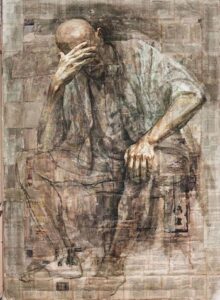 I have thought often about that confession, because I suspect it describes far more than the experience of one prisoner. It describes, in one form or another, nearly all of us. We become so accustomed to our freedoms that we cease to see them. We postpone conversations that ought to happen today because tomorrow seems guaranteed. We delay acts of kindness because another opportunity will surely present itself. We neglect the quiet miracle of an ordinary afternoon, never imagining that one day we would give almost anything simply to recover it. Gratitude, therefore, is not merely a pleasant disposition. It is a way of seeing reality as it actually is. The grateful man understands that what he possesses this morning may not belong to him by nightfall, and for that very reason he receives each hour, each friendship, each meal, each sunrise, not as an entitlement but as an undeserved gift.
And perhaps it is here, at the intersection of gratitude and purpose, that the true adventure of human life quietly begins.
If gratitude teaches a man to recognize the immeasurable value of the life already resting in his hands, purpose teaches him what to do with it. The two are inseparable. Gratitude without purpose gradually dissolves into comfortable contentment, while purpose without gratitude becomes ambition stripped of its soul. The happiest men and women I have known have almost never been those who possessed the greatest wealth, the highest office, or the broadest recognition. Rather, they were those who awakened each morning with a quiet understanding that they had been entrusted with work worth doing and people worth loving. Their days were seldom spectacular. They simply understood that significance is almost always hidden inside ordinary faithfulness.
It is one of the curious deceptions of our age that we have come to admire visibility more than usefulness. We know the names of entertainers whose accomplishments will be forgotten within a generation, while remaining blissfully ignorant of the schoolteacher who quietly transformed hundreds of young lives over forty years in the same little brick building, or the machinist whose patient craftsmanship helped build engines that carried men to the moon, or the nurse who spent an entire career easing pain without ever expecting applause. Civilization itself rests not upon the shoulders of celebrities but upon countless anonymous souls whose names history will never record. Every bridge that spans a river, every library that shelters wisdom, every church bell that calls a town to worship, every loaf of bread upon the family table, every harvest gathered before winter, every child tucked safely into bed at night is, in one way or another, the accumulated labor of ordinary people who simply chose to do ordinary things extraordinarily well.
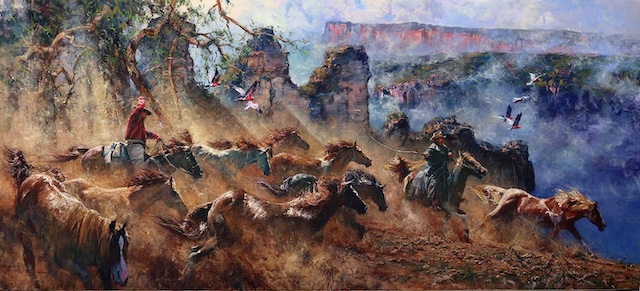
Mountain Stampede by Robert Hagan
Perhaps this is why genuine humility has always possessed such quiet dignity. Humility is not thinking less of oneself, as it is so often misunderstood, but thinking less about oneself. The humble craftsman is wholly absorbed in the cabinet he is building rather than the admiration it might earn. The devoted physician concerns himself with the healing of his patient, not the reputation that may follow. The loving mother scarcely notices the thousands of unnoticed sacrifices she makes because love has redirected her attention away from herself and toward another. We have somehow convinced ourselves that fulfillment is discovered through relentless self-expression, yet history seems to suggest exactly the opposite. The fullest lives are usually those that have forgotten themselves in the service of something larger.
Nature has always understood this truth better than mankind. No oak tree struggles to become famous among the forest. It simply reaches patiently toward the light, sending its roots deeper with every passing season while offering shade to travelers it will never meet again. Rivers do not drink their own water. Fruit trees do not consume their own harvest. The sun does not shine for itself. There is woven into creation an astonishing law that everything which truly flourishes does so by giving itself away. It is only man, blessed with the peculiar gift of self-consciousness, who continually imagines that happiness might somehow be found by gathering more tightly unto himself what was always intended to be shared.
I have often thought that one of the finest compliments a man can receive is not that he was brilliant, successful, or influential, but simply that others were better because he had passed through their lives. Such people leave behind a curious fragrance. Long after they are gone, conversations somehow become kinder when their names are mentioned. Children remember lessons they scarcely appreciated at the time. Old friends smile unexpectedly at recollections that had lain dormant for decades. Their influence continues not because they sought immortality, but because they invested themselves so completely in the lives entrusted to their care that part of them remained there forever. Like a candle lighting another without diminishing its own flame, they discovered that the most enduring legacy is seldom constructed intentionally. It is simply the natural consequence of a life faithfully lived.
There is an old saying that a society grows great when old men plant trees beneath whose shade they know they shall never sit. I have always loved that image because it captures something profoundly civilized. The man who plants such a tree has liberated himself from the tyranny of immediate reward. He understands that the highest expressions of love are often those whose fruits will be enjoyed entirely by strangers. Every cathedral whose vaulted ceilings still lift men’s eyes heavenward, every constitution that has preserved liberty for generations yet unborn, every scientific discovery upon which later discoveries were built, every masterpiece that continues to stir hearts centuries after its creator has returned to dust, bears silent witness to men and women who labored for futures they themselves would never inhabit.
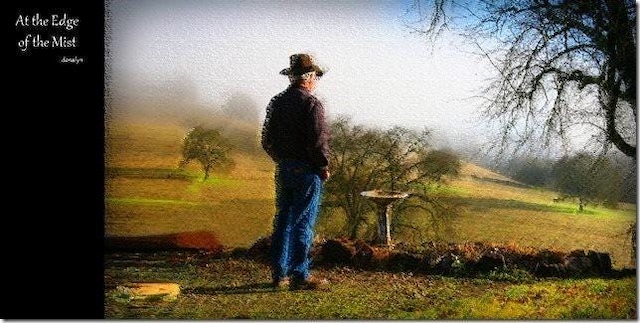
Photo taken by Donna Thomas, in Northern California’s “Ranch Country”, that was run through a pastel filter — ‘At the Edge of the Mist’ — in remembrance of a fine man and an outstanding American Patriot, Ron Cole
Modern life, however, conspires against this long vision. It encourages us to demand immediate results, instant gratification, perpetual stimulation, and visible recognition. We have become impatient gardeners, forever digging up the seed to see whether it has begun to grow. Yet nearly everything worthy of admiration matures slowly. Character cannot be microwaved. Wisdom refuses to be downloaded. Love deepens over decades, not weekends. Trust accumulates by countless small demonstrations of faithfulness until one day it seems as ancient and immovable as the mountains themselves. The finest wines spend years in quiet darkness. The strongest oak rings are formed through seasons of drought no less than seasons of rain. Even diamonds are born under pressures that would destroy lesser things.
This truth becomes clearer with age. Youth understandably admires speed because speed appears powerful. The young race toward destinations with the delightful confidence that every problem possesses an immediate solution and every mountain can be conquered before sunset. There is something beautiful in such enthusiasm, and Heaven forbid that we extinguish it. Yet if youth provides the energy to begin life’s journey, maturity gradually teaches us the value of pace. The old farmer does not hurry the spring. The experienced sailor does not curse the tide. The seasoned woodsman knows that forcing a green log upon the fire only smothers the flames. There is a rhythm to nearly everything worth becoming, and wisdom consists partly in learning to walk in harmony with it rather than forever attempting to outrun it.
This, I suspect, is why so many of the world’s greatest teachers have preferred gardens to classrooms, mountains to lecture halls, and long walks to hurried meetings. Nature is patient because truth is patient. The forest has no anxiety about tomorrow’s sunrise. The stars never compete with one another for prominence. Winter does not resent spring, nor does autumn cling bitterly to the leaves that must inevitably fall. Everywhere we look, creation quietly reminds us that growth is seldom noisy and almost never hurried. Only mankind imagines that lasting things can be manufactured overnight.
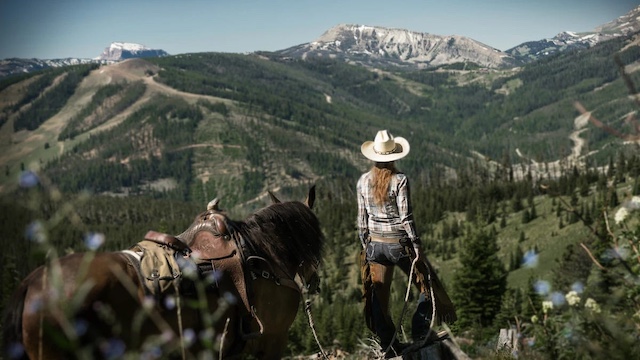
Lone Mountain Ranch, in Big Sky, Montana
It was Henry David Thoreau who retreated to Walden Pond in search of deliberate living, though one need not abandon civilization to discover the lesson he sought. The essential wilderness is not always found beyond the city limits. Often it lies hidden within the neglected provinces of our own souls, waiting for someone courageous enough to explore them. There are forests inside every human heart that remain un-mapped because their owner has spent a lifetime studying everyone else’s landscape while neglecting his own. There are rivers of thought left unnavigated, mountains of conviction left un-climbed, and quiet meadows of gratitude left undiscovered simply because we have become so captivated by the noise of the world that we no longer hear the invitation to undertake the inward journey.
And it is there, perhaps more than anywhere else, that the last great adventure truly begins — not upon some distant continent waiting to be discovered, but within the mysterious country of one’s own character, where every honest question opens another unexplored valley, every hard-earned virtue becomes another mountain pass crossed, and every act of forgiveness clears yet another stretch of wilderness through which the traveler may continue his long pilgrimage toward the person he was always intended to become.
There is an old belief, found in one form or another across many civilizations, that every man is born with two lives. The first is the one he receives at birth. The second begins on the day he realizes that the first cannot continue forever. Whether or not the saying can be traced to any single source hardly matters. It survives because it expresses a truth that nearly every thoughtful person eventually discovers for himself. Mortality, strange as it may seem, is not the enemy of purpose. It is its architect. If our days were endless, there would be no urgency to become wiser, kinder, more courageous, or more forgiving. We could postpone every difficult conversation until the following century and delay every worthy ambition until another convenient season. It is precisely because our years are numbered that they become infinitely precious.
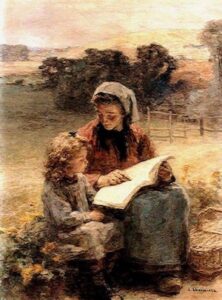 One need not dwell morbidly upon death to appreciate this reality. Indeed, I have always believed that those who think most deeply about life’s end are often those who love life most completely. They notice things that hurried people overlook. They linger a little longer on the front porch after supper while the evening settles over the fields. They pause beside the creek to watch sunlight shimmer upon moving water. They read one more chapter before extinguishing the lamp because they understand that books are conversations with minds that have already slipped beyond the horizon of history. They telephone an old friend without needing an occasion. They stoop to pick up a child who wishes to be held, even when their backs protest the effort, because they know with quiet certainty that one day the child will no longer ask.

My first-born daughter, Kelli, with her first-born child, my grandson Bailey, circa 2000
As a young man, I confess I admired speed above almost every other virtue. I admired those who accomplished much before the age of thirty, who conquered professions, accumulated fortunes, crossed continents, and seemed forever to be moving toward some larger horizon. There is nothing dishonorable in such admiration. Youth naturally inclines toward movement. It hears distant bugles where age hears the steady rhythm of a hearth-fire. Yet the years possess a remarkable way of refining one’s definition of success. Somewhere along the road, though I cannot say exactly where, I began to notice that the people who most impressed me were seldom those who had lived the fastest lives. They were those whose lives possessed an uncommon depth.
Depth is difficult to describe because it cannot be measured in the ordinary currencies by which modern society evaluates achievement. It reveals itself in conversation rather than in résumés. It becomes apparent in the serenity with which a man receives disappointment, in the patience with which he listens before speaking, and in the curious absence of any need to advertise his own importance. Such people seem to carry an interior stillness that remains undisturbed by the perpetual commotion of the age. One leaves their company strangely refreshed, not because they have entertained him, but because they have reminded him — without ever intending to do so — of the sort of person he himself had hoped to become.
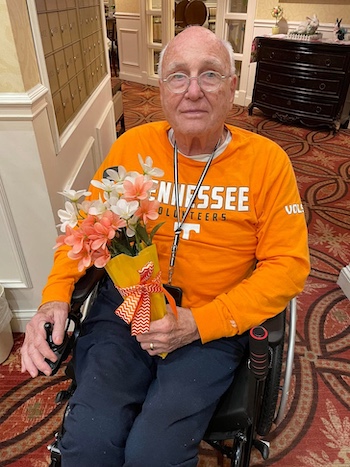
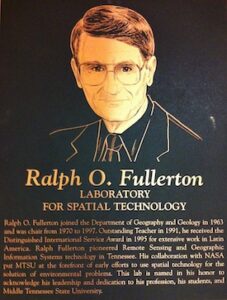
Dr. Ralph O. Fullerton, my friend and mentor, after he entered assisted living at Adam’s Place in Murfreesboro, TN — a U.S. Army [retired] Lt. Colonel and former aide to the U.S. Ambassador to Nicaragua
The older I grow, the more convinced I become that wisdom bears a remarkable resemblance to an old-growth forest. A young woodland grows quickly, every sapling straining impatiently toward the sun, each competing fiercely for light and space. An ancient forest, however, possesses no such anxiety. Its towering trees have weathered storms beyond counting. Their roots descend into depths invisible to the passing traveler, drawing strength from places untouched by drought or passing season. Standing among them, one senses not merely age but permanence. They have become what they are through thousands upon thousands of ordinary days, each one almost indistinguishable from the last, until time itself has become one of the principal architects of their majesty.
Human character matures in much the same fashion. There are no shortcuts to integrity. One cannot purchase courage any more than one can purchase wisdom. Both are accumulated quietly through innumerable choices so small that they scarcely seem significant when made. The decision to tell the truth when deceit would be easier; to keep a promise when breaking it would go unnoticed; to remain loyal when betrayal might prove profitable; to continue working after enthusiasm has faded; to forgive an injury that pride insists should be remembered — these modest victories seldom attract public attention. Yet together they shape the invisible architecture of the soul until, almost without realizing it, a man becomes someone upon whom others instinctively lean when life grows difficult.
 Our civilization has become remarkably adept at measuring almost everything except the things that matter most. We can calculate the distance between galaxies with astonishing precision while remaining unable to quantify the value of a father’s patient example or a mother’s unwavering affection. Economists can estimate the gross domestic product of entire nations, but no ledger has ever successfully recorded the wealth generated by a single teacher who convinces one discouraged student that his life possesses meaning. There exists no algorithm capable of measuring the influence of a faithful pastor who quietly buries the dead, comforts the grieving, baptizes the young, and preaches hope through fifty winters in the same little country church. The greatest forces shaping civilization are almost always invisible until many years have passed.
History itself offers abundant testimony to this quiet law. We remember generals because they won battles, presidents because they governed nations, inventors because they transformed industries, and explorers because they crossed unknown frontiers. Yet behind each stood countless unnamed souls who formed their character long before history took notice of their accomplishments. Somewhere there was a mother who insisted upon honesty, a father who taught perseverance, an old professor who awakened curiosity, a minister who spoke uncomfortable truths, a mentor who demanded excellence, or a friend who refused to permit mediocrity. Great lives seldom emerge spontaneously. They are cultivated, often by people whose own names disappear into obscurity, content to have strengthened another’s journey rather than drawing attention to their own.
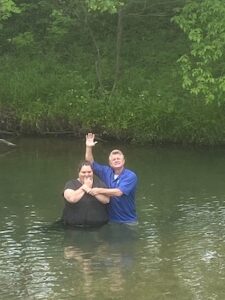
The pastor of Buffalo Missionary Baptist Church baptizing a young lady in the local creek in Bethpage, Tennessee
There is something profoundly comforting in that realization. It frees us from the childish illusion that significance belongs only to those whose names appear in newspapers or whose portraits hang in galleries. Most of the world’s enduring goodness has never been celebrated by headlines. It has been lived quietly around dinner tables, in machine shops, on cattle ranches, in libraries, in classrooms, in hospital corridors, in modest sanctuaries, and beneath the worn roofs of homes where husbands and wives chose, day after day, to remain faithful not because faithfulness was always easy, but because it was right.
Indeed, I have sometimes wondered whether Heaven measures greatness by an entirely different scale than the one to which we have become accustomed. We celebrate those who stand upon stages before thousands, yet perhaps the angels rejoice just as fully over the elderly widow who spends lonely evenings writing letters of encouragement to missionaries she has never met, or the retired mechanic who quietly repairs the automobiles of struggling neighbors without accepting payment, or the grandfather who patiently teaches his grandson how to sharpen an axe, cast a fly line, split kindling, and keep his word. The world is inclined to ask how many people know your name. Eternity may ask only whose lives became richer because they knew yours.
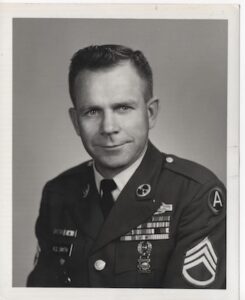
My Dad, a Combat Veteran of WWII, Korea and Vietnam — awarded two Bronze Stars with V for Valor and a recommendation for the Silver, circa 1960
If this is so — and I increasingly suspect that it is — then the adventure before us is far grander than the pursuit of success alone. Success, admirable though it may be, concerns itself chiefly with accomplishment. The deeper adventure concerns transformation. It asks not merely, “What did you build?” but “Who were you becoming while you built it?” For in the end, every house we construct, every business we establish, every office we occupy, every title we earn, and every possession we accumulate must eventually pass into other hands. Character alone accompanies us to the very edge of eternity, and perhaps beyond.
It is an extraordinary thought when one lingers over it long enough. We spend so much of life acquiring things that time inevitably requires us to surrender, while quietly neglecting those virtues that neither moth nor rust can corrupt and which no thief has ever succeeded in stealing. Patience, integrity, gratitude, courage, humility, charity, steadfastness — these constitute the true inheritance of a life well lived. They are the provisions gathered for the longest journey any of us shall ever undertake.
And if that is true, then every ordinary day, however uneventful it may appear, is not merely another page falling from the calendar. It is another mile along the greatest expedition entrusted to any human soul: the long and often difficult journey toward becoming fully, gratefully, and joyfully the man or woman God intended from the very beginning.
There is a curious habit among thoughtful people of imagining that the great decisions of life are made only a handful of times. We speak of choosing a profession, selecting a spouse, accepting a commission, enlisting in the service, or answering what we often call our “calling,” as though destiny itself hinged upon a few monumental moments standing like lonely monuments upon the landscape of our years. There is truth in that, of course. Certain crossroads alter the entire direction of a life. Yet I have gradually come to believe that the larger portion of our destiny is shaped not by the rare decisions that command our complete attention, but by the innumerable little decisions we scarcely notice ourselves making.
Character is not forged in moments of crisis nearly so much as it is revealed by them. The crisis merely uncovers what years of unnoticed habits have already built. The soldier who remains steady under fire did not suddenly become courageous on the battlefield. Somewhere in forgotten days he learned to master fear rather than surrender to it. The physician who calmly directs a frantic emergency room while others panic is not displaying a miraculous gift bestowed in a single instant. She is drawing upon thousands of quiet mornings spent studying, practicing, failing, correcting herself, and returning again to the discipline of her craft. The father who instinctively shields his children during danger has almost certainly spent years placing their welfare above his own convenience long before circumstances demanded heroism.
This is one of the reasons I have never entirely shared our culture’s fascination with extraordinary people. Extraordinary moments, yes; extraordinary courage, certainly. But extraordinary people? The longer I observe the world, the more I suspect that what we call extraordinary is usually nothing more mysterious than ordinary virtue practiced with uncommon consistency. We are dazzled by the finished cathedral while overlooking the mason who faithfully squared one stone after another for forty years. We applaud the accomplished violinist while forgetting the lonely afternoons when she practiced scales until her fingers ached. We admire the seasoned woodsman navigating an unfamiliar mountain without becoming lost, yet fail to appreciate the thousands of quiet walks through familiar forests that taught him how to read the wind, the moss upon the trees, the angle of the sun, and the hidden language of streams.
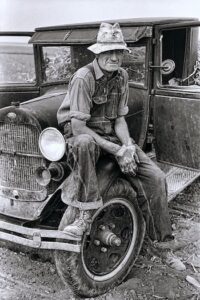
Itinerant Kansas Farmhand 1935 by Daniel Hagerman
Civilization itself is constructed in precisely this manner. Every generation inherits a world it did not build. Roads already stretch toward distant towns. Libraries already contain the accumulated wisdom of centuries. Churches stand where other men laid foundations. Bridges span rivers because forgotten engineers solved problems whose names few now remember. We awaken every morning inside an inheritance purchased almost entirely by the sacrifices of the dead. It is an astonishing thought when considered carefully. Nearly every comfort we enjoy exists because someone else believed that the future deserved their labor, though they themselves might never live to enjoy its rewards.
Perhaps that is why gratitude naturally matures into responsibility. It is impossible to remain genuinely thankful for very long without beginning to ask what one owes in return. The child receives everything as though it were the natural order of things. The mature man eventually recognizes that he has become a debtor — not in the burdensome sense of guilt, but in the joyful sense of stewardship. He has inherited language refined over millennia, laws hammered out through generations of struggle, music composed by souls long departed, discoveries made by patient scientists, crops cultivated by unknown farmers, liberties preserved by soldiers whose graves lie in distant fields beneath weathered white stones. To imagine that one owes nothing to those who came before is not independence. It is forgetfulness.
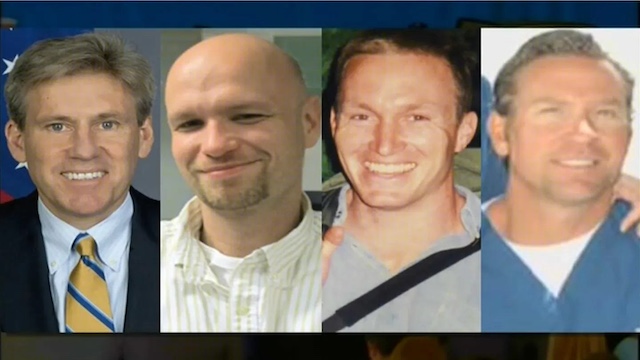
U.S. Ambassador to Libya J. Christopher Stevens, Department of State employee Sean Smith and CIA contractors and former Navy SEALs Glen Doherty and Tyrone Woods were killed September 11th 2012, in Benghazi, Libya. [credit, Fox News]
There is a magnificent humility in understanding that we are not the authors of civilization but merely one generation entrusted with its care. Every age is tempted to believe itself uniquely enlightened, to imagine that wisdom began with its own opinions and that the accumulated experience of previous centuries possesses little relevance to modern problems. Such conceit has always been one of history’s recurring follies. A civilization that ceases listening to its ancestors soon discovers that it must relearn their hardest lessons at terrible expense. The old proverbs survive not because they are quaint, but because they continue describing human nature with embarrassing accuracy. The Scriptures endure not because they are ancient, but because the human heart has changed remarkably little since they were first written. Pride, envy, greed, courage, sacrifice, love, betrayal, hope, despair, redemption — these remain the permanent geography of the soul regardless of how many machines we invent or how sophisticated our technology becomes.
It has become fashionable in certain circles to speak as though progress were inevitable, as though humanity naturally ascends toward greater wisdom with each passing generation simply because the calendar advances. History offers little encouragement for such optimism. Knowledge undoubtedly accumulates. Technology unquestionably advances. But wisdom does neither automatically. A man may carry in his pocket a device capable of accessing the sum of human knowledge while remaining utterly incapable of governing his own appetites. Nations may communicate across oceans in seconds while forgetting how to speak graciously across a dinner table. We have conquered distance with astonishing success while too often remaining strangers to ourselves.
 Indeed, there is a peculiar loneliness that seems to accompany modern abundance. Surrounded by constant communication, many have forgotten conversation. Connected to thousands, they know remarkably few. We exchange information at breathtaking speed while seldom exchanging the deeper confidences from which friendship is born. The old front porch, where neighbors lingered until the summer stars appeared overhead, has gradually yielded to glowing screens carried into every room of the house. We know what happened around the globe five minutes ago but cannot remember the last unhurried evening spent listening to an aging parent tell stories we have heard a dozen times before.
Yet those stories, repeated often enough, become something altogether different from entertainment. They become inheritance. They remind us that every family, like every nation, possesses a memory extending beyond any one lifetime. The old photograph tucked inside a Bible, the worn pocketknife passed from grandfather to grandson, the recipe written in a mother’s fading handwriting, the fishing rod carried down to the creek each spring, the weathered quilt stitched together through countless winter evenings—these humble things quietly resist the relentless erosion of time. They assure us that we belong not merely to ourselves, but to a long procession of lives whose hopes and labors continue flowing through our own.
I have often wondered whether this explains why the oldest places in the world possess such extraordinary power over the human imagination. Stand beneath the giant sequoias of California, whose silent witness spans empires. Walk through the worn stone streets of Jerusalem, where prophets, pilgrims, conquerors, and ordinary merchants have left footprints layered one upon another for thousands of years. Sit alone inside an ancient country church after the congregation has departed, where generations have knelt in prayer beneath the same wooden beams. One cannot remain in such places very long without sensing the comforting smallness of one’s own existence. Far from diminishing us, that realization enlarges us. We understand at last that our lives are chapters, not the entire story, and there is profound freedom in accepting the role we have been given.
For the world does not ask us to become immortal. It asks only that we become faithful. It does not require that every life alter the course of history. It requires only that each soul entrusted with a few brief decades upon this remarkable earth receive those years with reverence, cultivate them with diligence, and return them with gratitude. The oak is not ashamed that it cannot become the mountain. The river does not envy the sea. Each fulfills its appointed purpose, and in doing so contributes to a harmony infinitely greater than itself.
 There are evenings, particularly in late autumn when the air has acquired that unmistakable sharpness which hints of approaching winter, when I find myself thinking of all the men and women who have walked this earth before us. I imagine the countless campfires that once glowed beneath unfamiliar constellations, the conversations now lost forever to history, the laughter that echoed across frontiers where cities now stand, the prayers whispered by mothers over sleeping children, the old soldiers staring into fading embers while remembering friends who would never come home. Their voices have fallen silent, yet the civilization they helped build still shelters us. Their labor became our inheritance. Our labor, in turn, will become someone else’s beginning.
And perhaps that is one of the deepest consolations offered by a life lived well. We discover that our existence was never meant to terminate with ourselves. Like a river receiving waters from countless unseen springs before carrying them onward toward distant seas, we inherit, we enrich, and we bequeath. The current never truly belongs to us. We are privileged only to travel with it for a little while before entrusting it to those who follow, hoping that because we passed this way, however quietly, the waters run just a little clearer than when they first reached our hands.
There is a passage in every long journey when the traveler ceases to concern himself with the destination and begins instead to delight in the road itself. Those who have wandered through high mountains know the feeling well. During the first days every thought is fixed upon the distant summit whose white shoulders rise beyond the forests, beckoning from the edge of the horizon. The climb appears to be the purpose of the expedition, and every valley is judged according to whether it hastens or delays the ascent. Yet somewhere, often without realizing precisely when it happened, the traveler undergoes a subtle transformation. He finds himself pausing beside streams whose names he does not know. He notices the fragrance of pine carried upon the morning wind, the patient industry of ants crossing the trail with burdens many times their own size, the sudden flash of a trout beneath crystal water, or the improbable courage of a tiny wildflower blooming from a crack in naked granite hundreds of feet above the valley floor. The summit has not lost its importance, but it has surrendered its tyranny. One discovers that the mountain was never merely inviting him upward. It was teaching him how to see.
It has often occurred to me that life educates us in precisely the same fashion. In youth we imagine that wisdom consists of collecting answers, as though the mind were a warehouse into which facts might be neatly stacked until sufficient knowledge had accumulated to explain the world. Age gradually reveals a more humbling reality. The wisest people I have ever known were distinguished less by the certainty of their conclusions than by the quality of their questions. They possessed an almost childlike curiosity that never seemed to diminish with the passing years. They continued reading because they understood how little they truly knew. They listened more than they spoke because every stranger represented another volume in the endless library of human experience. They remained capable of changing their minds without surrendering their principles, for they understood that humility is not the enemy of conviction but its faithful companion.
There is, after all, a profound difference between certainty and wisdom. Certainty often closes the door of inquiry, while wisdom quietly leaves it ajar. The man who believes he has nothing left to learn has already begun the slow decline of his own intellect, regardless of how many diplomas adorn his walls or how many letters follow his name. Education, in its finest sense, was never intended to terminate with commencement exercises. It is the lifelong discipline of remaining teachable, of allowing every worthy book, every honest conversation, every difficult disappointment, every unexpected friendship, and every season of suffering to enlarge one’s understanding of both the world and oneself.
I have sometimes wondered whether our ancestors appreciated this more readily because they lived closer to the stubborn realities of nature. A farmer who believes he has mastered the weather will soon be corrected. A sailor who imagines he has conquered the sea will not remain arrogant for long. The physician who ceases learning condemns his patients, and the craftsman who decides there is nothing left to improve soon discovers that mediocrity advances with astonishing speed wherever excellence ceases to be pursued. Nature herself appears almost allergic to complacency. She rewards attentiveness and quietly punishes neglect, not out of malice but because reality cannot be persuaded by pride.
Perhaps this explains why genuine craftsmen possess a peculiar reverence for their tools. The old cabinetmaker who carefully sharpens his chisels at the close of each day’s labor is not merely maintaining steel. He is practicing gratitude toward the instrument through which his vocation finds expression. The violinist lovingly polishes the instrument that has become almost an extension of her own heart. The rancher oils his saddle before hanging it carefully upon its peg, knowing that tomorrow’s work begins with yesterday’s discipline. Such habits may appear insignificant to the casual observer, yet they reveal something important about the human spirit. We inevitably become like the things to which we give our careful attention.
The same principle governs the unseen landscape of the soul. Thoughts are tools no less than hammers. Words are instruments every bit as consequential as scalpels. Habits, repeated quietly over months and years, become the architecture within which our character gradually takes shape. It is fashionable to imagine that personality is something fixed and unalterable, bestowed upon us at birth like the color of our eyes. Experience suggests otherwise. Human beings are forever becoming. Every act of kindness makes the next kindness slightly easier. Every dishonest compromise lowers the threshold for the next deception. Every courageous decision enlarges the territory over which courage holds sway, while every surrender to fear invites fear to establish a more permanent residence. Character is less a possession than a direction of travel.
That realization ought to encourage rather than discourage us. It means that no man is imprisoned forever by yesterday’s failures, nor is any woman guaranteed tomorrow by yesterday’s successes. Every sunrise quietly extends another invitation to begin again. There is something wonderfully democratic about the dawn. It falls with equal generosity upon the palace and the farmhouse, upon the saint and the scoundrel, upon the grateful and the bitter alike. The new day asks only one question: “What will you do with the hours I have entrusted to you?” It neither excuses the past nor condemns it absolutely. Instead, it offers the remarkable privilege of another beginning.
 I have always found that one of the most hopeful truths in all of Scripture is that redemption rarely occurs by erasing history. More often it occurs by transforming it. The failures remain part of the story, but they cease to possess the final word. The scar upon the old soldier’s face becomes evidence not merely of violence endured but of survival. The weathered hands of the carpenter speak not of youth surrendered but of decades spent creating things of enduring usefulness. The wrinkles surrounding an elderly woman’s eyes often reveal a lifetime of laughter no less than sorrow. Even grief itself, patiently carried, can become strangely beautiful, softening the heart instead of hardening it, enlarging compassion rather than diminishing joy.
This may be one of God’s quietest miracles. He does not waste experience. The years we would gladly erase often become the very years through which wisdom enters. The disappointments we once regarded as cruel interruptions reveal themselves, in retrospect, to have been unexpected instructors. The closed door prevented us from entering a room that would never have become our home. The failure that seemed unbearable redirected our steps toward work more worthy of our gifts. The friendship that ended painfully taught us how to love more faithfully. Looking backward across enough decades, one begins to discern a pattern invisible while it was being woven. The tapestry made little sense from the underside where loose threads appeared hopelessly tangled. Only with distance does one glimpse the design taking shape upon the other side of the loom.
There is, I think, immense comfort in accepting that we were never intended to understand every chapter while we are living it. The traveler crossing a mountain pass sees only the next turn in the trail. The map becomes visible only from the summit. Faith consists not in pretending to know the entire route, but in trusting that the One who fashioned both the mountain and the traveler understands where the path is leading, even when the valley below has disappeared beneath the evening mist.
And perhaps that is the deepest difference between merely existing and truly living. The one drifts from circumstance to circumstance, forever reacting to whatever fortune or misfortune happens to arrive. The other begins, however imperfectly, to cooperate with Providence itself, treating each day not as an accident but as an assignment, each encounter as an opportunity, each hardship as a possible tutor, and each joy as a gracious reminder that the Author of the universe has not forgotten how to write beauty into even the smallest corners of an ordinary human life.
There are few words in the English language that have suffered more from misunderstanding than the word love. We have stretched it until it has become almost elastic, expected to encompass everything from passing amusement to lifelong devotion, from appetite to sacrifice, from momentary affection to eternal covenant. Yet if one observes the lives of those who have loved most deeply, one discovers that love is seldom a feeling sustained through uninterrupted emotion. It is something at once quieter and infinitely more demanding. It is a decision renewed so faithfully that, after enough years have passed, it becomes almost indistinguishable from the character of the person making it.
I have known old couples who no longer finished one another’s sentences because conversation itself had become unnecessary. A glance across the breakfast table conveyed what younger lovers required a hundred words to express. Their hands, weathered by decades of labor, found one another almost absentmindedly while walking from the church parking lot or sitting beneath the shade of a familiar porch. There was nothing theatrical about their affection. It possessed none of the feverish urgency celebrated by novels or cinema. Instead it resembled something far older and stronger, like two great oak trees whose roots had become so intertwined beneath the earth that no storm could easily separate them. Looking upon such marriages, one begins to suspect that love is less a firework exploding brilliantly across the night sky than a hearth faithfully tended through innumerable winters.
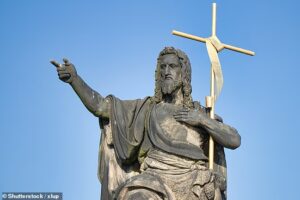
John the Baptist often prepared the masses for Jesus’s arrival in the Bible
Perhaps that explains why Scripture speaks so often of endurance when discussing love. Endurance is not a particularly glamorous virtue. It seldom receives applause. Yet almost everything beautiful depends upon it. Gardens require it. Friendships require it. Nations require it. Faith requires it. Even hope itself demands a peculiar stubbornness, refusing to surrender simply because circumstances have grown dark. We speak admiringly of those who die heroically in a single magnificent hour, and rightly so, but there exists another form of heroism that receives far less recognition. It is the quiet courage of remaining faithful through forty ordinary years, of continuing to forgive after repeated disappointment, of rising each morning determined once again to honor promises made when youth still colored the horizon.
This, I think, is why families remain among the greatest adventures entrusted to the human heart. No expedition into unmapped wilderness has ever required more patience than raising a child. There is no university that adequately prepares a young father for the first moment he cradles an infant whose entire future has somehow been placed within the uncertain strength of his own trembling hands. There is no manual capable of teaching a mother precisely how to love each son or daughter according to the singular person he or she has been created to become. Children arrive not as blank pages awaiting our authorship, but as mysterious little souls entrusted to our care for only a little while. We imagine that we are teaching them how to live, while all the while they are quietly teaching us how to love without calculation.
There is something almost sacred about watching a father kneel beside his child to answer a question that could easily have been dismissed. The child asks why leaves change color, why stars appear only at night, why birds know where to fly when winter comes, why people grow old, why good men sometimes suffer, or why God seems silent when hearts are breaking. The father seldom possesses perfect answers. Indeed, he often discovers that he has been carrying the same questions unanswered within himself for decades. Yet by taking the child seriously, by refusing to laugh away wonder, he preserves something infinitely precious. He teaches that truth is worth pursuing, that curiosity is not an inconvenience but one of God’s earliest gifts, and that no honest question is ever unwelcome beneath a loving roof.
Books perform much the same office in the life of the soul. They remind us that we are not the first generation to wrestle with grief, ambition, temptation, courage, or hope. Every worthwhile library is, in a sense, a gathering of old friends patiently waiting for conversation. Homer still speaks across three millennia. Augustine still wrestles with the restless heart. Shakespeare continues to explore the bewildering complexity of human motives with a clarity that often embarrasses our own age. Jefferson, Lock, Montesquieu, Churchill, Solzhenitsyn, Lewis, Tolkien, Frost, and a thousand others extend their hands across time, inviting us into a fellowship that neither distance nor death has been able to dissolve.
It has always struck me as one of civilization’s quiet miracles that a young man sitting alone beneath a lamp in rural Tennessee, Montana, Yorkshire, or Tasmania may spend an evening in conversation with Marcus Aurelius before supper, Abraham Lincoln after dessert, and C. S. Lewis before retiring for the night. Kings of earlier centuries possessed no such privilege. Libraries have democratized wisdom in a manner history scarcely anticipated. Yet possessing books is not the same thing as allowing them to shape us. A dictionary gathering dust upon the shelf enlarges no vocabulary. A Bible left unopened transforms no heart. The greatest books are not ornaments for our homes but companions for our pilgrimage.
 I have often wondered whether reading accomplishes something deeper than merely increasing knowledge. Good books enlarge our sympathies. They compel us to inhabit lives unlike our own. The young soldier learns something of old age. The prosperous merchant catches a glimpse of poverty. The city dweller discovers the silence of wilderness. The comfortable citizen encounters tyranny through the eyes of those who endured it. In this way literature quietly rescues us from one of the greatest dangers of modern life: the illusion that our own experience constitutes the boundaries of reality. Every worthwhile book gently reminds us that the world has always been larger, stranger, and more beautiful than our individual lives alone could ever reveal.
The same may be said of friendship, though perhaps with even greater force. A true friend performs a service impossible for mirrors. Mirrors faithfully reflect our appearance while remaining incapable of revealing our character. Friends accomplish the opposite. They see beneath the carefully arranged exterior to the often untidy landscape within. They know our strengths well enough to encourage them and our weaknesses well enough to challenge them. They laugh with us when laughter is medicine and remain silently beside us when words would only diminish sorrow. Such friendships cannot be manufactured by convenience. They are quarried slowly from the hard stone of shared experience, mutual trust, forgiveness honestly given, and time generously invested.
As I have grown older, I have become increasingly convinced that one of God’s greatest mercies is that He rarely permits us to travel the longest roads alone. Somewhere along every meaningful journey appear companions who strengthen our resolve precisely when our own courage begins to fail. Sometimes they remain with us for a lifetime. Sometimes they accompany us only through one difficult season before quietly continuing toward another horizon. Their duration matters less than their faithfulness while they are present. Looking backward across the years, I find that many of the decisive turning points in my own life did not arrive through dramatic events but through ordinary conversations with people who probably never realized how profoundly their words had altered another traveler’s course.
Perhaps that is because every human soul carries within it an extraordinary power seldom recognized while it is being exercised. We imagine that history is changed chiefly by presidents, generals, inventors, and kings. Yet history also changes every time one discouraged heart persuades another not to surrender; every time an elderly teacher convinces a lonely student that his mind matters; every time a wife quietly restores her husband’s courage after the world has spent all day trying to diminish it; every time an old friend reminds us of who we are just as we were beginning to forget.
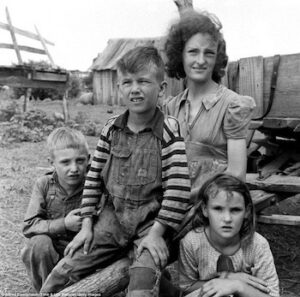
Oklahoma, 1932
There is no ledger capable of recording such moments.
No historian can adequately trace their consequences.
No monument will ever commemorate them.
Yet civilization itself is quietly held together by these invisible acts of grace, repeated millions of times each day by ordinary people who will never imagine that they have participated in the architecture of eternity.
And perhaps it is only when one has lived long enough to look backward with gratitude rather than merely forward with ambition that he finally understands this astonishing truth:
The greatest treasures of life were never things at all.
They were always people.
And every meaningful adventure, however distant its destination, ultimately leads us back to them.
July 17, 2026
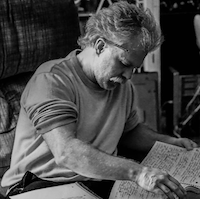
Justin O. Smith ~ Author
~ the Author ~
Justin O. Smith Has Lived in Tennessee Off and on Most of His Adult Life, and Graduated From Middle Tennessee State University in 1980, With a B.S. And a Double Major in International Relations and Cultural Geography – Minors in Military Science and English, for What Its Worth. His Real Education Started From That Point on. Smith Is a Frequent Contributor to the Family of Kettle Moraine Publications.