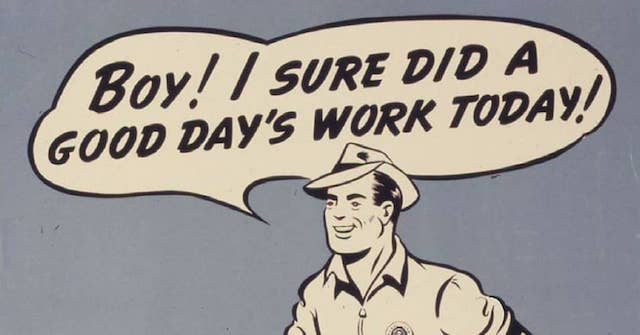
 Back when I was a younger man I used to outwork any two men – well, maybe not any. I did have a great friend, Irvin Harrell who’d go step for step with me on any given day of the week. But the amazing thing was that the older I got the more I saw young men who were doing half the work I used to do getting paid twice the money; by the time I hit 50, I could outwork any three – of what passed for men on any given day of the week.
Nowadays, we see these young guys wanting to pick and choose what they will or won’t do, while trying to get twice what they’re worth, always looking for the easy way out, rather than taking the first job they can find and working it as if they appreciated having a job, until they can do better.
The first week after I left the Army I was in the tobacco fields cutting and spiking tobacco and hanging it in the tobacco barn. Eventually I got hired to manage a lumber company, and I went on from there.
Kids today think something’s owed them, and their attitude shows it. That’s not to say it’s all kids who think like this; there are some from good conservative families who’ve been taught better and who have the great work ethic and integrity to get ahead in whatever they choose to do and succeed, but by and large, from what I see daily in the streets, stores and businesses of America today, it’s the former who seem to hold the majority in America today. And that simply doesn’t bode well for the next generation of the country – men and women with piss-poor attitudes raising more children to carry on their sorry mores and attitudes as they continue the work to tear America asunder, begging for the handouts and the free ride.
Perhaps I’ve grown too cynical. I simply know that no matter how tough the economy seems today, a man can find work in any tough time, if he really wants to work. I know. I did.
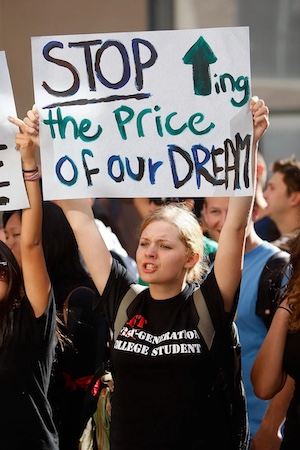 I have lived long enough to watch America change in ways that would have been unthinkable when I was young. I grew up in a world where children roamed neighborhoods freely, where parents didn’t track their every move, and where falling off your bike or striking out in a baseball game wasn’t a crisis — it was simply part of growing up. As I’ve often stated, “Boomers didn’t get participation trophies. They got chores, curfews, and a good reminder that life doesn’t care about your feelings.” That wasn’t cruelty; it was preparation. It was the understanding that life would not bend itself to your emotions, and that the only way to build strength was to encounter resistance. Today, however, we are living with the consequences of several generations raised in a culture that tried to remove every obstacle, pad every corner, and sanitize every experience. The result is a generation that has been protected from discomfort but not prepared for reality.
Baby Boomers, despite facing oil crises, stagflation, high interest rates in the 1970s-80s, Vietnam, and social upheaval and tumult, were forged by aa harder freer formation in a world of chores, curfews, unsupervised neighborhood roaming and problem-solving and clear accountability, with parents expecting us home at dark. Pain – from scraped knees to strikeouts was Tuesday’s lesson, not a lifelong trauma label demanding therapeutic intervention.
The truth is that pain was once a teacher, not a trauma, and it still is — but only if you stop running from it. My generation – the Baby Boomers – learned that lesson early. We learned it because we had to out of necessity. We learned it because our parents didn’t swoop in to solve every problem. We learned it because scarcity forced discipline: repairing items, stretching dollars, saving via layaway rather than tapping “buy now.” We learned it because school didn’t coddle us, because work was a duty and a source of pride, not an option, and because no one told us we were special simply for existing. We learned it because we had no safety net — and that pressure made us cautious, resilient, and resourceful. We didn’t expect society to hand us success. We expected to earn it, because we were taught that life owes us nothing, and so we persisted and persevered and overcame the obstacles in our way. That mindset shaped everything.
One showed up and built a life rather than demanding fulfillment from day one. Boredom, absent screens, cultivated creativity and focus. Problems were fixed with a wrench, not outsourced. Criticism was absorbed — “do better” — building resilience. Manual labor was a rite: chopping wood, fixing cars, mowing lawns built both body and mind. Chaos was expected; quitting a last resort. Rules were clear and non-negotiable. Emotional processing was private or communal in stoic fashion. Responsibility arrived early — teen jobs, early independence, no expansive safety net. Marriage demanded endurance and sacrifice. Life owed nothing; one earned it.
By contrast, many in Gen Z matured amid smartphones, safe spaces, helicopter parenting, therapeutic intervention, and instant digital gratification. The “iPhone shock” around 2012 – when smartphone ownership hit critical mass — coincided with dramatic spikes in teen depression, anxiety, sleep deprivation, self-harm, and suicide ideation. High parental monitoring replaced free play. Family dinners declined; marriage and children delayed or forgone. A therapeutic culture reframed discomfort as danger, conflict as requiring administrative mediation, and personal agency as secondary to systemic explanation. The result: elevated time preference, where $28 lunches trump index fund contributions, and “bedrot” with takeout supplants the grind.
This is not an indictment of young people as individuals. It is an indictment of the culture that shaped them. Gen Z did not ask for a world of smartphones, safe spaces, helicopter parents, and institutions terrified of causing offense. They did not ask to grow up in a society that confuses discomfort with trauma, or that treats emotional fragility as a virtue. But they did grow up in it, and it has shaped them in ways that now collide with the demands of adulthood. When I say that many young people today struggle with resilience, I am not mocking them. I am describing the predictable outcome of a society that has spent decades insulating children from the very experiences that teach grit, patience, and self‑reliance.
Economic headwinds compound the cultural ones. From 2019 to early 2026, the CPI rose approximately 28%, but essentials surged faster: eggs +84%, ground beef +79%, rent +41%, gasoline +47%, electricity +48%. Wages kept rough pace with overall inflation but lagged the cost of living’s sharp edges. Millennials graduated into the Great Recession and navigated COVID; student debt exploded as federal subsidies drove tuition inflation, creating a vicious cycle of higher educator salaries and prices. Homeownership reflects the strain: Boomers at ~80%, Gen X ~73%, Millennials ~55%, adult Gen Z ~27%. Yet median incomes at comparable life stages have tracked prior generations in key metrics, and recent gains exist. The deeper shortfall often lies in expectations mismatched to effort and skills.
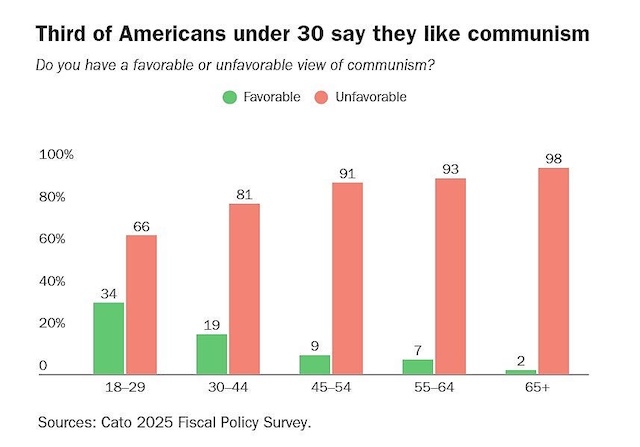
However, here is an indictment of America’s more youthful generations today. Thirty-four percent of Americans under the age of thirty today say that they like communism, even though none of them have ever lived under a truly totalitarian communist state. And I daresay it’s because they are in love with the notion of the romanticized “pie-in-the-sky” version of communism they have had their heads filled with through indoctrination programs in universities, that make it sound like the perfect Utopia — where everybody sits around all day long smoking weed or crack or taking their drug of choice, having sex with whoever is the flavor of the day, and the Government provides all their needs — food, clothing, electricity, housing, education, luxury items, e.g. color t.v., cellphone and their custom Mercedes Benz — for them FREE of Charge.
 Here is the uncomfortable truth: hard does not mean hopeless. Every generation has faced economic hardship. Boomers faced double‑digit interest rates, stagflation, and the oil crisis. Gen X faced deindustrialization. Millennials graduated into the Great Recession. Gen Z entered adulthood during a pandemic and an inflation spike. Every generation has had to adapt to forces beyond its control. The difference between those who rise and those who fall is not the economy — it is the mindset.
This is not to minimize legitimate barriers — zoning restrictions inflating housing, regulatory thickets, demographic pressures, and policy choices that favored asset owners — but to insist that despair is neither inevitable nor productive. The ladder remains accessible to those willing to climb with calloused hands and clear eyes.
Yet beneath all the despair and resentment, one truth remains as solid today as it was in the age of blacksmiths, railroad builders, machinists, miners, farmers, and factory workers: human beings who make themselves useful, disciplined, adaptable, trustworthy, and capable will always possess value. Economies change. Technologies change. Entire industries rise and collapse. But societies still reward people who solve problems, create value, endure hardship, and carry responsibility.
The danger facing America is not primarily that Artificial Intelligence will destroy work. The greater danger is that too many Americans have been conditioned to believe they are above the difficult process of becoming valuable in the first place. An entire culture has emerged that quietly teaches young people they should begin near the top instead of climbing upward from the bottom. It teaches them to see labor as humiliation rather than dignity, discomfort as oppression rather than growth, criticism as cruelty rather than correction, and sacrifice as unfairness rather than necessity.
For most of American history, young men and women understood instinctively that life was a ladder. You started where your abilities placed you. You learned. You struggled. You improved. You earned trust. You acquired skills. You failed and corrected yourself. You built your reputation slowly, often painfully, over years of labor. Nobody promised fulfillment at twenty-two years old. Nobody expected mastery without apprenticeship. Nobody assumed they deserved a management salary while possessing entry-level discipline.
The old American ethic, especially visible among working-class and middle-class families, was built around the idea that competence preceded reward. Farmers did not begin by owning thousands of acres. Mechanics did not begin by operating successful shops. Electricians did not begin as master tradesmen. Business owners did not begin with corner offices and investment portfolios. They started by sweeping floors, carrying lumber, changing tires, digging ditches, repairing engines, stocking shelves, welding beams, pouring concrete, balancing books, and learning how the world actually worked.
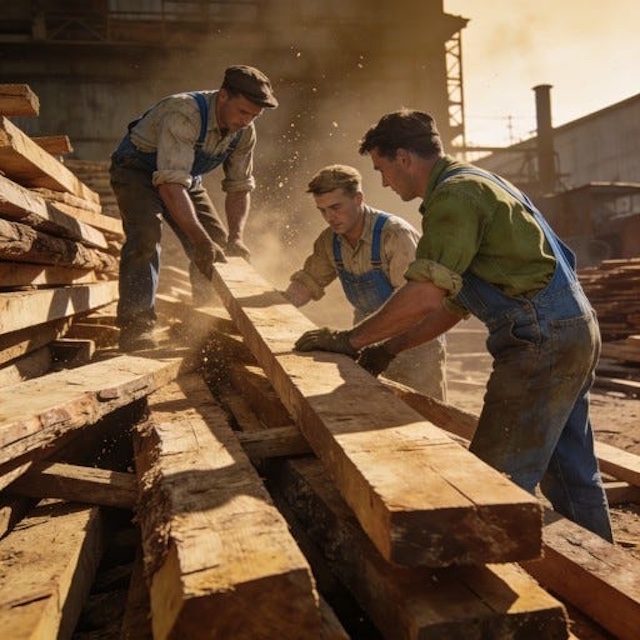 That process forged resilience because it forced individuals to confront reality directly. Boomers and members of the Silent Generation were not superhuman. They were flawed people living through inflation, war, economic instability, oil shocks, labor unrest, and social upheaval. But they often possessed one psychological advantage over many modern Americans: they expected life to be difficult.
Expectation matters.
A young person who expects hardship interprets obstacles differently from someone raised to expect comfort. One sees adversity as initiation. The other sees adversity as injustice. One understands that failure is part of development. The other experiences failure as a personal invalidation.
This difference explains much of today’s generational conflict.
Baby Boomers grew up in an America where responsibility arrived early. Teenagers worked summer jobs. Boys mowed lawns, stocked grocery shelves, fixed fences, and worked construction. Girls babysat, worked diners, balanced cash registers, and contributed economically to the household. Many families lacked luxury but possessed structure. Fathers and mothers expected contribution, not merely self-expression.
That environment built a form of toughness modern society increasingly misunderstands. Toughness was not the absence of emotion. It was the ability to continue functioning despite discomfort. A young worker could be criticized harshly by a boss, embarrassed publicly for mistakes, or physically exhausted after twelve hours of labor and still return the next morning because quitting was considered shameful.
Modern culture often dismisses this as cruelty or emotional repression, but it produced generations capable of enduring pressure without psychological collapse.
And this is where the younger generations face their greatest test. Because while the economy is undeniably harder today, in some regards, the cultural conditioning they received has left many of them ill‑equipped to confront hardship. They were raised to expect comfort, validation, and emotional cushioning. They were taught to avoid discomfort, not endure it. They were taught to seek fulfillment, not responsibility. They were taught to chase passion, not competence. And now, when the world demands resilience, many feel betrayed — as if life has broken a promise it never made.
This is why so many young people today feel demoralized. Zoomers do not think that they have a future, and in some respects, they are not wrong to think this way. They watched Millennials do everything right — study hard, get degrees, follow the rules — only to be crushed by the 2008 crash. They watched wages stagnate while costs soared. They watched institutions betray them, leaders lie to them, and society decline around them. They watched the marshmallow [risk vs reward] test fail — not because they lacked discipline, but because the adults running the experiment changed the rules. When the future becomes unpredictable, when the reward becomes uncertain, when the institutions that promised stability collapse, people naturally shift toward immediate gratification. Why save for a house you’ll never afford? Why invest in a future you don’t believe will come? Why sacrifice now for a payoff that may never materialize?
But here is the truth that must be spoken plainly: the future is not something you wait for — it is something you build. And no generation in history has ever built a future by sitting around waiting for someone else to save them. Not the government. Not corporations. Not institutions. Not parents. Not society. The only people who can save the younger generations are the younger generations themselves.
This is where the tough love comes in; because while the economic pressures are real, the entitlement is also real. Too many young people believe they are too good for manual labor, too good for entry‑level jobs, too good to start at the bottom. They want top‑tier jobs with lower‑tier skills. They want the lifestyle without the labor. They want the rewards without the apprenticeship. But the world has never worked that way — and it never will. Work always has been every adult’s duty, not an option for them to accept or reject. That duty built discipline. And discipline built opportunity.
The trades — plumbing, electrical work, welding, carpentry, HVAC, mechanics — are desperate for workers. These jobs pay well, cannot be outsourced, and cannot be automated by AI. Yet many young people turn their noses up at them because they believe manual labor is beneath them. They would rather chase a vague dream of “doing what they love” than build a concrete skill that society actually needs. But fulfillment does not come from avoiding hard work. It comes from mastering it.
AI is a very real, existential threat to America in many areas, but not necessarily when it comes to a man’s ability to earn a living. Entitlement is. AI will replace people who sit at desks waiting to be told what to do. It will replace people who rely on credentials rather than competence. It will replace people who expect the world to accommodate them. But AI will not replace people who can build, repair, create, or lead. It will not replace people who show up, learn constantly, solve problems, and take initiative. It will not replace people who provide value that machines cannot. In other words, AI will not replace the kind of Americans who built this country.
The path forward for young Americans is not despair. It is responsibility. It is self‑reliance. It is humility. It is the willingness to start at the bottom and climb. It is the rediscovery of the virtues that built America: grit, discipline, craftsmanship, delayed gratification, and the dignity of labor. It is the understanding that no one is coming to save you — and that this is not a tragedy, but a liberation. Because once you stop waiting for rescue, you can finally begin to build.
The younger generations have every reason to feel frustrated. But they have no excuse to surrender. They have inherited a broken world — but they also have the power to rebuild it. And if they choose to reclaim the virtues that made America great, they will not merely survive the age of AI. They will thrive in it. They will build businesses, master trades, create new industries, restore communities, and rebuild the nation. They will prove, once again, that America’s greatest resource is not its technology, its wealth, or its institutions. It is its people.
And if they fail? If they sit around waiting for someone else to fix things? If they cling to entitlement instead of embracing responsibility? Then yes — they will have no one to blame but themselves. Because the opportunity is still there. The path is still open. The future is still theirs to claim.
But only if they stand up and take it.
By embodying founding virtues — industry, responsibility, independence — young Americans will shape abundance amid disruption, restore moral bearings, and achieve greatness. Society follows individuals. The top is not bestowed; it is earned rung by rung. Grab the ladder with calloused hands. Climb with purpose. America’s future — and yours — awaits your ascent.
June 20, 2026
Justin O. Smith ~ Author
~ the Author ~
Justin O. Smith Has Lived in Tennessee Off and on Most of His Adult Life, and Graduated From Middle Tennessee State University in 1980, With a B.S. And a Double Major in International Relations and Cultural Geography – Minors in Military Science and English, for What Its Worth. His Real Education Started From That Point on. Smith Is a Frequent Contributor to the Family of Kettle Moraine Publications.