 On the morning of August 20th 2032, the President of the United States looked out through the tall windows of the East Room and saw a city that no longer seemed entirely certain of itself. Washington had always possessed a peculiar confidence, the confidence of a place in which decisions were made, and consequences happened somewhere else, beyond the Potomac, beyond the marble facades and guarded doors. Even when the country was angry, Washington generally seemed serene.
Traffic still moved along Pennsylvania Avenue, flags still stirred above the government buildings, tourists still photographed the Capitol, and somewhere inside the vast machinery of the federal government a clerk was always filling out a form that another clerk would eventually approve. But that morning the city seemed different. There were National Guard vehicles at several intersections, barricades around the Capitol, and clusters of police officers standing beneath the summer trees.
The previous night’s demonstrations had continued until nearly dawn, and although the official statement from the White House described them as “isolated disturbances,” everybody in Washington knew that the phrase was intended less to describe reality than to create it.
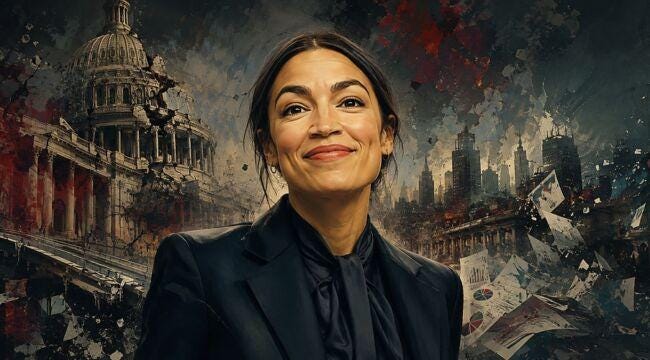
Alexandria Ocasio-Cortez stood before the cameras in a dark blue suit and waited for the room to become silent. She had learned, during four years in the White House, that silence was almost as useful as applause. She was forty-two years old now, though the photographs selected for the morning broadcast showed her in the confident middle distance between youth and authority that political consultants preferred. Behind her were the flags and the presidential seal, and beneath the seal stood a small table bearing a glass of water she would never touch. Outside, the temperature was already climbing toward ninety degrees. The electrical grid was under emergency restrictions throughout much of the District, and the administration had ordered federal buildings to reduce consumption during the afternoon. The White House, however, was operating normally.
“My fellow Americans,” she began, “four years ago you entrusted us with the responsibility of building a government that works for everyone.”
In a kitchen in western Pennsylvania, Thomas Mercer listened with the sound turned down.
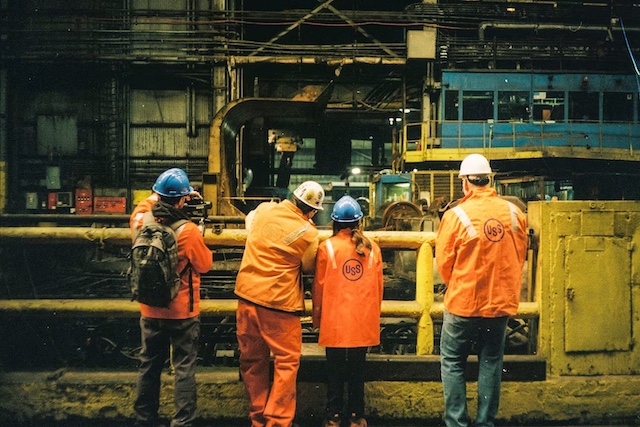
He had been sitting at the same table for almost twenty minutes, studying an electric bill that had arrived the day before. The bill lay open beneath his left hand. Beside it were the remnants of a cup of coffee, a prescription bottle belonging to his wife, and a yellow legal pad upon which he had written several numbers in a column. He had worked in the steel industry since he was nineteen years old. The mill had changed ownership three times, modernized twice, downsized repeatedly, and survived recessions, foreign competition, union disputes, environmental regulations, and the transformation from a manufacturing economy into something nobody in his town could quite name. Through all of it Tom had gone to work. He had never considered himself heroic for doing so. His father had worked. His grandfather had worked. A man worked if he could, paid his bills, raised his family, and tried not to leave his children worse off than he had been.
The previous administration under President Trump had attempted to bring the steel industry roaring back, but once the promises of “free” everything went out from Alexandria Ocasio-Cortez and she and her minions took the White House and Congress, every commonsense initiative and bill was immediately reversed and the country set on its ear, descending into a miserable state of affairs.
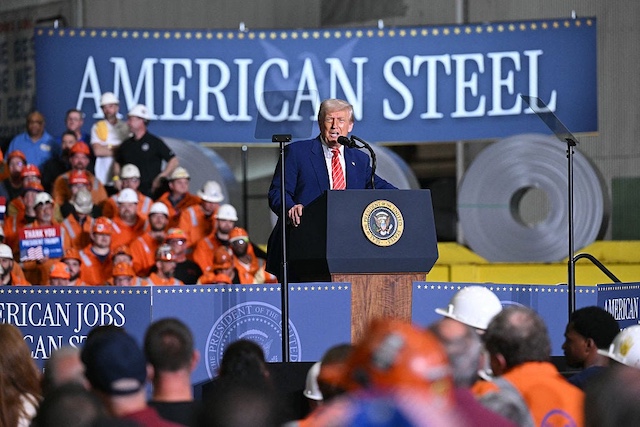
President Donald Trump speaks during a visit to U.S. Steel – Irvin Works in West Mifflin, Pennsylvania, in May 2025. [credit, Saul Loeb/AFP]
Now the electric company wanted $386.17.
His wife Ellen came into the kitchen carrying a basket of laundry and saw the bill beneath his hand.
“That’s not right,” she said.
Tom looked up.
“That’s what I said.”
“Did you call them?”
“Yesterday.”
“And?”
“They said it’s the new rate.”
Ellen put the basket down.
“What new rate?”
Tom gave her a tired smile. “The one that makes electricity more expensive.”
She did not laugh. Neither of them had been laughing much lately.
On the television, the President was speaking about the historic transformation of the American economy, about the moral obligation of government to guarantee dignity, opportunity, healthcare, housing, and economic security to every citizen. Tom listened for another moment, then reached for the remote.
Lies, lies, lies — one after the next on a daily basis. Tom and most of America had grown sick of hearing them.
“Don’t,” Ellen said.
He looked at her.
“Don’t what?”
“Turn it off.”
“Why?”
“I want to hear what she says.”
Tom lowered the remote.
The President continued speaking.
She talked about abundance.
She talked about equality.
She talked about the success of the administration’s economic programs and the unprecedented investment in clean energy, infrastructure, healthcare, and American workers. She spoke with the assurance of a woman who had spent four years surrounded by people whose careers depended upon convincing her that history was moving in the direction she had chosen for it.
Tom listened until she began discussing the decline in unemployment.
Then he laughed.
It was not a happy sound.
“What’s funny?” Ellen asked.
“Nothing.”
“You laughed.”
“I know.”
“Why?”
Tom pointed at the television.
“Because they say unemployment is falling.”
“You don’t believe them?”
“I know sixteen people at the mill who were laid off last month.”
 Ellen sat down.
“Maybe they count them differently.”
Tom folded the electric bill and put it into the pocket of his work shirt, though he no longer worked at the mill.
“That’s what governments do when they don’t like the numbers.”
Four years earlier, Tom Mercer had not believed Alexandria Ocasio-Cortez could become President of the United States.
He had not been alone.
The Republican Party had believed it would win the 2028 election. Its leaders had expected a difficult contest, perhaps even a close one, but they had assumed that the coalition assembled during the Trump years would remain sufficiently large to carry the presidency. They believed the Democrats were too divided between their establishment and progressive wings. They believed the American people would reject socialism. They believed that economic realities would ultimately prevail over ideological enthusiasm.
Most importantly, they believed that their own voters would show up.
The Democrats understood the last point better than they did.
The election that November was not a landslide in the old-fashioned sense. The country remained divided, sometimes almost exactly down the middle. But the Democratic coalition was better organized, more disciplined, and more successful in converting dissatisfaction into turnout. A series of close states fell one after another. The Senate followed. The House followed. By the time the last results had been certified, Alexandria Ocasio-Cortez possessed something few presidents in modern American history had enjoyed: a White House backed by a unified Congress and a political movement convinced that the election represented not merely a victory but a mandate to remake the country.
Her supporters celebrated in the streets.
There were flags, music, fireworks, tears, and speeches about the beginning of a new American century. Young people who had spent years feeling that their country was moving backward now believed they had finally seized the steering wheel. They spoke of universal healthcare, affordable housing, clean energy, immigration reform, free education, economic justice, and an end to what they considered the corrupting influence of money upon politics. They did not think they were voting to destroy America. Most believed they were voting to save it.
That was what made the election important.
Almost nobody who changes history believes that he is doing so for the worse.
The President-elect understood that she had been handed a rare opportunity. The Democratic leadership understood it as well. Within weeks of the inauguration, they began discussing the Senate filibuster.
The debate lasted for days in public and months in private. Republicans warned that abolishing the filibuster would eliminate one of the last remaining procedural barriers against a bare majority imposing its will upon the entire country. Democrats replied that the filibuster was itself an undemocratic relic, a device allowing a minority to prevent the majority from governing. The argument was old, and both sides possessed respectable historical examples to support their position.
Senator Samuel Harlan of Missouri, a Republican who had served three terms, listened to the final debate from his desk beneath the chamber’s great ceiling. He had never been sentimental about the Senate. He had spent enough time there to understand that the institution was filled with ambition, vanity, compromise, hypocrisy, courage, cowardice, and occasional brilliance. But he believed in its slowness.
“Senator,” the Democratic majority leader told him privately the night before the vote, “you know as well as I do that if you had fifty-one votes, you’d do exactly what we’re doing.”
Harlan looked across the table.
“You’re probably right.”
“Then what’s the problem?”
“The problem,” Harlan said, “is that you’re going to win.”
The majority leader smiled.
“We already did.”
“No. You won the election. You’re about to win something much bigger.”
“What?”
“The ability to change the rules whenever you have the votes.”
The other senator shrugged.
“That’s democracy.”
Harlan shook his head.
“No. That’s majoritarianism. They’re not the same thing.”
The bill passed at 2:43 in the morning.
The President signed it before lunch.
Three days later the first major piece of legislation that would have been impossible under the old Senate rules passed with fifty-one votes.
The newspapers called it historic.
The administration called it democratic.
The Republican minority called it the beginning of the end.
Nobody knew then how prophetic the last phrase would become.
The statehood bills followed.
Washington, D.C., became a state.
Puerto Rico became a state.
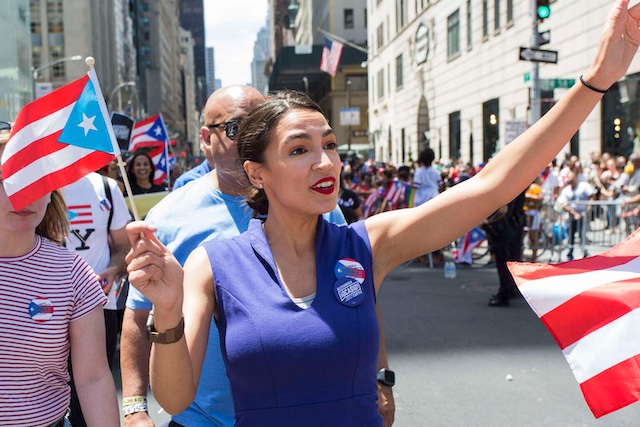
Congresswoman Alexandria Ocasio-Cortez marched during the 62nd annual Puerto Rican Day Parade on June 9th 2019 in New York, New York. [credit, Erin Lefevre]
The Democratic coalition celebrated both as acts of political justice. The opposition accused the administration of manufacturing senators. The arguments became vicious, but the votes were never really in doubt. Four additional senators would enter the chamber, and the arithmetic of American politics changed accordingly.
Then came the Supreme Court.
The President had campaigned on judicial reform, but few people expected the administration to move as rapidly as it did. When Clarence Thomas retired in 2028 because of declining health, the vacancy became the opening. Congress proposed expanding the Court from nine justices to fifteen. Constitutional scholars appeared on television and explained that the Constitution did not specify the number nine. Historical examples demonstrated that the Court had changed size before. The administration therefore possessed a perfectly respectable legal argument.
The political argument was another matter.
Republicans called it court-packing.
Democrats called it judicial restoration.
The hearings became spectacles.
Senators shouted.
Law professors accused one another of intellectual dishonesty.
Former judges issued letters.
Protesters gathered outside the Capitol.
The bill passed anyway.
Seven new justices were eventually confirmed.
For the first time in decades, the Supreme Court’s ideological balance was transformed by an unmistakably political act. The administration celebrated. Its opponents promised that the next Republican president would reverse the process.
The President’s advisers privately warned her that this was dangerous.
She asked why.
“Because,” one of them said, “the other side will do it when they get the chance.”
She looked at him for a long moment.
“Then they shouldn’t get the chance.”
The adviser said nothing.
There are moments in history when a civilization changes without anyone hearing a sound.
This was one of them.
The government had discovered that almost anything could be accomplished if the correct political majority could be assembled.
And the opposition had discovered that almost anything might have to be undone if it ever assembled a majority of its own.
The old assumption that some institutions were supposed to stand above politics had begun to die.
The new assumption was that politics would eventually control everything.
Immigration was next.
The administration abolished ICE and dramatically reduced federal enforcement. The President described the decision as a rejection of cruelty and an affirmation of America’s historic identity as a nation of immigrants. The policy was enormously popular with the progressive base and with many business organizations that had long complained about labor shortages.
Within months, the consequences became visible.
The border crossings increased.
Processing centers overflowed.
Cities requested emergency assistance.
Governors requested funding.
Schools required more teachers.
Hospitals required more beds.
Housing became scarce in communities that had never before experienced serious shortages.
In some parts of the country, the newcomers filled jobs Americans had been unwilling to perform. In others, they competed for jobs that Americans desperately wanted. Both things happened simultaneously, depending upon where one lived and what work one did.
The administration argued that immigration increased economic growth.
It did.
Critics argued that rapid population growth increased pressure upon housing, wages, infrastructure, and welfare systems.
It did.
The two sides screamed at one another because neither could understand why the other refused to acknowledge the obvious.
The answer was that each was looking at a different piece of the same machine.
By the second year of the administration, the immigration question had become so politically explosive that families stopped discussing it at dinner.
A school superintendent in Tennessee discovered that his district required additional classrooms.
A landlord in Arizona discovered that he could raise rent by several hundred dollars and still fill every vacancy.
A construction contractor discovered that labor was cheaper.
A union discovered that wages were under pressure in certain trades.
A hospital discovered that its emergency room was crowded beyond capacity.
A restaurant owner discovered that he could finally find workers.
A citizen waiting for a medical appointment discovered that the hospital had no additional capacity.
Everybody had evidence.
Everybody had grievances.
And everybody believed the other side was deliberately ignoring reality.
The political system responded by making the argument more political.
Green cards were accelerated.
Citizenship requirements were shortened.
The administration insisted that new citizens would strengthen the country.
The opposition insisted that the new electorate would strengthen the Democratic Party.
Both predictions became true.
The economic consequences came more slowly.
Inflation, which had already been troubling the country, began to behave differently from what administration economists had predicted. The government increased spending while attempting to subsidize housing, healthcare, energy, education, and household income. The Federal Reserve struggled to contain prices without producing a recession. Businesses raised prices because costs were rising. Workers demanded higher wages because prices were rising. Government increased transfers because wages were not keeping pace with prices.
The circle tightened.
By 2029, people began using the word stagflation again.
The administration rejected it.
Economists argued about definitions.
Americans argued about grocery bills.
The argument ended in the produce aisle.
Tom Mercer noticed the change first in meat.
He stood in the supermarket one Saturday morning with a package of ground beef in his hand and stared at the price.
“Ten dollars,” he said.
Ellen was beside him.
“$9.42 … My goodness … what in the world.”
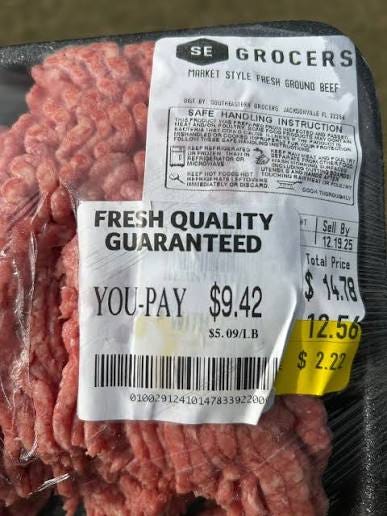 He looked again.
“HhMFff … $9.42.”
“Put it back.”
Tom did.
They bought chicken.
Two weeks later, chicken went up.
They bought beans.
The following month Ellen began making a list of meals that did not require meat.
It was not political.
That was why it mattered.
A political argument becomes real when it enters the kitchen.
By the beginning of 2030, the administration had introduced a wealth tax of ten percent on fortunes above one million dollars. The President spoke about fairness. She described the policy as a way to ensure that those who had benefited most from the American system contributed proportionately more toward maintaining it.
The first year was politically exhilarating.
The second was economically revealing.
A family-owned manufacturing company in Ohio discovered that its valuation had risen dramatically even though its cash reserves had not. The owners had no desire to sell, but the tax bill was substantial.
They sold.
A software entrepreneur moved to Ireland.
An investor relocated to Singapore.
A wealthy physician established residency in another country.
A technology company moved part of its operations abroad.
The administration responded with new enforcement measures.
The wealthy responded by becoming more mobile.
A Treasury official privately told the President that the country was losing investment.
“Then we need to stop them from leaving,” she replied.
“How?”
She looked at him.
“Find out.”
That was the beginning of another spiral.
Capital became something the government increasingly regarded as a fugitive.
Capital, being incapable of patriotism, behaved accordingly.
The investment decline eventually reached Main Street.
A factory expansion was canceled in Pennsylvania.
A pharmaceutical laboratory delayed construction in New Jersey.
A machine-tool company in Ohio laid off workers.
Tom’s mill announced that it would reduce production.
He was among the workers retained.
For a while.
Then came the energy crisis.
The administration had spent billions transforming America’s energy system. Wind farms spread across the plains. Solar installations covered enormous tracts of land. Electric vehicles multiplied. Battery factories rose in places where steel mills and automobile plants had once stood.
The President called it the largest industrial transformation in American history.
She was not entirely wrong.
The problem was that industry required electricity. and most energy, even “green energy” still relied heavily on substantial amounts of fossil fuels, oil in fact.
Artificial intelligence required electricity.
Data centers required electricity.
Electric vehicles required electricity.
Heating systems required electricity.
The country needed vastly more power.
Yet environmental restrictions made it difficult to construct new conventional generating facilities. Transmission lines encountered opposition. Storage remained inadequate. Natural-gas infrastructure was constrained. Nuclear projects were delayed. Oil extraction had been stymied at every turn in the political road.
The administration promised that technology would solve the problem.
Technology did not arrive on schedule.
The first major blackout struck Phoenix.
The second struck Chicago.
The third hit New York.
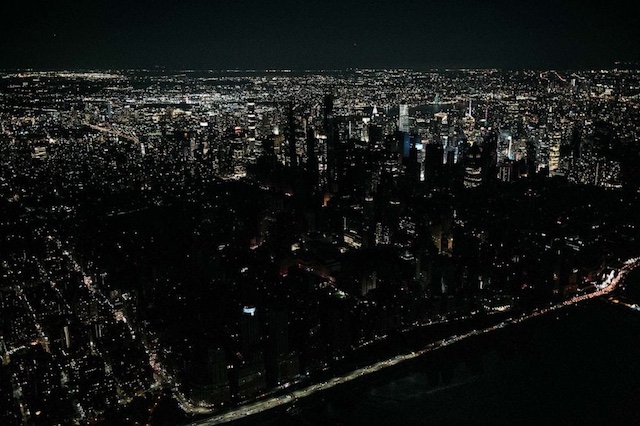
A large section of Manhattan’s Upper West Side and Midtown neighborhoods sat coated in darkness during a partial blackout.
The fourth was the one nobody forgot.
It occurred in July 2031.
A heat wave settled across the Northeast. Temperatures climbed above one hundred degrees. Air conditioners ran continuously. Data centers drew enormous loads. Electric vehicles charged overnight. The grid operated close to its limit.
At 6:58 p.m., a transmission failure triggered a cascade.
At 7:04, Manhattan went dark.
At 7:11, parts of Brooklyn followed.
At 7:17, elevators stopped throughout several apartment towers.
Hospitals switched to generators.
Traffic signals failed.
Subway trains halted underground.
The administration assured the public that power would be restored shortly.
It took thirty-three hours.
During that night, something strange happened.
The people who had spent months screaming at one another began helping each other.
A restaurant in Queens cooked all its food and gave it away.
A church opened its basement.
A group of teenagers carried water to elderly residents in an apartment building.
Firefighters worked without rest.
A doctor operated by flashlight when the backup generator failed.
For one night, the politics disappeared.
Then the lights came back.
By morning, the argument had resumed.
The administration blamed aging infrastructure.
The opposition blamed energy policy.
Environmentalists blamed fossil fuels.
Industry blamed regulation.
Everybody blamed somebody.
Nobody blamed the human tendency to believe that tomorrow can be engineered without paying for it today.
Universal Basic Income arrived soon afterward.
The President announced that households earning below $95,000 would receive approximately $40,000 a year.
The crowds cheered.
For the first time in years, millions of Americans felt that the government had finally acknowledged how difficult life had become.
The checks arrived.
People paid bills.
Some left jobs.
Some reduced their hours.
Some started businesses.
Some took care of children.
Some did nothing.
That last category grew.
Restaurants struggled to find workers.
Factories raised wages.
Construction companies offered bonuses.
Businesses increased automation.
Prices rose.
The administration increased payments.
Prices rose again.
The economists warned about incentives.
The President’s advisers warned about political optics.
The voters demanded more.
The country entered a strange period in which millions of Americans had more money but fewer things to buy with it.
Tent encampments spread in some cities.
Drug addiction increased.
Public order deteriorated.
The government responded with social programs, outreach teams, housing initiatives, and additional funding.
The problem became larger.
The programs became larger.
Eventually no one could remember which had come first.
Healthcare was the final great promise.
Universal healthcare began in 2030 and was celebrated as a moral victory.
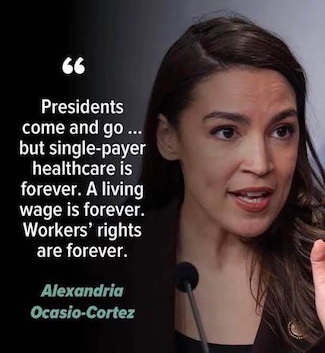 For the first few months, the system appeared successful.
Then demand overwhelmed supply.
Doctors retired.
Specialists were scarce.
Hospitals struggled.
Medical schools could not produce physicians quickly enough.
Waiting lists grew.
Tom’s wife developed a heart condition.
The doctor told them she needed to see a specialist.
The appointment was nine months away.
Tom called the hospital.
“Is there anything sooner?”
“No.”
“What if I pay?”
The woman on the telephone hesitated.
“You can’t.”
Tom was silent.
“Why?”
“Because you’re covered by the system.”
He hung up.
Ellen watched him from the kitchen.
“What did they say?”
Tom looked at her.
“They said we’re covered.”
She waited.
“That’s good, isn’t it?”
He stared at the floor.
“I don’t know anymore.”
The same week, a federal investigation uncovered billions of dollars in healthcare fraud.
The administration promised reforms.
More bureaucracy followed.
The country was beginning to discover that government could make healthcare universal without making doctors universal.
By 2031, the cultural battle had become as intense as the economic one.
DEI programs returned with unprecedented force. Corporate hiring practices were scrutinized. Universities restored programs that had previously been dismantled. Government contracts incorporated diversity requirements. Supporters said the policies corrected historic inequalities. Opponents said the government was replacing one form of discrimination with another.
The country stopped talking about individual people.
It began talking about categories.
This was perhaps the most corrosive transformation of all.
Americans who had once lived beside one another as neighbors increasingly encountered one another as demographic representatives.
The internet magnified everything.
Government officials pressured platforms to combat misinformation.
The platforms complied.
Accounts disappeared.
Videos were removed.
Posts were labeled.
Some of the material was genuinely false.
Some was genuinely dangerous.
Some was simply politically inconvenient.
The distinction became impossible to administer fairly.
When conservatives complained, progressives replied that they had once demanded stronger moderation.
When progressives complained, conservatives replied that they were now experiencing the same machinery.
Neither side recognized the fundamental problem.
Once government acquires influence over the machinery of public speech, every faction eventually wants control of it.
And the government, like every institution, eventually develops reasons why its own intentions are uniquely trustworthy.
By 2032, America was tired.
It was tired of inflation.
Tired of protests.
Tired of political investigations.
Tired of immigration arguments.
Tired of censorship arguments.
Tired of accusations.
Tired of counter-accusations.
Tired of being told that the country was either being saved or destroyed depending upon which television channel one watched.
Then unemployment reached twenty-three percent.
The official explanation was complicated.
Artificial intelligence had eliminated millions of jobs.
Automation had accelerated.
Outsourcing continued.
Businesses had reduced investment.
Government programs had distorted labor incentives.
Inflation had damaged demand.
No single cause explained the disaster.
The country did not care.
People wanted work.
The President announced new employment programs.
The opposition demanded tax reductions.
The administration proposed more subsidies.
The Federal Reserve struggled.
The Treasury borrowed.
The deficit reached $7.3 trillion.
Gasoline climbed above thirteen dollars a gallon.
Diesel became scarce.
A third of the country’s refineries had closed or been idled under environmental restrictions.
Copper reached forty-five dollars a pound.
Thieves began stripping electrical wiring from abandoned buildings.
The country was no longer merely politically divided.
It was materially exhausted.
That was when the protests began.
The first were peaceful.
Then came the counter-protests.
Then the arrests.
Then the confrontations.
Then the rumors.
A video would appear showing a policeman striking a protester.
Another would show a protester attacking a policeman.
One side would demand justice.
The other would demand punishment.
Within hours the video would be millions of views old and nobody would know who had recorded it, what had happened before it began, or whether the caption was true.
Washington responded with more restrictions.
The opposition responded with more resistance.
Governors began challenging federal authority.
Courts issued contradictory orders.
The Supreme Court intervened.
Half the country accepted its decisions.
Half the country called the Court illegitimate.
That was the moment when the machinery began to grind.
Not because the Constitution had disappeared.
Because people had stopped believing that constitutional institutions belonged to them.
In June 2032, Tom Mercer went to his first demonstration.
Ellen opposed it.
“You’re sixty-three years old.”
“So?”
“You have a bad back.”
“I’ve had it forty years.”
“You don’t know what might happen.”
Tom put on his jacket.
“Neither does anybody else.”
He drove three hours to the state capitol.
The crowd was larger than he expected.
There were veterans, farmers, small-business owners, teachers, retirees, young families, and people who had never before attended a political demonstration in their lives. Tom saw an old union man holding an American flag. He saw a young woman carrying a sign demanding constitutional limits. He saw a man wearing a shirt that said JUST LET ME LIVE MY LIFE.
The demonstration was peaceful until someone threw a bottle.
Nobody ever determined who.
The police moved.
The crowd surged.
People screamed.
Tom fell.
For one terrible moment he thought he would be trampled.
Then a young man grabbed his arm.
“Come on!”
Tom got up.
They ran together.
The next morning, the television networks spent hours arguing about which side had started the violence.
Nobody mentioned the young man.
Nobody knew his name.
That was the tragedy of the age.
Millions of decent people were still helping one another.
The cameras simply preferred the people who were fighting.
By August, Washington was surrounded by barriers.
The President prepared for reelection.
Her opponents prepared to stop her.
The administration announced new measures against political extremism and coordinated disinformation.
The opposition called them authoritarian.
The administration called the opposition dangerous.
Governors began refusing certain federal directives.
The White House threatened legal action.
The governors threatened resistance.
The newspapers used the phrase constitutional crisis so frequently that it became meaningless.
Then came the night of August 19.
A rumor spread that Congress intended to suspend the election.
It was false.
But it spread faster than the correction.
By midnight, thousands believed it.
Another rumor claimed that several governors had ordered their police forces to ignore federal commands.
That one was partly true.
A third claimed that the Supreme Court had secretly ruled that the President could remain in office indefinitely.
That one was completely true.
It did not matter.
The country had reached the point where truth no longer traveled as quickly as fear.
On the morning of August 20th, the President gave her speech.
She spoke of abundance.
She spoke of equality.
She spoke of the future.
Tom watched for three minutes.
Then he turned off the television.
Across America, millions of other people did the same.
But in Washington, the crowds remained.
The President’s chief of staff entered the Oval Office shortly after noon.
“Madam President.”
She turned from the window.
“What is it?”
“Eleven governors are refusing the federal directive.”
“Eleven?”
“Seven this morning.”
She walked back toward her desk.
“Have the Attorney General file.”
“He already has.”
“And?”
“Three judges have issued conflicting orders.”
She stopped.
“What about the Supreme Court?”
“They’re meeting.”
“Good.”
The chief of staff hesitated.
“There is another problem.”
“What?”
“The governors are saying their state police will not enforce the federal order.”
The President looked at him.
“Then the federal government will enforce it.”
“With whom?”
The question hung in the room.
For the first time since taking office, Alexandria Ocasio-Cortez had no immediate answer.
The United States government possessed enormous power.
But power was not the same thing as obedience.
The federal government could write an order.
It could litigate.
It could threaten.
It could fine.
It could imprison.
It could deploy federal personnel.
But every order ultimately depended upon human beings deciding to carry it out.
The President looked toward the Capitol.
She remembered the election.
She remembered the crowds.
She remembered the chants.
She remembered the promises.
She had believed that winning meant receiving permission to transform the country.
Now, four years later, she was beginning to understand the darker half of the equation.
When one political faction believes that an election gives it unlimited authority to remake the nation, the other faction eventually begins to believe that losing an election threatens its existence.
At that point, both sides become dangerous.
The first wants power without restraint.
The second wants resistance without surrender.
Between them stands the Constitution.
And constitutions are only as strong as the people willing to obey them when obedience becomes painful.
That evening, Tom Mercer sat on his porch with Ellen.
The electricity had gone out again.
They could see darkness spreading across the valley.
“Do you think this is the end?” Ellen asked.
Tom looked at the distant hills.
“No.”
She waited.
“Not yet.”
“What happens next?”
Tom did not answer immediately.
He had spent four years watching his country change, and he had finally understood that the great events of history did not feel great while they were happening. They felt like grocery bills. They felt like layoffs. They felt like arguments with neighbors. They felt like waiting for a doctor’s appointment. They felt like standing in line at a gas station. They felt like turning off the television because you could no longer stand hearing another politician explain why everything was going according to plan.
History did not arrive with trumpets.
It arrived one consequence at a time.
Ellen reached across the darkness and took his hand.
From somewhere down the road came the sound of a car door closing.
Then another.
People were stepping outside their houses.
They could not see the city lights.
They could not see the television towers.
They could not see Washington.
For the first time in years, they could see only one another.
Tom stood.
Across the road, his neighbor was standing beneath a porch light powered by a small generator.
They looked at each other.
Neither spoke.
Then the neighbor raised his hand.
Tom raised his in return.
It was a tiny gesture.
It meant almost nothing.
Yet in that moment it meant everything.
Because the Republic had never depended upon everyone agreeing.
It had depended upon people who disagreed remembering that the man across the road was still their neighbor.
The following morning, the President would meet with her advisers.
The governors would meet with theirs.
Congress would convene.
The courts would issue new orders.
Demonstrators would return to the streets.
Some Americans would demand resistance.
Others would demand obedience.
There would be arrests.
There would be confrontations.
There would be political violence, though not yet the organized civil war that some had begun to predict.
And through it all, the country would continue to function in a thousand small ways that nobody reported. Nurses would go to hospitals. Truck drivers would deliver food. Farmers would bring in crops. Teachers would unlock classroom doors. Mechanics would repair engines. Mothers would pack lunches. Fathers would go to work. Children would complain about homework. Churches would open on Sunday. People would fall in love, grow old, bury their parents, raise their children, and carry on with the ancient business of being human.
That was the strange thing the politicians had forgotten.
The Republic was not Washington.
It was not Congress.
It was not the Supreme Court.
It was not the President.
It was not even the Constitution by itself.
Those were the machinery.
The Republic was the people.
But the problem remained that across the decades over half of the American people had grown to advocate for ideas that were totally antithetical to the American founding, and they were indeed the enemies of all freedom-loving Americans. It was just that way; the indoctrination centers had done their job and set the country on the whole on a path to its own ruin and ultimate destruction.
That was the true catastrophe.
Not the wealth tax.
Not the immigration crisis.
Not the blackouts.
Not the unemployment.
Not even the political revolution.
Those were consequences.
The deeper disaster was the gradual destruction of the belief that Americans could lose an election and remain Americans.
The Founders had understood that disagreement was inevitable. They had not trusted majorities because they knew majorities could become tyrannical. They had not trusted presidents because they knew presidents could become ambitious. They had not trusted Congress because they knew legislators could become corrupt. They had not trusted courts because judges were human beings. They had therefore built a system in which power would be divided, slowed, challenged, and forced to justify itself.
It was an untidy system.
It was inefficient.
It produced frustration.
It sometimes prevented good things from happening quickly.
That was the point.
The machinery was designed not merely to allow government to act.
It was designed to prevent government from acting too easily, too hastily, too inefficiently and too disastrously.
And once Americans forgot why, every restraint began to look like an obstacle.
That was how the crisis had begun.
One majority had removed one restraint.
Then another.
Then another.
Each time the argument had sounded reasonable.
Each time the objective had sounded necessary.
Each time the people doing it had believed that they were correcting an injustice.
And perhaps some of the injustices had been real.
But power does not ask whether the purpose for which it was acquired was noble.
Power asks only whether it may be used again.
The Democrats had learned that lesson in 2028.
The Republicans were preparing to learn it in 2032.
And somewhere beyond the television cameras, beyond the speeches and slogans and furious demonstrations, ordinary Americans were beginning to understand what their leaders had forgotten.
The country could not survive indefinitely if every election became a war for permanent control.
One party could win.
The other had to be able to lose.
Then the second could win.
The first had to be able to lose.
That was the rhythm of constitutional government.
That was the safety valve.
That was the difference between a republic and a revolution.
The danger of an Alexandria Ocasio-Cortez presidency had never been that one woman might become powerful.
The danger was that millions of Americans might conclude that she had to be powerful because the country needed to be remade, while millions of others concluded that her victory was so intolerable that ordinary constitutional politics could no longer be trusted.
And that was the fact of the matter. Communism was once criminalized in America by way of the Communist Control Act of 1954, and yet, over the past decade, not only had communists come out in the open with their beliefs but they had campaigned and won a litany of elections.
The country was standing on the edge.
Evil machinations had emerged via the Democrat Party communists and virtue within the GOP had been dying for decades thanks to the heavy infiltration by RINOs .
Both parties believed that the survival of America — the America of their respective worldviews — depended upon defeating the other.
And nothing was more true than anything else in human history, once knowledgeable patriots had stacked up the pros of Western and American virtues and principles against the edicts, tenets and diktats of Marx, Mao and Mohammed as adopted by the Democrats of America.
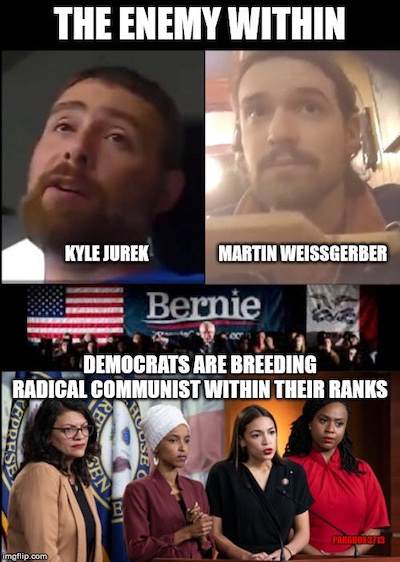 Past civilizations had repeatedly broken themselves on this very same war throughout the ages — a war between the forces of freedom and tyranny..
Tom Mercer knew all of this when he stood on his porch that night.
He also knew that his wife was beside him, that the electricity was out, that the air smelled of cut grass and summer heat, and that somewhere beyond the hills thousands of other Americans were looking into the darkness wondering what morning would bring.
He looked across the road at his neighbor.
The man was still there.
Tom raised his hand again.
The neighbor did the same.
Neither man knew which political party the other belonged to.
For the moment, it did not matter.
They were Americans.
And whether America remained one nation would depend, in the end, upon whether enough of them remembered that fact before it became too late.
The next morning, Americans all across the country awakened to the news that President Alexandria Ocasio-Cortez had suspended the Constitution, declared a state of emergency and martial law, as she called out the National Guard. And acting in concert simultaneously, the Democrat controlled Congress had just passed a bill authorizing the eradication of the entire Bill of Rights and the confiscation of all privately owned firearms.
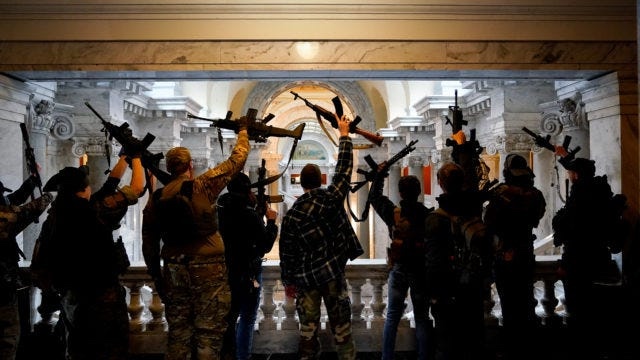 The day erupted in angry gunfire as patriots everywhere engaged authorities and refused to meekly hand over their firearms, and what followed was a long line of explosive confrontations between authorities, law enforcement and the military standing against Free Born Americans and military members who refused to follow the President’s illegal and illegitimate orders.
The country was aflame and those fires wouldn’t burn themselves out anytime soon, at least not as far as America’s patriots were concerned — not for years to come. Too many had already been killed by this illegitimate regime, and the rest had made up their minds that they would either restore true freedom and individual liberty in America or die trying.
September 12, 2026
Justin O. Smith ~ Author
~ the Author ~
Justin O. Smith Has Lived in Tennessee Off and on Most of His Adult Life, and Graduated From Middle Tennessee State University in 1980, With a B.S. And a Double Major in International Relations and Cultural Geography – Minors in Military Science and English, for What Its Worth. His Real Education Started From That Point on. Smith Is a Frequent Contributor to the Family of Kettle Moraine Publications.