
For the past few weeks, I’ve been buried in a personal project, and the deeper I went, the more I kept running into the same disturbing pattern in American life: the steady normalization of socialist ideas under softer, friendlier names. C.R. Dickens
 I’m talking about the creeping stranglehold of socialist ideology in this country – not merely as a slogan, a campus argument, or some far-off theory, but as a practical effort to make ordinary people more dependent on centralized power.
What I found is not just another political disagreement. It is a pattern: movements that promise fairness often begin by asking for trust and end by demanding control. When government institutions gain authority over healthcare, housing, education, wages, and information, they do not merely influence private life; they begin to define the terms on which ordinary people are allowed to live it.
I know this subject is everywhere – in the news, online, in campaign speeches, and in the constant churn of public argument. That is exactly why it becomes easy to tune out. But when an idea becomes unavoidable, the right response is not exhaustion; it is examination.
To examine it honestly, we have to separate the promise from the mechanism. The promise is fairness, security, compassion, and dignity. The mechanism is centralized authority over production, prices, wages, scarcity, and eventually the daily choices of the people whose lives depend on those decisions.
It began in the early 1800s during the Industrial Revolution as a response to the harsh treatment and poverty of many factory workers. Early socialist thinkers argued for a system in which people worked together and shared resources instead of allowing a few owners to control production and profit. Their vision was built on a utopian claim of fairness and equity, especially for workers who felt trapped, underpaid, and used. That origin matters because socialism entered politics first as a moral promise, not as a machinery of control. What happened after that – the record of socialist movements, socialist governments, and socialist rhetoric – is still debated, especially in America.
The historical problem with socialism is not merely that it has often failed economically; it is that it has repeatedly failed politically. Systems built to spread power more evenly often end by consolidating authority at the center, because once the state controls production, wealth, and basic necessities, political freedom becomes dependent on bureaucratic permission.
That is why the origin story matters. The moral promise may sound noble, but the political outcome depends on who receives the authority to enforce it – and what they are willing to do once they have it.
Stop for a moment and consider the progression: an idea begins as sympathy for workers, becomes a theory of shared ownership, and then requires political force to make that ownership real. Once that force exists, the question is no longer whether the original promise sounded humane. The question is who controls the force.
That is where modern media enters the picture. I dislike the all-encompassing word because it is overused, stretched, and burdened with meanings that change depending on who says it and why. But the confusion matters: too many readers and listeners accept the message at face value instead of stopping to ask who benefits from it. And once people stop asking who benefits, they become easier to persuade, easier to frighten, and easier to direct.
The people pushing this ideology understand human psychology better than many citizens realize. They know that fear, exhaustion, guilt, resentment, and the desire for security can be used to move people politically before they have time to reason through the consequences. That is why the message is repeated everywhere – not just to inform, but to condition.
When you strip away the idealistic rhetoric about equality, human needs, and putting people above private profit, you arrive at the real purpose of the ideology: centralized authority. The language may sound compassionate, but the mechanism is always the same – move ownership away from individuals, concentrate decision-making in the collective, and place power in the hands of those who claim to speak for everyone.
The process is simple. First, persuade people that their hardship is caused by freedom itself – by markets, private ownership, individual ambition, and unequal outcomes. Then offer a new authority as the cure. Once that authority is accepted, control can be sold as compassion, and dependence can be marketed as justice.
Here is how that argument is usually dressed up for public consumption, stated in its strongest form before we examine what it requires in practice.
To make socialism appear to be the ultimate remedy for the world’s crises, its advocates frame it as a necessary evolutionary step away from artificial scarcity and exploitation and toward shared abundance and collective survival. Under this perspective, capitalism is an outdated operating system that prioritizes short-term private profit over human life and planetary health, leading directly to existential threats like climate change, extreme wealth inequality, and systemic alienation.
That is the sales pitch. It is carefully framed to sound humane, modern, and inevitable, and that is exactly why it deserves scrutiny.
The danger is not that the problems named in that pitch are imaginary. Housing costs are real. Medical bills are real. Student debt is real. Wage pressure is real. The danger is that real hardship can be used to justify a remedy that transfers too much authority to the state, and once that authority is surrendered, it is rarely returned voluntarily.
This is also where an important distinction matters. A society can have public schools, roads, courts, police, national defense, public health measures, and even limited safety nets without becoming socialist. The decisive question is whether government protects the conditions for independence or replaces independence with managed dependency.
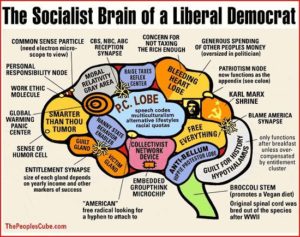 Defenders of socialism often argue that critics confuse socialism with ordinary welfare policy or social democracy. That distinction is worth making. Social democracy generally keeps a market economy while using taxation, regulation, and public programs to soften its hardest edges; democratic socialism more often aims to move ownership and economic power away from private capital and toward some form of social or public control. My concern is with that second impulse: the movement from assistance to dependency, and from dependency to political control.
The promise is that Socialism is the only rational solution to humankind’s existential crises because it upgrades our economic system from one of cutthroat competition for private profit to one of collective planning for human survival. By guaranteeing basic needs like healthcare, housing, and education as unconditional rights and extending democracy directly into the workplace, it eliminates artificial scarcity and frees humanity to collaborate on global challenges like climate change. True liberty is impossible when survival is a commodity, and socialism replaces the dictatorship of the market with a cooperative framework where society’s immense wealth finally serves the dignity and potential of everyone.
Does this sound familiar? It should, because versions of this argument now appear throughout American politics. The traditional view of American capitalism is quietly fracturing as more voters question whether the free market can still deliver stability, opportunity, and dignity. What critics call a “takeover” and proponents call an “awakening” is fundamentally a battle over the institutions people depend on most.
That is how abstract theory becomes practical politics. Once the argument is dressed as compassion, it no longer sounds radical. It becomes a campaign promise, a slogan, a policy plank, a student movement, a viral clip, and finally a voting bloc. Ideas do not need to win every mind at once; they only need to move the center of gravity far enough that yesterday’s radical proposal becomes tomorrow’s normal demand.
The rise of socialism in America is not just a slogan moving through protest signs and social media feeds. It represents a broader structural shift, especially among younger generations who are more skeptical of the free market and more open to systemic economic reform.
That shift has already changed the policy gravity of the American left. Ideas that once sat on the fringe now appear in congressional campaigns, city councils, activist platforms, and mainstream policy debates. The language is usually practical rather than revolutionary: healthcare as a right, housing as a right, jobs as a guarantee, education as a public obligation.
On the surface, those proposals sound like protection from an economy many people no longer trust. But the practical effect is to shift leverage away from private employers, voluntary markets, and local institutions toward the state. Once basic necessities are defined primarily as government-administered entitlements, ordinary life becomes more dependent on political management.
The more ambitious versions of this movement do not stop at expanding programs. They call for changing the structure of American governance itself so that national economic planning becomes easier to impose and harder to reverse. That can include efforts to weaken institutional brakes, reduce the power of competing authorities, and make large-scale public control of industry more politically achievable.
In practice, socialism shifts the primary mechanism of society from market-driven competition to centralized bureaucratic planning, consolidating vast power within the state. In a capitalist system, resources are allocated through the decentralized choices of consumers and businesses responding to supply, demand, and prices.
Under a socialist model, the government nationalizes key industries and assumes control over the “means of production,” meaning a centralized network of state agencies, committees, and planners must decide what goods are made, how resources are distributed, and what wages are paid. Critics argue that because planners cannot easily calculate the daily shifting needs of an entire population, shortages and economic imbalances become more likely.
To keep such a system functioning, the state must keep expanding its administrative reach: setting rules for labor, influencing prices, and managing the distribution of essential goods like housing and healthcare. As that authority grows, individual survival can become increasingly tied to compliance with the agencies and officials who manage access to those necessities.
To fund a socialist system, the government relies on a combination of corporate profit capture, aggressive wealth redistribution, and control over the national currency supply. When the state nationalizes major industries, financial surpluses that would normally go to private owners and shareholders are diverted into the public treasury to pay for social programs.
For transitional economies or democratic socialist models, this revenue is often supplemented by steep taxes on high-income earners, corporate assets, and accumulated private wealth. If the state also gains influence over the central bank or financial sector, it may use currency creation, credit controls, or wage policy to finance public projects and sustain state-provided services like healthcare and housing.
Critics point out, however, that this model faces severe structural limits. Aggressive wealth seizure can weaken incentives for innovation, while excessive currency creation has historically contributed to inflationary crises. Over time, those pressures can shrink the very pool of wealth the state relies on to function.
Recent socialist political wins in America can be understood as the early marketing phase of this power shift: candidates promise to shelter voters from the rising cost of living before the state has the power to seize industry wealth or control currency at national scale.
In our democracy, the transition to centralized economic planning cannot happen overnight; it requires popular consent. That consent is built by targeting what economists call cost disease – the spiraling costs of housing, healthcare, education, and childcare. Socialist candidates often campaign on immediate, palatable relief such as Medicare for All, rent control, student debt forgiveness, and expanded public housing. Voters are not initially voting to nationalize factories or surrender their economic freedom; they are voting to subsidize their cost of living.
Cost disease is a useful term because it describes a genuine pressure point in modern life. Some labor-heavy services, especially healthcare, education, and childcare, are difficult to make dramatically more productive without reducing the human attention that makes them valuable. As those costs rise faster than many families can manage, frustration grows. Socialists understand that frustration and aim their message directly at it.
That is why the appeal is especially strong among younger voters. Many of them entered adulthood facing inflated housing prices, unstable career paths, medical insecurity, student debt, and a growing sense that major institutions serve insiders first. Their anger is not hard to understand. The question is whether that anger should be channeled into reform that restores independence, or into a political system that makes independence even harder to sustain.
At the local and congressional level, socialist-leaning officials face a practical limitation: they do not control the federal money supply, nationalized industries, or broad corporate surpluses. As a result, their early programs usually depend on narrower tools – higher local taxes, corporate surcharges, bond measures, regulatory mandates, and public spending aimed at proving that the model can work on a smaller scale.
Critics and economists argue that when localized programs cap prices, restrict rents, or add heavy regulatory burdens, the affected markets can become less responsive over time, sometimes producing stagnation, reduced supply, or shortages.
This creates a self-reinforcing cycle: when early socialist policies create economic friction, elected officials may be tempted to argue for more centralized control rather than reconsider the original premise. In that sense, current political wins can normalize greater state dependency and prepare voters to accept broader institutional changes in the name of making the system work.
That raises the obvious question: if these systems so often produce scarcity, dependency, and political concentration, why do intelligent people keep advancing them?
The answer, I believe, is power – not always crude personal greed, but the institutional power to decide what society values, who receives resources, which freedoms are negotiable, and which voices can be dismissed as obstacles to progress.
From a power-realist perspective, one danger of centralized socialist systems is that they can attract and empower political elites and bureaucrats who are insulated from the economic risks ordinary citizens face. In a free market, power is fragmented across many independent businesses and institutions; by contrast, a nationalized economy concentrates decision-making authority in fewer hands and weakens competing centers of influence.
While the ideology is marketed to the public as a pursuit of equality, centralized systems have often produced a new privileged class of officials, managers, and loyalists who control access to scarce goods and services. Historical examples such as the Soviet nomenklatura – a vetted roster of influential leadership positions and the specific candidates approved by the Communist Party to fill them – show how a ruling administrative class can emerge even in systems that claim to abolish hierarchy. When there is little market competition or political accountability, the public bears the cost of failed planning while the governing class is more likely to remain insulated from its consequences.
At its worst, this kind of system gives ambitious officials the ability to monopolize national wealth, suppress dissent through control of basic necessities, and reshape social life under the banner of collective good.
This is the contradiction I see in anti-oligarchy socialist rhetoric: from a structural and power-realist perspective, fully realized socialism can become the very thing it claims to resist – a state-run oligarchy. Political scientists and sociologists describe a related tendency as the Iron Law of Oligarchy, which holds that complex organizations, even those founded on democratic or egalitarian ideals, tend to develop rule by a small, self-protecting elite.
That is why this argument cannot end with intentions. Good intentions do not prevent concentrated power from protecting itself, expanding itself, or punishing those who resist it. The choice is not between cruelty and compassion; that is the false choice socialism depends on. The real choice is whether compassion must require centralized authority, whether justice must require dependency, and whether security must come at the price of liberty.
 So wake up – not in panic, but in resolve. This is not a distant theory reserved for academics and politicians. It reaches into every home, every paycheck, every school, every doctor’s office, and every future our children will inherit. If we hand over healthcare, housing, education, wages, and public life to leaders who promise compassion while expanding dependency, we should not be surprised when freedom becomes conditional.
I care deeply about this country, and I will until I die. But this is not only about what remains of my lifetime. It is about the country our children and grandchildren will inherit after today’s slogans have faded and today’s voters are gone. Think carefully about the burden they may carry, the freedoms they may lose, and the leaders we trust to shape their future. History does not wait for comfortable people to become brave. It changes when ordinary citizens decide that enough is enough – and act before silence becomes surrender.
That is the trap behind the promise.

For the Amalgamated Heavy…
August 6, 2026
~ the Author ~
 Charles R. Dickens Was Born in 1951, Is a Veteran of the Vietnam War, for Which He Volunteered, and the Great-Great Grandson of the Noted Author, Whose Name He Shares.
He Is a Fiercely Proud American, Who Still Believes This Is the Greatest Country on the Planet, With Which We’ve Lost Control and Certainly Our Direction. He Grew Up in Moderate Financial Surrounding; We’re Not Rich by Any Stretch, but Didn’t Go Hungry – His Incredibly Hard Working Father Saw to That. As Most From That Era, He Learned About Life From His Father, Whose Story Would Take Too Long to Tell, Other Than to Say That, He Is Also a Fiercely Proud American; A WWII and Korean War, Veteran Marine.
Charlie Was Educated in the Parochial System Which, Demanded That You Actually Learn Something, and Have Capability to Retain It Before You Advance. He Attended Several Universities in Pursuit of a Bachelor’s Degree, and Chased the Goose Further to a Master’s, and Has Retained Some Very Definite Ideas About Education in This Country.
in Addition, Charlie Is a Retired Blues Guitar and Vocalist – a Musician. This Was His Therapy Career. Nothing Brings Him as Much Joy as Playing Music, and He Wishes That He Could Make a Living at It… but Alas… Life Goes on!