
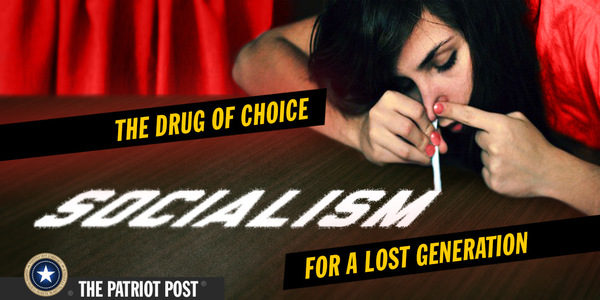
 Every promise has a price. Every political bargain sends someone the bill. The question is not whether America should help those in need; it is whether Americans understand what they may be asked to surrender once the word “free” enters the room.
As this republic approaches its 250th anniversary, I want to celebrate it by asking an uncomfortable question:
Why is America flirting with socialism without first understanding the bill that comes due? Yes, I am addressing socialism in America; the question was only when. I recently wrote about people who make bold claims but do not follow through when the cost arrives. That phrase belongs in this debate because socialism is often sold with confidence, wrapped in compassion, and paid for later by people who were never told the full price.
So let’s move through it plainly: what socialism promises, what it costs, why it appeals, and why America should understand the bargain before accepting it.
~ Why the Promise Sells ~
I keep asking the same question: Why socialism? Why are so many Americans drawn to an ideology that promises comfort but demands control? Every system needs rules. Capitalism does. Socialism does. Every “ism” does. But rules are one thing. Surrendering freedom to a permanent ruling class is another. A nation can survive regulation. It cannot survive citizens who forget they are supposed to be free.
By well-educated, I do not mean degrees on a wall. I mean common sense. You do not need a Ph.D. in statistics or political science to recognize a pattern of failure. History keeps warning us, and we keep pretending not to hear it. Meanwhile, public education and public debate have been bent toward the loudest voices rather than the clearest facts. When a culture teaches slogans before judgment, it should not be surprised when citizens mistake emotion for truth.
My academic background is not the point. The point is what should be plain enough: the warning signs are there, and America does not seem to learn from them.
Democracy works only when citizens understand what they are voting for. In America, power is supposed to rest with the people, exercised through elected representatives. Too often, however, parties, donors, media interests, and professional activists steer the conversation while ordinary citizens are left to choose from slogans. That is not self-government at its best; it is political management dressed up as public choice.
America is often called a democracy, but more precisely it is a constitutional federal republic with representative democratic features. That means the people rule through elected officials, but those officials are supposed to be restrained by the Constitution, the rule of law, and protected rights. When a small group of politicians, corporations, wealthy donors, agencies, or partisan machines controls the choices, we drift toward oligarchy. That is government by the few, not government by the people.
Socialism sounds simple: the public owns or controls the means of production, and society distributes wealth according to need. Britannica defines socialism as a doctrine calling for public rather than private ownership or control of property and natural resources. That language appeals to our better instincts: compassion, fairness, and human dignity. But every promise has a price, and every central plan needs someone powerful enough to enforce it. The question is never only what government gives. The question is always what government takes, who decides, and what happens when citizens object.
In several interviews with socialist supporters, a commentator asked them to define socialism. They could not. He asked them to name a country where socialism had worked as advertised. They could not. Then he asked why they favored it. The answer was always some version of the same promise: free education, free healthcare, free food, free rent, free transportation, free childcare. Free everything.
But “free” is not a plan. It is a sales pitch. Someone always pays, and the person promising “free” is rarely the one writing the check.
When did we become a nation more tempted by receiving than building?
Margaret Thatcher’s famous warning still applies: “The problem with socialism is that you eventually run out of other people’s money.” The Margaret Thatcher Foundation traces the line to her February 5, 1976 Thames Television interview, where she said socialist governments “always run out of other people’s money.” The arithmetic has not changed: promises still require payment. Too many people would rather have an idea explained to them in a thirty-second clip than read, compare, test, and think for themselves.
That media segment exposed a deeper problem. Maybe it is one reason socialism has become fashionable: too many Americans have been trained to repeat conclusions instead of test them. They believe what they are told. They do not know how to check the claim, trace the source, or ask who benefits. That is not education. That is conditioning. A republic cannot stay free when its citizens are taught what to think but not how to think.
Modern media makes the problem worse. It rewards speed, outrage, and certainty. Algorithms learn what we fear, what we hate, and what keeps us watching. Then they feed us more of it. The result is not wisdom. It is emotional conditioning disguised as awareness. We call it being informed, but too often it is simply being managed in real time.
People still bear responsibility for what they believe. But the information machine is built to exploit human weakness. We favor news that confirms our opinions. We mistake repetition for truth. We trust polished voices because thinking is hard and time is short. Fear, anger, tribe, and exhaustion do the rest. That is how citizens become spectators. That is how slogans become policy. That is how a free people can be persuaded to accept chains, so long as the chains are marketed as benefits.
* Here is a simple exercise for any reader willing to test the argument. Use your favorite web browser to read about socialism, Marxism, and communism. If you use an AI search tool, enter “compare and contrast: socialism, Marxism, and communism.”
– Extra credit if you add “constitutional federal republic” to the query.
This exercise is not about changing your mind. It is about making sure your mind is still yours. Do not rely on my opinion. Test it. I do this regularly because I want to know whether I am missing something, whether I am being manipulated, and whether my own assumptions still hold up. If your beliefs cannot survive a search, a challenge, or a counterargument, they were never convictions. They were borrowed opinions.
* Caveat: AI can make mistakes, so verify responses against reliable sources.
No country has operated a perfect textbook version of socialism for long, if at all. That fact alone should make us cautious. Some socialist systems improved literacy, healthcare access, or poverty measures. But those gains often came with political control, economic stagnation, censorship, fear, and abuse. The question is not whether government can provide benefits. Of course it can. The question is what government demands in return—and whether citizens can still say no after they become dependent on the answer.
That is the first trap: every model comes with a catch, and the catch is usually hidden behind the promise.
Pure state socialism has failed to manage complex modern economies efficiently. Pure capitalism can also fail to protect the vulnerable. Most successful countries operate somewhere in the messy middle. But America is not debating a careful middle. We are being sold a cafeteria plan: pick the benefits, ignore the costs, blame capitalism, and promise that someone else will pay. That is not governing. That is marketing with a tax collector standing behind the curtain.
History is blunt. Socialist states of the twentieth century often produced fast gains in literacy and public services, but they also produced heavy trade-offs: censorship, secret police, forced labor, shortages, fear, and economic crisis. Library of Congress materials on the Soviet system describe strict party-state control, censorship, forced collectivization, police terror, and forced labor under Stalin. The purpose was not only compassion. It was modernization, mobilization, and control.
A government that wants total power needs a population it can organize, educate, direct, and monitor. Literacy helps spread official doctrine. Healthcare keeps the workforce productive. Education can strengthen a country, but it can also teach loyalty to the party before loyalty to family, faith, conscience, or country.
The moral appeal of socialism is easy to understand. It promises to end exploitation, reduce inequality, and guarantee basic needs. It tells people they should not have to fight every day just to survive. That message is powerful, especially when families are worried about rent, groceries, medical bills, and the future.
But in practice, the dream often becomes a machine. Once the state owns or controls the economy, the state becomes employer, landlord, insurer, doctor, banker, schoolmaster, and gatekeeper. If it controls your paycheck, housing, food, healthcare, and education, it controls your choices. Dissent stops being an opinion. It becomes a threat to survival. A citizen dependent on the state for everything is not secure. He is supervised.
Modern Western socialism usually no longer talks about seizing factories. It talks about rights: healthcare, housing, college, debt forgiveness, green energy, and guaranteed support. Leaders and groups in the United States and Europe have pushed these ideas from the fringe into mainstream politics. The language is softer. The direction is familiar.
The catch is obvious: the benefits are funded by the very productive market economy the ideology often condemns. It curses the engine while demanding the engine pull a heavier train.
The old pattern is always the same. Promise a future paradise. Demand obedience today. Justify harsh measures as temporary. Call critics selfish, dangerous, or enemies of progress. Then, before long, freedom becomes negotiable and rights become privileges. Once rights become privileges, they are no longer rights at all.
I know I am not the only person who sees this. Many Americans do. The media may call us skeptics, reactionaries, or anti-ideologues. So be it. Too few have learned to notice when facts are shaped to fit a narrative and when narratives are shaped to serve power.
So I will keep repeating the refrain: it is about money, and it is about power. Remember: it is always both.
~ Desperation Opens the Door ~
A frightened country is easier to steer than a confident one. I was born at the beginning of the McCarthy era. I do not claim to remember every detail, but I know the shadow of the Red Scare. The Library of Congress describes Senator Joseph McCarthy’s anti-communist campaign as beginning in 1950 and paralleling the intimidation tactics of the House Un-American Activities Committee. McCarthy’s methods were deeply flawed; the fear he exploited did not disappear with him. The concern over ideological infiltration never disappeared; it simply changed clothes.
~ The Emotional Bargain ~
The premise is simple: desperation is the doorway. When people are afraid, broke, angry, and exhausted, they stop trusting the system they have. Then they become willing to gamble on systems they do not understand. Socialism, Marxism, communism, and capitalism are not just economic terms. They are belief systems. They tell people who is guilty, who is owed, who should rule, and what must be sacrificed. Desperate people do not ask enough questions. They ask who will make the pain stop.
Look around. Much of what we hear every day tells us the system is broken, corrupt, racist, unfair, rigged, doomed, or illegitimate. Some criticism is deserved. But constant despair has consequences. Public trust in government has been near historic lows; Pew Research Center reported in 2025 that only 17% of Americans said they trusted the government in Washington to do what is right “just about always” or “most of the time.” A country that loses faith in itself becomes easy to sell. First convince people the house is burning. Then offer to manage the ashes.
If desperation is the prologue to socialism, what better agent provocateur than a media culture that profits from despair? Fear sells. Anger sells. Division sells. A confident, informed, self-governing citizen does not.
So keep one question in mind as you read:
Is America’s constitutional federal republic and representative democracy strong enough to withstand this pressure toward dependency and centralized control?
~ The Vocabulary Matters ~
Socialism, Marxism, and communism are related, but they are not identical. Britannica notes that communism’s distinction from socialism has long been debated and that Marx used the terms interchangeably, while many later descriptions treat socialism as a transitional phase and communism as a classless end state. That distinction matters. Confusing them lets advocates soften the terms when convenient and harden them when useful. When the public does not understand the vocabulary, the argument can be moved without the public noticing.
~ The Trade-Offs ~
Once the vocabulary is clear, the real debate is trade-offs. Capitalism favors individual freedom, private property, innovation, and opportunity. Socialism favors collective security, redistribution, and equality of outcome. Neither system is magic. Each solves some problems and creates others.
The American model offers a high ceiling. It rewards risk, work, ownership, invention, and ambition. But it also leaves people exposed to medical bills, job loss, bad luck, and widening inequality.
The Nordic model offers a safer floor. It provides broad public services, including healthcare, education, and strong safety nets. But it also requires high taxes, including taxes that reach deep into the middle class, not just the rich. It is not pure socialism. It is competitive capitalism tied to a heavy welfare state.
– Source: Tax Foundation, “Top Personal Income Tax Rates in Europe, 2026”; top statutory personal income tax rates, excluding social security contributions—Denmark, 60.5%; Sweden, 52.3%; Norway, 39.6%.
The key catch is this: in the United States, many voters imagine Nordic benefits paid mostly by billionaires. That is not how the Nordic model works. Broad benefits require broad taxes. The middle class pays, too.
So the choice is plain: a system with a high ceiling and a dangerous floor, or a system with a safer floor and a lower ceiling. Americans should at least know which bargain they are being asked to make.
Capitalism has real flaws. Wealth can compound. Influence can be bought. Companies can push costs onto the public while keeping profits private. A market without guardrails can turn opportunity into advantage and advantage into permanent control.
That brings us to another word often used without care: equity. Equality and equity are not the same.
Equality means giving everyone the same rules, resources, or opportunities.
Equity means changing resources or rules to account for different starting points and barriers.
Ultimately, equality focuses on equal treatment. Equity focuses on engineered outcomes.
In a socialist system, the central state decides what fairness means. That is the danger. The same authority that defines equality and equity also enforces them. Once that power is centralized, citizens no longer debate fairness; they receive it by decree. When government becomes the referee, rule maker, scorekeeper, and prize distributor, the game is already over.
Every major “ism” creates a ruling class. Some promise to abolish elites, but they usually replace one elite with another. Capitalism can produce corporate and financial elites. Socialism can produce bureaucratic and party elites. The names change. Power remains. The only honest question is how much power they have and how easily ordinary people can take it back.
Socialism often claims to abolish private property while protecting personal property.
Private property means the means of production: factories, land, major business assets, and income-producing property. Those are shifted toward state control, public ownership, or worker cooperatives.
Personal property means your home, car, clothing, savings, and ordinary possessions. In modern democratic socialism, these are usually not seized outright. Instead, they are increasingly taxed, regulated, and subordinated to public policy goals. The ownership remains on paper, but the control can quietly move elsewhere.
~ A Better Path ~
There are better answers than surrendering daily life to the state. We can address real market failures without pretending central planners can run everything. Reform is not surrender. Guardrails are not socialism. But neither should reform become a Trojan horse for permanent control.
That better path must face four realities:
1. The Core Trade-off
– American capitalism creates opportunity, innovation, and wealth, but it can also create inequality and market failure.
– Socialism promises security and equality, but it often creates shortages, inefficiency, dependency, and dangerous state power.
2. The Myth of the Pure Market
– America is not a pure free market. It is already a mixed capitalist economy.
– Government already regulates markets, subsidizes industries, provides safety nets, and uses central banking to steer the economy.
3. The Problem: Externalizing Public Harm
– The real problem is not profit itself. The problem is when private profit pushes public harm onto everyone else.
– Pollution, health damage, financial risk, and other hidden costs often do not appear on corporate balance sheets. The public pays later.
4. Practical Solutions
The better path is to correct abuses without destroying market freedom:
– Internalize costs: make those who create public harm pay for it, and return the revenue directly to citizens when possible.
– Stakeholder capitalism: require certain companies to account for workers, communities, and long-term public effects, not only quarterly profit.
– Social wealth funds: charge fair value for the use of public resources and return part of the benefit to citizens.
Even that better path will be difficult in America because sensible reforms still have to pass through a political system built to protect the status quo. The Senate filibuster blocks major changes unless a supermajority agrees. That means serious reform can die before the public even gets a fair debate.
Powerful industries also defend themselves. Agriculture, energy, finance, technology, healthcare, and defense all know how to protect their interests. They fund campaigns, hire lobbyists, shape language, and slow anything that threatens their margins.
Special interests are focused, funded, and patient. Ordinary citizens are busy, tired, and divided. That is why concentrated money often beats diffuse public benefit. Power does not need most people to agree. It only needs most people distracted.
Then comes the branding war. One side calls every reform “creeping socialism.” The other calls every objection “greed.” Both shortcuts prevent serious thought. Meanwhile, the problems remain. Labels become weapons, and citizens stop asking whether a proposal works, who pays for it, and who gains power from it.
Fear of inflation makes reform even harder. Any policy can be attacked as a hidden tax that will raise gas, groceries, or rent. Sometimes that warning is fair. Sometimes it is propaganda. Either way, it works.
Washington also changes direction every few years. One administration writes rules. The next one rolls them back. Congress funds a program. Another Congress guts it. The pendulum swings, and long-term policy becomes temporary warfare.
Because Washington is so gridlocked, many reforms move to the states or to the marketplace. Voters, consumers, and investors pressure companies directly. That may be imperfect, but it is often faster than waiting for Congress to act with seriousness again.
 Frankenstein’s Monster remains the right analogy. The creature destroyed its creator not because it began as pure evil, but because Dr. Frankenstein created something powerful and then abandoned responsibility for it. We have done something similar with politics, media, bureaucracy, debt, entitlement, and appetite. We built a monster. Now we act surprised that it wants to rule the house. Worse, some people are handing it the keys and calling that compassion.
~ The Choice America Faces ~
All of this leads back to the same crossroads. America stands before a choice, and the signs are not always clear—maybe intentionally so. Every path has a cost. Every promise hides a trade-off. No system gives everyone everything forever without demanding something back. The danger is not that Americans want help. The danger is that we may accept control because it arrives dressed as help.
This is why promises of fundamental change should always be examined carefully. Remember Barack Obama’s promise to “fundamentally change America”?
That change is no longer theoretical. It is here, and the question is whether Americans recognize it before they surrender to the terms of the bargain.
Where we go from here depends on whether citizens still understand what liberty costs—and what dependency costs. Liberty is expensive because it demands responsibility. Dependency is expensive because it eventually demands obedience.
These are not new choices. We faced them at the founding. The circumstances have changed, but the question remains: who rules—free citizens, or a distant power promising protection in exchange for obedience? The uniform has changed. The bargain has not.
We fought a revolution to reject rule from a distant king who taxed, governed, and controlled the colonies without their consent. Do we now want to hand that liberty to a new ruler—modern socialism—a political monster we helped create for ourselves? Do we want to let offers of security and “free” benefits decide how we live? That is the question every American should understand before accepting any promise from anyone for anything “free.”
Many thousands died during the American Revolution from 1775 to 1783. Do we honor that sacrifice by surrendering control to a new master, or by preserving the liberty they won for us?
In the end, this is not an argument against compassion, reform, or helping people who truly need help. It is a warning against confusing generosity with surrender. America can repair what is broken without handing the keys to a state powerful enough to decide what citizens earn, own, say, believe, and receive. The sales pitch is always simple: let us manage the problem, and we will make life easier. The cost is harder to see because it arrives later—in taxes, dependency, obedience, and the quiet shrinking of liberty. Before Americans accept anything advertised as “free,” they should ask the oldest and most important question in public life: free for whom, paid by whom, controlled by whom, and enforced by whom?
Let’s not sleepwalk into the next chapter of this country and wake up wondering who signed away our future without our consent. Read. Question. Compare. Challenge the slogan. Follow the money. Ask who gains power every time government promises to make life easier. Don’t let anyone purchase your liberty with borrowed money and borrowed words. If America is going to remain free, ordinary citizens must stop living like passengers and start acting like owners.
Before we sign away tomorrow for security today, remember that liberty is never returned at the original price.
‘The devil you say…‘

Happy 250th Anniversary, USA
For the Amalgamated Heavy…
July 4, 2026
~ the Author ~
 Charles R. Dickens Was Born in 1951, Is a Veteran of the Vietnam War, for Which He Volunteered, and the Great-Great Grandson of the Noted Author, Whose Name He Shares.
He Is a Fiercely Proud American, Who Still Believes This Is the Greatest Country on the Planet, With Which We’ve Lost Control and Certainly Our Direction. He Grew Up in Moderate Financial Surrounding; We’re Not Rich by Any Stretch, but Didn’t Go Hungry – His Incredibly Hard Working Father Saw to That. As Most From That Era, He Learned About Life From His Father, Whose Story Would Take Too Long to Tell, Other Than to Say That, He Is Also a Fiercely Proud American; A WWII and Korean War, Veteran Marine.
Charlie Was Educated in the Parochial System Which, Demanded That You Actually Learn Something, and Have Capability to Retain It Before You Advance. He Attended Several Universities in Pursuit of a Bachelor’s Degree, and Chased the Goose Further to a Master’s, and Has Retained Some Very Definite Ideas About Education in This Country.
in Addition, Charlie Is a Retired Blues Guitar and Vocalist – a Musician. This Was His Therapy Career. Nothing Brings Him as Much Joy as Playing Music, and He Wishes That He Could Make a Living at It… but Alas… Life Goes on!